Listening to the Symphony of Deep Space: How Scientists and Artists Translated Fast Radio Bursts Into Sound

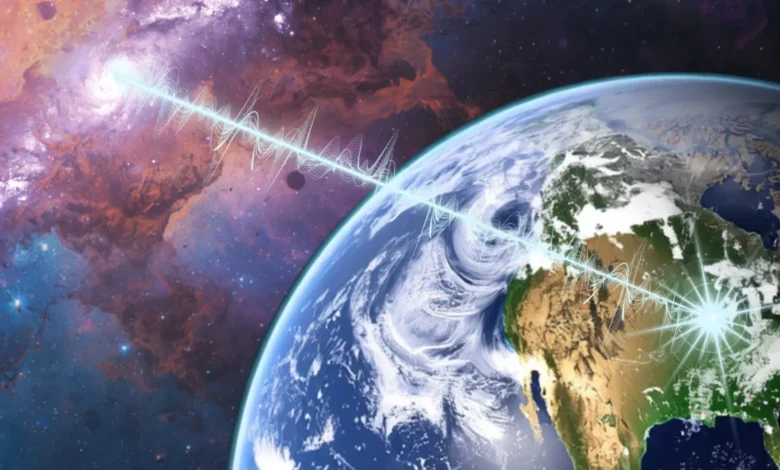
Fast radio bursts—brief, enigmatic flashes of cosmic energy originating from distant galaxies—remain invisible to the naked eye and imperceptible to human ears in their natural state, but a groundbreaking collaboration between physics and musical composition has finally given humanity a way to hear them. By translating raw radio telescope data into acoustic soundscapes, composer Andrew Melchior and MIT physicist Kiyoshi Masui have transformed millisecond-long explosions from the deep universe into a rich, immersive auditory experience. This unique intersection of astrophysics and art is currently on display at the Oulu Cathedral in Finland, where an ongoing installation titled “The Logos” allows visitors to listen to signals that embarked on their journeys across space billions of years ago.
The Main Facts of the Cosmic Symphony
At its core, the project centers on the sonification of data gathered by the Canadian Hydrogen Intensity Mapping Experiment (CHIME), a state-of-the-art radio telescope located in British Columbia. CHIME features a wide field of view and powerful computing infrastructure that allows it to capture thousands of fast radio bursts (FRBs). Because FRBs are fundamentally pulses of radio waves rather than acoustic sound waves, they must undergo digital translation before human ears can perceive them.
Working alongside MIT associate professor Kiyoshi Masui, artist and composer Andrew Melchior mapped the structure of individual FRB signals to varying musical pitches. These translated sounds are broadcast through a specialized array of twelve loudspeakers positioned throughout the historic Oulu Cathedral. The resulting acoustic experience is diverse and complex: distant, ancient bursts manifest as low hums, deep rumbles, subtle pops, and high-pitched whistles.
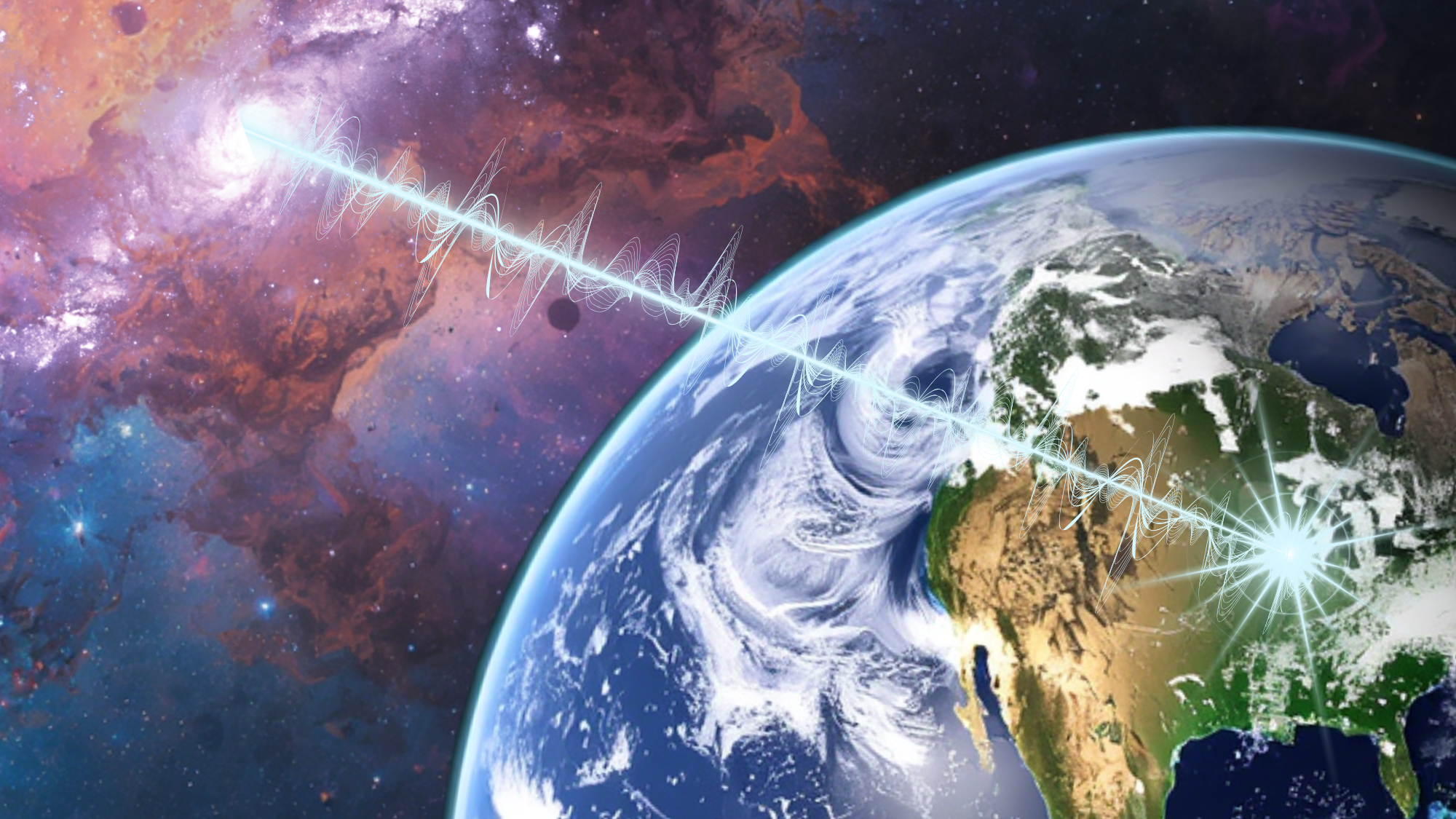
The installation not only provides an artistic interpretation of the universe but also remains faithful to the underlying physics of the phenomena. As FRBs travel through the vast expanses of intergalactic gas, high-frequency waves arrive at telescopes slightly faster than lower-frequency waves, a phenomenon known as dispersion. In Melchior’s composition, this physical stretching of the signal is audible as a distinct downward sweep of tones cascading from the cathedral’s dome, turning complex astronomical data into a visceral, real-time physics lesson.
A Brief Chronology of Fast Radio Bursts
To understand the magnitude of this artistic project, it is necessary to examine the relatively short yet impactful history of FRB research.
- 2007: The first fast radio burst, known historically as the "Lorimer Burst," was discovered in archival data by Duncan Lorimer and David Narkevic. Lasting merely a fraction of a millisecond, the flash posed an immediate astrophysical mystery regarding its origin and immense power.
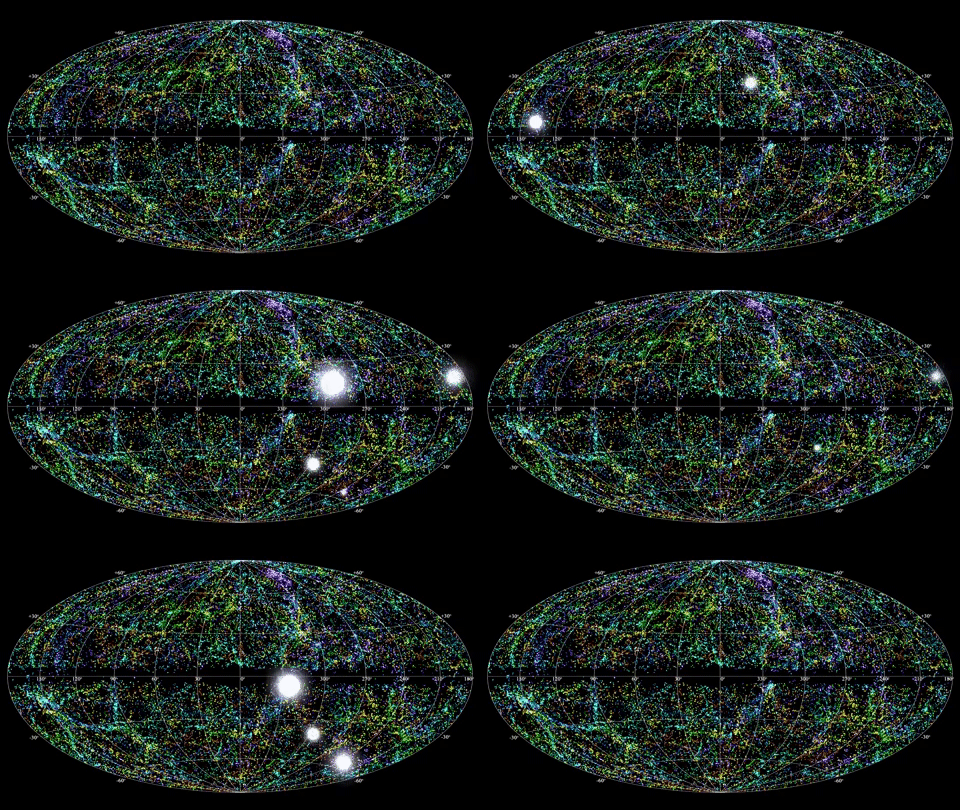
- 2018–2023: The activation of the CHIME telescope marked a watershed moment for observational astronomy. Armed with a design optimized for surveying large swathes of the northern sky, CHIME drastically accelerated the rate of discovery. Within its first year of operation, the facility quadrupled the global catalog of known FRBs, ultimately recording 4,539 distinct bursts originating from 3,641 unique sources over a five-year period.
- Early 2024–Present: The installation of "The Logos" opened at Oulu Cathedral in Finland, offering daily public presentations of sonified CHIME data. The exhibition is slated to run through the end of the year, culminating in specialized live performances that blend acoustic human vocalizations with live keyboard interpretations of space signals.
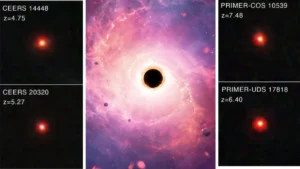
- Recent Discoveries: Astronomers utilizing advanced instrumentation, including the James Webb Space Telescope (JWST), successfully pinned down the host galaxy of the most distant FRB ever recorded. This particular burst occurred when the universe was only about 3 billion years old, shedding new light on the environments that foster these extreme cosmic events.
Supporting Data and Astrophysical Context
Fast radio bursts are among the most cataclysmic events in the observable universe. In a mere millisecond, a single FRB can release an amount of energy equivalent to the total energy output of our sun over a span of three days. To briefly put this into perspective, these flashes often outshine entire host galaxies before vanishing into the cosmic void just as quickly as they appeared.
The signals utilized in "The Logos" installation vary wildly in age, providing a cross-section of deep cosmic history. According to project documentation, the youngest bursts featured in the composition were emitted approximately 50 million years ago—light-years ahead in terms of human evolution, yet relatively recent on a geological scale. Conversely, the oldest signals integrated into the installation began their journeys between 8 and 9 billion years ago, meaning the radio waves traversing the cathedral speakers were generated during an era when the Milky Way was still in its relative infancy.
The hunt for the central engine driving FRBs has dominated modern high-energy astrophysics. For years, scientists debated whether these events were caused by cataclysmic, one-time mergers—such as the collision of two neutron stars—or by recurring phenomena tied to active stellar remnants. Recent observations, particularly those involving the James Webb Space Telescope analyzing the host galaxies of distant bursts, have complicated the merger hypothesis. JWST revealed that one of the most distant FRBs originated within a remarkably small, young, star-forming dwarf galaxy. Because neutron star mergers typically require billions of years of orbital decay before colliding, the youth of the host galaxy aligns more closely with an alternative model: young, hyper-magnetic neutron stars known as magnetars. These objects are born from the explosive deaths of massive stars and are capable of unleashing repeated, high-intensity flares shortly after formation.
Official Responses and Institutional Perspectives
The collaborative effort between academia and the arts has drawn praise from both scientific and cultural communities, bridging the gap between abstract academic research and public engagement.
"The fast flashes will echo as snare-like beats bouncing through the cathedral," Kiyoshi Masui noted in a statement released by the Massachusetts Institute of Technology regarding the unique nature of the project. Masui emphasized that the sonification process is not merely an artistic exercise, but one rooted deeply in empirical data. "It should feel rich and layered, while also revealing something real about how these signals travel across billions of years of cosmic space before reaching Earth."
Andrew Melchior expanded on the interactive nature of the installation in communications with science journalists, detailing plans for an upcoming live performance scheduled for November 21. During this special event, 30 vocalists will occupy spaces among the audience, singing in Finnish as a direct acoustic response to the sky while Melchior manipulates live FRB data from a keyboard. This dynamic call-and-response format seeks to establish a symbolic dialogue between human culture and deep-space phenomena.
Broader Impact and Implications for Science Communication
The translation of astronomical data into human-accessible sensory formats represents a growing trend in modern science communication. As datasets grow exponentially larger—driven by next-generation observatories like the Vera C. Rubin Observatory and the Square Kilometre Array—traditional methods of data visualization are increasingly complemented by alternative sensory modalities, including sonification.
Beyond its value as a tool for public outreach, sonification offers researchers an intuitive method for parsing complex datasets. The human auditory system is remarkably adept at recognizing patterns, temporal changes, and subtle variations in pitch and timbre that might otherwise go unnoticed in traditional two-dimensional graphs or numerical spreadsheets. By converting multi-frequency radio dispersion curves into audible sweeps, composers and physicists are pioneering new ways to interrogate astronomical archives.
Furthermore, installations like "The Logos" serve a vital cultural function by democratizing complex scientific concepts. Astronomy often deals with scales of time and space that defy human intuition—billions of light-years, milliseconds of duration, and energies equivalent to billions of stars. By bringing these signals down to Earth and allowing audiences to physically hear the acoustic fingerprint of intergalactic gas and ancient stellar explosions, the project fosters a profound sense of connection between humanity and the broader cosmos. As scientific instruments continue to peer further back into the history of the universe, creative collaborations ensure that the wonders of deep space remain accessible, resonant, and deeply moving to all who listen.