White House Threatens Democratic Lawmakers With Criminal Investigations Over Planned Oversight Probes

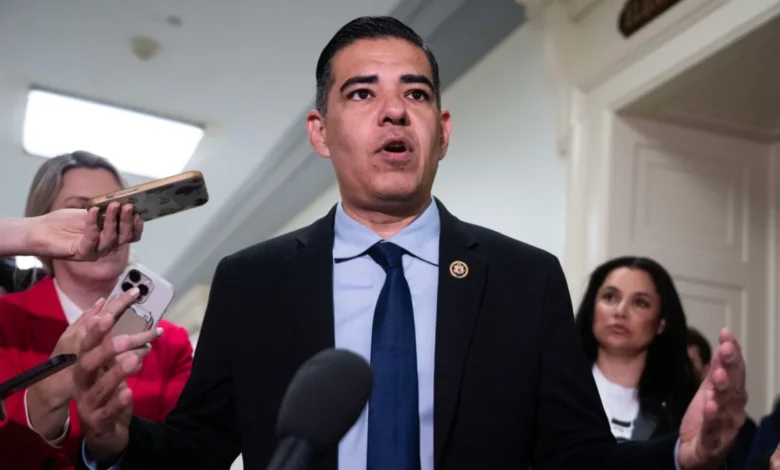
The escalating friction between the executive branch and the legislative branch reached a new intensity this week as the White House issued a stark warning to incoming Democratic leaders, threatening criminal investigations into lawmakers who have signaled their intent to launch oversight probes into the Trump administration. The confrontation centers on the constitutional boundaries of congressional oversight, a recurring point of contention in American politics that has now been elevated by the threat of legal repercussions for members of the House of Representatives.
Will Scharf, serving as White House counsel, formally communicated this stance in a letter directed to Representative Robert Garcia (D-Calif.), who is slated to assume the role of Chair of the House Oversight Committee when the new Congress convenes in January. In the correspondence, Scharf cautioned that the administration would not stand idly by while Democrats pursue what he described as a campaign of harassment disguised as legislative oversight. The letter specifically cited the Constitution’s “foundational limits,” asserting that congressional investigations must be tethered to a legitimate legislative purpose. According to the White House, the proposed investigations lack such a basis and, therefore, constitute a "clear abuse of power" that interferes with the lawful functioning of the federal government.
The Constitutional Tug-of-War
The dispute hinges on the interpretation of Article I of the U.S. Constitution, which grants Congress the power of oversight, and Article II, which establishes the executive branch’s authority. Historically, the Supreme Court has provided broad latitude to Congress to conduct inquiries. Landmark cases, such as McGrain v. Daugherty (1927) and Watkins v. United States (1957), have consistently upheld the principle that the power to investigate is an essential corollary to the power to legislate.
Legal scholars note that the judiciary has generally been reluctant to police the motives of Congress, provided that the investigation is directed toward a subject on which legislation could be had. However, the Trump administration’s current stance suggests a more aggressive legal strategy—one that seeks to frame these inquiries not as legislative oversight, but as political interference, potentially opening the door to criminal referrals or civil litigation against lawmakers themselves.
Chronology of the Escalating Rhetoric
The tension has been building since the November elections, which resulted in a Democratic majority in the House. The timeline of this confrontation underscores the rapid transition from campaign promises to institutional deadlock:
- November 4, 2026: Representative Analilia Mejia (D) signaled an aggressive stance on social media, stating, “We’re going to toss out subpoenas like Mardi Gras beads.” This rhetoric served as a catalyst for the White House’s current pushback.
- Early November 2026: Rep. Robert Garcia appeared on various media platforms, including MS NOW, outlining plans to coordinate with state attorneys general to gather information that could facilitate legal challenges against administration officials.
- November 11, 2026: Will Scharf issued the formal letter to Rep. Garcia, formally articulating the administration’s threat of legal action against members of the Oversight Committee.
- November 12, 2026: President Trump amplified the message on social media, characterizing the proposed Democratic oversight strategy as “extortion at the highest level” and calling for accountability for those involved.
- Mid-November 2026: Rep. Garcia issued a formal response, reaffirming the committee’s intent to proceed with its investigative agenda, citing constitutional authority.
The White House Position and Public Statements
The White House’s legal argument relies on the assertion that the proposed investigative blitz is devoid of policy substance. By highlighting specific social media posts—such as Rep. Mejia’s comment regarding the issuance of subpoenas—the White House is attempting to build a record of "political animus." The administration’s legal team argues that when an investigation is motivated primarily by a desire to harass political opponents rather than to inform future legislation, it loses its constitutional protection.
President Trump has consistently echoed these sentiments, framing the legislative branch’s oversight powers as a weaponized instrument of the political opposition. By framing the issue as "extortion," the administration is attempting to shift the public narrative from one of government accountability to one of political persecution, a strategy that seeks to delegitimize the committee’s work before it even begins.
Rep. Garcia and the Congressional Defense
Representative Garcia’s response to the White House letter was swift and defiant. In an official statement, he emphasized that the authority of the House Oversight Committee is derived directly from the Constitution and is not contingent upon executive approval.
“Let’s be clear: Congress’ authority comes from Article I of the Constitution, not from the permission of the White House,” Garcia wrote. He argued that the American electorate provided a clear mandate during the recent election to investigate corruption and administrative abuse. Garcia and his colleagues contend that the White House’s threats are, in themselves, an unconstitutional attempt to impede the oversight process and undermine the system of checks and balances.
Broader Implications for Governance
The threat of criminalizing political opposition marks a dangerous departure from standard norms of governance. If the executive branch successfully intimidates the legislative branch into silence, it could fundamentally alter the power dynamic in Washington.
Observers from both sides of the aisle have expressed concern about the precedent this creates. If administration lawyers begin investigating members of Congress for the exercise of their oversight duties, the result could be a total breakdown in inter-branch communication. This would likely lead to a surge in protracted litigation, as both the House and the White House would be forced to seek judicial intervention to resolve the validity of every subpoena issued.
Furthermore, the involvement of state attorneys general in the Democrats’ strategy adds another layer of complexity. If federal officials are targeted by state-level investigations, the federal government may attempt to invoke the Supremacy Clause to block such actions, leading to a complex multi-jurisdictional legal battle that could reach the Supreme Court.
The Legal Landscape of Congressional Subpoenas
Courts have historically been wary of interfering in the legislative process. In the landmark case Trump v. Mazars USA, LLP (2020), the Supreme Court established a balancing test for congressional subpoenas directed at a sitting president’s personal records. While the Court recognized the need to protect the executive from harassment, it also affirmed the legislature’s right to access information relevant to its duties.
However, the current administration’s argument appears to be an attempt to push past the Mazars framework, seeking to establish that even the threat of investigation is a violation of law if it can be proven to be politically motivated. Whether a federal judge would accept such a premise remains highly doubtful, as it would require the court to sit in judgment of the subjective intentions of elected representatives—a task that is notoriously difficult and politically fraught.
Conclusion: A Looming Institutional Crisis
As January approaches, the stage is set for a significant institutional showdown. The House Oversight Committee, under the leadership of Rep. Garcia, appears committed to pursuing its agenda, while the White House shows no signs of backing down from its threat of legal retribution.
The outcome of this standoff will have profound implications for the future of American governance. It will test the resilience of the separation of powers and determine whether the legislative branch still possesses the practical, as well as the theoretical, authority to hold the executive branch accountable. As both sides prepare for the start of the new legislative session, the legal and political communities are bracing for what promises to be one of the most contentious periods of constitutional litigation in recent history. The question is no longer just about the content of the records or the nature of the investigations; it is about the very mechanisms by which the American government remains transparent and accountable to the public it serves.