Tim Tebow pauses relationship with financial seminar company Life Surge following investigation into predatory sales practices

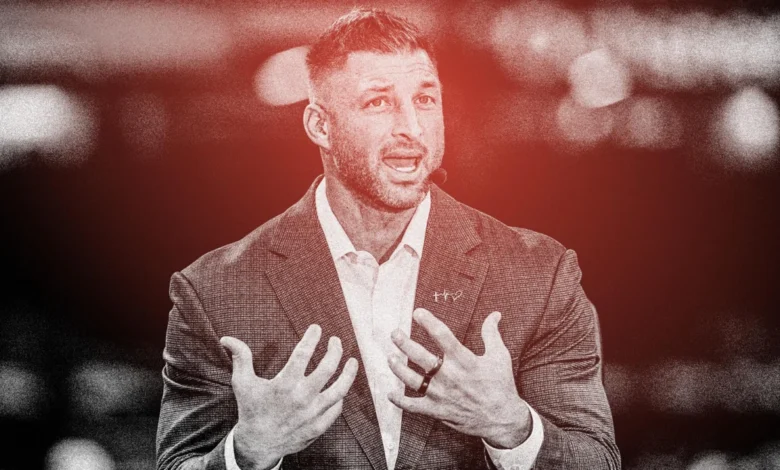
Legendary college football icon and former NFL quarterback Tim Tebow has officially announced he is pausing his professional relationship with Life Surge, a Christian-focused financial seminar company, following a bombshell investigative report detailing allegations of predatory sales tactics. The decision, confirmed by Tebow during an appearance at a Southeastern Conference (SEC) event on Friday, marks a significant turning point for the six-year-old organization, which had leaned heavily on Tebow’s high-profile status to legitimize its business model.
The investigation, a joint effort between Mother Jones and the production team behind Pablo Torre Finds Out, highlighted a pattern of complaints from participants who alleged that Life Surge salespeople leveraged religious sentiment to aggressively upsell expensive financial courses. According to these reports, many attendees were persuaded to invest significant sums—often reaching tens of thousands of dollars—into programs that failed to deliver the promised financial returns, leaving some customers in precarious economic situations.
The Anatomy of the Allegations
The core of the controversy centers on the intersection of faith-based messaging and high-stakes financial seminars. Life Surge has long marketed itself as a bridge between Christian values and wealth creation, promising attendees a path to financial freedom through strategic investment education. However, the investigation suggests that the company’s internal culture encouraged a “gospel of high yields” that prioritized aggressive enrollment over the actual financial well-being of the participants.
Former customers cited in the report described high-pressure sales environments where their religious devotion was used as a tool to bypass typical skepticism regarding the efficacy of the programs. By framing the purchase of these courses as an act of faith or a necessary step toward stewardship, the sales representatives allegedly manipulated attendees into committing to financial packages that were often beyond their means.
A Timeline of Events and Recent Developments
The timeline leading to Tebow’s departure reflects the rapid speed at which public scrutiny can shift corporate partnerships.
- September 24, 2026: The investigative report is published, outlining specific complaints from former clients and analyzing the company’s sales tactics.
- September 25, 2026: While attending an anti-human trafficking conference, Tebow is informed of the findings. Later that day, at an SEC-related appearance, he publicly confirms the decision to pause his involvement.
- September 25, 2026 (Afternoon): Life Surge CEO Jeremy Nosek issues a formal statement expressing disappointment in the characterization of the company while acknowledging Tebow’s decision to step back pending an internal review.
Before this abrupt suspension, Tebow had been a central figure for Life Surge, with a schedule that included appearances at 10 separate events slated for the remainder of 2026. His association provided the company with a veneer of moral authority, a critical asset for a business operating in the competitive and often skeptical world of personal finance seminars.
The Company’s Defense
In response to the mounting pressure, Life Surge has maintained a posture of defiance. CEO Jeremy Nosek’s emailed response to the news cycle did not offer a retraction of the company’s methods, but rather a doubling down on its mission. “We strongly disagree with the characterization of our company presented in recent reporting,” Nosek wrote. “We will not apologize for who we are, what we believe, or the work we do.”
Nosek further noted that the company respects Tebow’s decision to conduct his own due diligence. By framing the departure as a mutual agreement to gather facts, the company appears to be attempting to mitigate the reputational damage that inevitably follows the loss of a major celebrity spokesperson. However, the company’s categorical denial of the “improper sales tactics” described in the report puts it at odds with the testimonials provided by the individuals who claim to have been harmed.
The Broader Context of Faith-Based Marketing
The case of Life Surge is not an isolated incident but rather the latest example of a growing trend in the American marketplace: the rise of "affinity fraud" or predatory practices within niche, faith-based communities. These groups often operate with a high degree of trust, as members are predisposed to believe that a shared religious identity guarantees ethical behavior.
Financial analysts and consumer protection advocates have long warned that when financial products are sold primarily through the lens of faith, critical analysis is often sidelined in favor of emotional connection. In such environments, the vetting process for investment strategies is frequently bypassed, and the standard “buyer beware” warnings are replaced by a sense of spiritual imperative.
Implications for Celebrity Endorsements
For Tim Tebow, the situation presents a complex challenge to his personal brand, which is built on a foundation of faith, integrity, and community service. His immediate reaction—stating that he was “caught off guard” and that his team takes the allegations “extremely seriously”—suggests a recognition that his association with a company under fire for predatory behavior could cause lasting damage to his public image.
In the world of modern celebrity, an endorsement is not merely a commercial transaction; it is a transfer of credibility. When that credibility is compromised by the actions of the partner organization, the celebrity is often forced into a reactive damage-control phase. The challenge for Tebow now lies in how he manages the "investigation" he promised. Should his team discover systemic issues within Life Surge, the decision to pause the relationship may quickly evolve into a permanent severance.
Financial and Legal Risks Ahead
The long-term implications for Life Surge remain uncertain. Should the allegations of deceptive trade practices gain traction, the company may face more than just the loss of celebrity endorsements. Regulatory bodies, including the Federal Trade Commission (FTC) and state-level attorneys general, frequently investigate companies that use misleading sales tactics to extract money from consumers, particularly when those tactics involve systematic, high-pressure environments.
Furthermore, if the complaints from participants are found to represent a widespread pattern, Life Surge could face potential class-action litigation. Such legal battles are notoriously difficult for seminar-based companies to survive, as they often rely on the constant inflow of new capital from new attendees to sustain their operations.
Analysis of the Industry Landscape
The sector of "financial empowerment" seminars is a multi-billion dollar industry that often exists in a regulatory gray area. Because these companies often sell "education" or "coaching" rather than regulated financial products like securities, they are not always subject to the same rigorous oversight as licensed financial advisors.
This regulatory gap allows organizations to promise outsized returns and employ aggressive sales tactics that would be illegal in the traditional banking or investment sector. The investigation into Life Surge serves as a wake-up call for consumers to scrutinize the business models of organizations that claim to combine religious alignment with financial gain.
Moving Forward: Accountability and Transparency
As the situation develops, the public will be looking to see if Life Surge changes its operational model or if it continues to hold firm to its current sales strategies. For Tebow, the incident underscores the risks inherent in deep-tier partnerships with private, niche-market companies.
The outcome of the internal investigation by Tebow’s team will likely determine whether this is a temporary setback for the company or the beginning of a larger institutional collapse. For now, the move by the former quarterback has effectively neutralized the immediate threat to his own reputation, but the questions surrounding Life Surge’s business practices are only just beginning to be answered. The saga serves as a reminder of the vital importance of financial literacy and the necessity of maintaining healthy skepticism, even when a pitch is delivered in the language of faith.
Related posts: