Protesters Reclaim the Streets as Benjamin Netanyahu Addresses the United Nations Amidst Growing Political Defiance

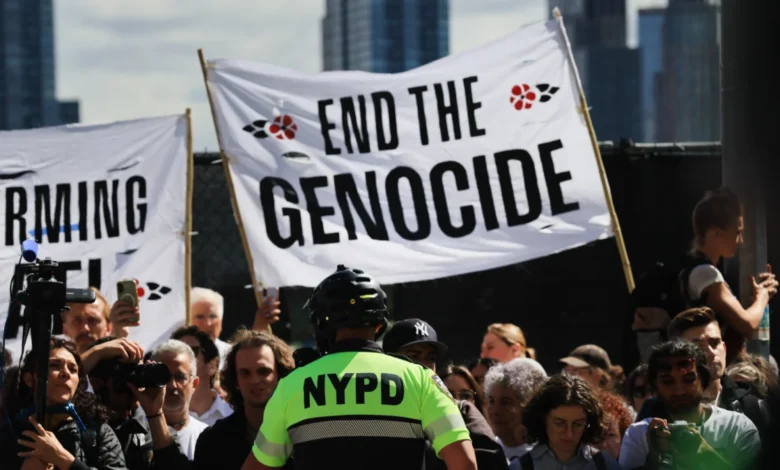
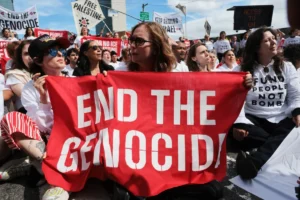
The arrival of Israeli Prime Minister Benjamin Netanyahu at the United Nations General Assembly in New York City on September 24, 2026, served as a flashpoint for renewed activism, challenging the narrative of a silenced protest movement. For months, the momentum of demonstrations regarding the war in Gaza had appeared to wane, hampered by a combination of state-level repression, the deportation of activists, and stringent legal measures imposed by the Trump administration. However, the presence of the Israeli leader at the UN headquarters catalyzed a resurgence of civil disobedience that drew thousands to the streets, signaling that the movement for Palestinian rights remains a potent force in American civic life.
A Chronology of Escalation and Repression
The landscape of protest in New York City has undergone a significant transformation since the early months of the conflict. In late 2023 and early 2024, the city witnessed widespread disruptions, including the tactical blocking of major bridges and tunnels and high-profile occupations of landmarks like the Statue of Liberty. These actions were met with a robust response from law enforcement and federal agencies.
Throughout 2025 and into 2026, the federal government intensified its efforts to quell the unrest. Under directives from the Trump administration, the Department of Homeland Security and local law enforcement focused on targeting the leadership structures of protest organizations. Reports of mass arrests, the revocation of student visas for international activists, and the systematic use of federal charges to deter organizers created a "chilling effect" on public discourse. By the spring of 2026, while the conflict in Gaza continued unabated, the visible manifestation of dissent on the streets of New York had largely retreated into quieter, more localized forms of advocacy.
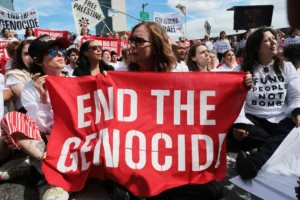
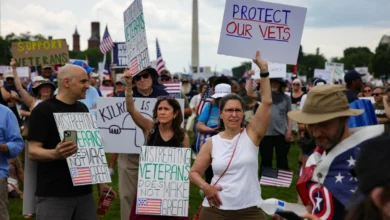
The events of September 24 represented a definitive break from this trend. As Netanyahu prepared to address the General Assembly, hundreds of demonstrators coordinated a strategic blockade of roads leading to the UN complex, effectively encircling the diplomatic hub in a human chain. By the afternoon, the crowd had swelled into the thousands, with participants characterizing the turnout as a return to the peak mobilization levels seen in early 2024.
The Political Shift: A New Wave of Elected Officials
Perhaps the most significant development during this week of protests was the visible participation of newly elected officials and congressional candidates. Unlike the protests of previous years, which were primarily driven by grassroots activists and non-governmental organizations, the September 24 mobilization saw a coalition of political figures who have built their platforms on progressive, anti-war foundations.
The presence of figures such as Darializa Chevalier, the victor in the race for New York’s 13th congressional district, and candidates Chris Rabb, Melat Kiros, and Adam Hamawy highlighted a shift in the Democratic Party’s internal dynamics. These candidates, many of whom ran on platforms explicitly critical of current U.S. foreign policy toward Israel, have signaled their intent to leverage their legislative authority to challenge the status quo once they assume office.
Chris Rabb, a state legislator from Philadelphia, emphasized that this new cohort of lawmakers is operating independently of traditional institutional pressures. "There is a group of folks coming into Congress who are not being tethered to corporate money and to institutionalists," Rabb stated while participating in the blockade. He added that these members intend to utilize every legislative tool available—including oversight committees, budgetary challenges, and public floor debates—to scrutinize the U.S. involvement in the ongoing conflict.
Official Responses and the Stance of City Leadership
The political tension surrounding the Prime Minister’s visit was mirrored in the statements of local leadership. New York City Mayor Zohran Mamdani, known for his progressive stance, issued a stern critique of the Israeli government’s actions. While the Mayor did not physically join the picket lines, his remarks to the media reflected a alignment with the protesters’ core concerns.
"When it comes to Benjamin Netanyahu, I have described him as I believe him to be: a war criminal and an architect of a horrific genocide of the Palestinian people," Mamdani said during an interview with CNN. His comments were specifically calibrated to address the International Criminal Court’s (ICC) ongoing legal considerations regarding potential war crimes warrants. By stating that no individual should be considered above international law, Mamdani placed the city’s administrative perspective at odds with the federal government’s unwavering support for the current Israeli administration.
Supporting Data: Arms Sales and Economic Ties
The intensity of the protests is contextualized by the continued flow of military and financial support from the United States to Israel. On September 15, 2026, the White House approved a $2.8 billion arms package, the latest in a series of military sales that have drawn criticism from human rights groups and international observers. According to data from the Stockholm International Peace Research Institute (SIPRI) and various domestic watchdogs, the scale of military aid provided since the start of the conflict has reached unprecedented levels, sparking intense debate regarding the role of American-made munitions in the humanitarian crisis in Gaza.
Protesters and advocacy groups have now shifted their focus from general demonstrations toward specific economic leverage points. Nas Issa, an organizer with the Palestinian Youth Movement, articulated a strategy aimed at institutional divestment. The proposed demands include:
- Divestment of Municipal Funds: The removal of city pension funds from Israeli bonds and companies tied to the defense industry.
- Regulatory Scrutiny: Investigations into the tax-exempt status of charitable organizations currently facilitating the shipment of supplies to West Bank settlements, which are deemed illegal under international law.
- Local Policy Enforcement: Ensuring that local jurisdictions, which have historically cooperated with federal agencies on surveillance and immigration enforcement, cease the sharing of resources with entities involved in the suppression of protest movements.
Broader Implications and Future Outlook
The resurgence of mass protest in New York City suggests that the political cost of the conflict in Gaza is far from settled. As the 2026 election cycle concludes and a new session of Congress approaches, the alignment between grassroots activists and a new generation of federal lawmakers could lead to a legislative gridlock on foreign aid packages.
Furthermore, the participation of cultural figures—such as actors Hannah Einbinder and Susan Sarandon, both of whom were detained during the September 24 demonstrations—indicates that the movement has maintained its ability to capture mainstream media attention, ensuring that the issue remains at the forefront of the national conversation.
While the federal government maintains its diplomatic and military trajectory, the events at the United Nations have underscored a widening gulf between national policy and local political sentiment. The willingness of candidates and elected officials to face arrest signifies a shift from symbolic protest to a more direct, confrontational style of legislative advocacy. Whether this strategy will lead to tangible changes in U.S. foreign policy remains a subject of intense debate, but the events of September 24 confirmed that the movement for Palestinian rights is not merely surviving—it is evolving into a more institutionalized and politically entrenched force.
As the international community continues to monitor the situation in Gaza, the streets of New York remain a critical barometer for the domestic impact of foreign conflicts, ensuring that for as long as the violence persists, the debate over American complicity will remain central to the city’s, and the nation’s, political life.
Related posts: