
Apple Watch Audio Intelligence Developer Beta Raises Privacy and Functionality Questions Following Siri Recap Testing

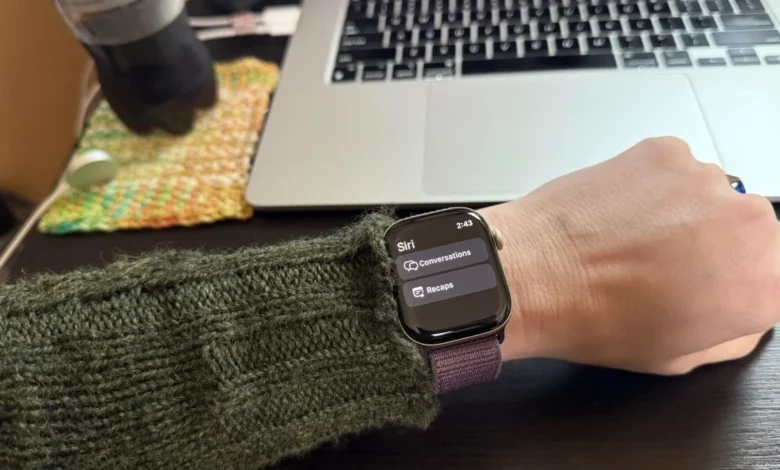
Apple’s latest foray into ambient computing and audio intelligence has moved from the conceptual stage to hands-on developer testing, bringing with it a complex mixture of technological capability and acute privacy concerns. Following initial announcements made in September regarding the company’s expanded artificial intelligence framework, the developer beta introducing the "Siri Recap" feature has arrived on supported hardware. Over the past 24 hours of continuous field testing, the feature has demonstrated a profound ability to passively capture, transcribe, and summarize everyday human speech, sparking intense debate over the boundaries of personal data collection, surveillance culture, and consumer utility.
The functionality, which operates as part of a suite of four distinct audio intelligence capabilities built for high-end Apple devices, continuously listens to the user’s acoustic environment. It automatically segments the captured audio into hourly blocks, synthesizing offhand remarks, lengthy discussions, and ambient chatter into bulleted summaries. While proponents of ambient computing view this as a significant milestone in proactive digital assistance, critics and early testers note that the psychological impact of being systematically summarized by an algorithm is remarkably unsettling.
Main Facts and System Architecture
The Siri Recap feature is currently restricted to early-access software development kits, requiring specific flagship hardware to process local machine learning workloads. To run the developer beta, users must pair an Apple Watch Series 12 or Apple Watch Ultra 4 with an iPhone 16 or newer model (excluding the iPhone 16e). Once updated to software version 27.3, users can navigate to the Watch application, access the Siri settings submenu, and toggle the feature into active status.
Unlike traditional dictation or recording applications, Siri Recaps intentionally omit speaker identification markers and raw audio transcripts. The system relies entirely on on-device neural engines to interpret acoustic inputs, abstracting them into thematic summaries without preserving the verbatim audio file. This design choice serves a dual purpose: it mitigates massive cloud storage requirements for continuous audio streams and creates a legal boundary regarding consent, as no permanent recording exists to prove the exact phrasing used by conversational participants.
Despite these privacy-oriented guardrails, the system’s operational mechanics remain opaque. Users are required to establish a passcode on their wearable device and undergo an automated hardware security protocol to upgrade their local audio connection pathways. A dedicated toggle within the Apple Watch Control Center allows users to manually interrupt the listening process, though failure to engage this manual override results in continuous, uninterrupted ambient monitoring during scheduled operational windows.
Chronology of Audio Intelligence Developments
The introduction of Siri Recaps represents the culmination of a multi-year hardware and software development cycle focused on ambient artificial intelligence.
- September: Apple officially unveils its broader "Audio Intelligence" framework, showcasing headline features such as "Live Rewind" during a major product presentation. The demonstration highlights a server reading restaurant specials aloud while a customer reviews the live text readout on their Apple Watch.
- Late Fall: Internal testing and developer kit distribution begin for foundational machine learning models capable of low-latency audio processing on wrist-worn form factors.
- Current Phase: Apple releases software version 27.3 to registered developers, deploying Siri Recaps alongside Live Rewind to compatible devices including the iPhone 16 Pro and select Apple Watch variants. Early adopters begin field-testing the system’s accuracy, retention limits, and psychological implications in everyday social environments.
Supporting Data and Functional Limitations
Early evaluations of the developer beta reveal substantial gaps between the promise of ambient intelligence and its execution. While the underlying speech-to-text translation engines successfully capture surface-level keywords, the contextual synthesis frequently struggles with complex human interactions.
During testing across various environments—ranging from routine family errands and academic libraries to structured musical rehearsals—the system displayed distinct patterns of reliability and failure. When a conversation remained tightly focused on a single, uncomplicated subject, the resulting recap occasionally highlighted specific numeric data, calendar dates, or factual reference points with notable accuracy. However, when multiple subjects overlapped or casual interruptions occurred, the software regularly conflated distinct topics.
For instance, discussions concerning unrelated subjects—such as household administrative tasks, family health prognoses, and academic coursework—frequently merged into single, highly distorted summary blocks. In one documented instance, a discussion regarding a family member’s medical prognosis was attributed incorrectly to a paternal figure, while book recommendations frequently omitted core titles while retaining fragmented thematic elements. Furthermore, the system routinely failed to capture nuanced argumentative structures. When users engaged in debates regarding complex futuristic scenarios, such as space colonization, the resulting summaries documented general thematic skepticism while entirely omitting opposing viewpoints, individual rationales, or speaker attribution.
Intriguingly, preliminary observations suggest that the software may incorporate built-in environmental filters. During localized tests in musical settings, such as choral practice sessions, the algorithm successfully captured pre- and post-rehearsal conversations while remaining entirely inert during active vocal performances or high-volume instrumental accompaniments. Whether this behavior stems from deliberate heuristic programming designed to ignore music or mere hardware limitations in processing complex acoustic environments remains unverified by official documentation.
Official Responses and Technical Scope
Apple positions its audio intelligence suite as a productivity enhancement designed to reduce cognitive load and help users retain transient information encountered throughout a busy day. The company emphasizes that data privacy is maintained through localized processing architectures, ensuring that conversational summaries do not leave the user’s encrypted device ecosystem unless explicitly exported by the user.
Privacy advocates, however, have raised substantial questions regarding the ethical implications of ambient computing in public and semi-private spaces. While the absence of a raw audio recording protects users from permanent wiretap liabilities, the passive ingestion of spoken dialogue without the explicit, informed consent of surrounding participants creates a social friction point. Individuals interacting with a device wearer are frequently unaware that their casual remarks are being systematically synthesized and stored for subsequent review, even if the retention window is temporally limited to approximately one week before automatic deletion occurs.
Broader Impact and Industry Implications
The rollout of Siri Recaps highlights a broader technological pivot across the consumer electronics industry toward continuous, ambient artificial intelligence. As neural processing units embedded within smartphones and wearables become increasingly powerful, the technical barrier to continuous environmental monitoring has effectively disappeared.
However, the user experience reported during this developer phase underscores the immense distance between capturing raw audio data and achieving genuine semantic comprehension. True understanding requires not merely the translation of speech into text, but an accurate model of human intent, relational context, and logical nuance—capacities that current large language models still struggle to maintain in unstructured, real-world social settings.
For consumers, the utility of such features remains heavily dependent on personal risk-tolerance regarding privacy versus the marginal convenience of automated daily summaries. As the software matures past the developer beta stage and approaches wider public release, Apple will likely face continued scrutiny from regulators, privacy groups, and end-users regarding how consent is managed in environments where devices are perpetually listening, summarizing, and quietly reauthoring the narrative of daily life.