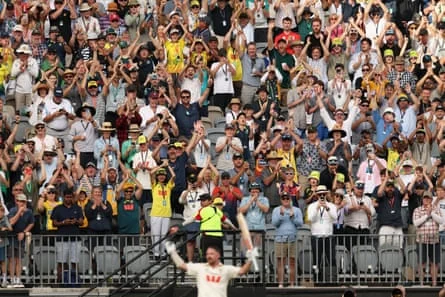
The intensity of the "Bazball" era, which dominated headlines during the previous tour, has dissipated. While Brendon McCullum remains at the helm of the limited-overs side, the aggressive, ideological branding that defined England’s Test approach is noticeably absent from the current discourse. The squad, led by Harry Brook, is focused on the practicalities of a transitional period rather than the performative bravado that previously invited intense scrutiny from the Australian media.
A Shifting Narrative in the West
Twelve months ago, the local press in Perth was preoccupied with picking apart England’s leadership, labeling Ben Stokes a "Cocky Complainer" and dismissing Joe Root as "Average Joe." Today, the narrative has moved on entirely. The focus of the Australian sporting public is no longer on England’s vulnerabilities, but on an internal reckoning within Cricket Australia.
The catalyst for this shift is Usman Khawaja’s recently published autobiography, Sabr. The memoir has reignited the volatility surrounding the 2018 Cape Town ball-tampering scandal, colloquially known as "Sandpapergate." By dedicating 22 pages to the controversy—and suggesting that the practice of ball manipulation was more prevalent among the Australian squad during the 2017-18 Ashes than previously admitted—Khawaja has thrust the ghost of the past into the center of the current tour’s buildup.
The Straight Bat of Joe Root
On Wednesday, Joe Root, arguably England’s most recognizable figure, addressed the media ahead of his 200th ODI appearance. Root, a veteran of the 2017-18 Ashes tour, demonstrated his trademark composure. When pressed on whether he believed the hosts were tampering with the ball during that series, Root declined to speculate.
"I can only speak from my own experiences," Root stated, offering a measured response to the recurring claim that such practices were widespread across international cricket before the 2018 intervention. "That is not how I feel," he added, effectively shielding his side from the peripheral noise. Root’s ability to navigate these questions highlights the contrast between the current tour and previous iterations; England is no longer looking for conflict, but is instead focused on the immediate task of preparing for next year’s World Cup.
Contextualizing the Sandpaper Saga
To understand the current tension, one must look back to March 2018. During the third Test against South Africa in Cape Town, Cameron Bancroft was caught on camera using sandpaper to alter the condition of the ball. The resulting investigation led to year-long bans for captain Steve Smith and vice-captain David Warner, and a nine-month ban for Bancroft.

For years, the narrative remained that the incident was an isolated moment of madness. Khawaja’s book challenges this, claiming the practice was an open secret within the dressing room. Cricket Australia has formally ruled out reopening an investigation, citing the lapse in time and the flawed nature of the original 2018 inquiry. However, the appetite for clarity remains high among the Australian public and media, placing pressure on current stars like Pat Cummins, Mitchell Starc, and Josh Hazlewood to address allegations that extend beyond the Cape Town event.
Team Preparations and Tactical Evolution
While the headlines are dominated by off-field controversy, England’s preparation for the white-ball series has been far more disciplined than in previous years. The squad has utilized the Waca for a proper tour match, a stark contrast to the threadbare preparations of the past.
The backroom staff has been significantly bolstered, reflecting a strategic move to address the team’s lackluster performance in a recent tri-series in Pakistan. The inclusion of Kevin Pietersen in a coaching capacity, alongside specialists recruited from the Kolkata Knight Riders, signals a concerted effort to refine the team’s technical approach to spin and high-pace conditions.
The Schedule and Selection Challenges
The current tour is governed by a punishing schedule, often described by players as a "sardine tin" calendar. The white-ball squad arrives following a physically demanding period, and rotation remains a necessity rather than a luxury.
Pat Cummins, Mitchell Starc, and Josh Hazlewood are notably absent from this white-ball series, a decision the Australian board maintains is based on workload management rather than a desire to avoid media scrutiny regarding the ball-tampering allegations. Starc, however, has already doubled down on the 2021 joint statement issued by the Australian bowlers, which categorically denied prior knowledge of the sandpaper incident. Whether captain Pat Cummins will be forced to clarify his position as the tour progresses remains a point of significant interest.
Broader Implications for the Sport
The controversy surrounding Khawaja’s book highlights the fragility of institutional reputations in modern cricket. The backlash against Khawaja—ranging from accusations of a "cash grab" to claims that he is undermining team unity—reflects the polarized nature of the debate.
The implications for Cricket Australia are twofold. First, it risks a permanent fracture in the public’s perception of the "win-at-all-costs" culture that defined the mid-2010s era. Second, it serves as a distraction that even the most seasoned players find difficult to ignore. For England, the implication is one of opportunity. By staying clear of the debate, the tourists have a rare chance to focus on their own development.
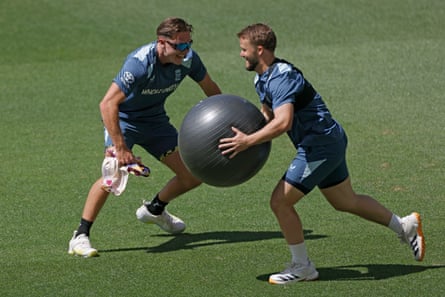
The 50-over format remains a priority for England as they recalibrate following the disappointing tri-series in Pakistan. The focus on developing young talent, such as Sonny Baker, alongside established anchors like Ben Duckett and Joe Root, is a testament to the long-term vision of the current coaching setup.
Looking Ahead: The Path to the World Cup
As the first ODI approaches, the cricketing world will be watching to see if the players can compartmentalize the external noise. Joe Root, who secured his first Test century on Australian soil during the 2025 Ashes, enters this series with a point to prove in the 50-over format.
The transition from the volatility of the Ashes to the technical requirements of white-ball cricket is rarely seamless, but England’s current posture suggests a team that has matured. They are no longer the "Poms" looking to provoke or be provoked; they are a professional unit operating in a landscape where the hosts are, for once, the ones dealing with the weight of their own history.
The series, starting this Friday, will serve as a bellwether for both teams. For Australia, it is an opportunity to assert dominance on the field while fighting to maintain control of the narrative off it. For England, it is a chance to reset, refine their tactical approach, and build momentum toward a World Cup that feels like the only relevant horizon in a sport currently preoccupied with the ghosts of 2018.
As the debate over Sabr continues to generate headlines, the cricket itself—the one-day internationals and the T20s—will ultimately dictate the tone of the tour. Whether the focus remains on the sandpaper of the past or the cricket of the future will be decided over the coming weeks at Optus Stadium and beyond. For now, the tourists seem content to let the hosts navigate the storm, focusing their energy on the technical challenges of the game at hand and the quiet, incremental improvement of their own ranks.
Related posts: