The Death of the Appalachian Democrat: How the Last Rural Stronghold in Kentucky Finally Faded Away

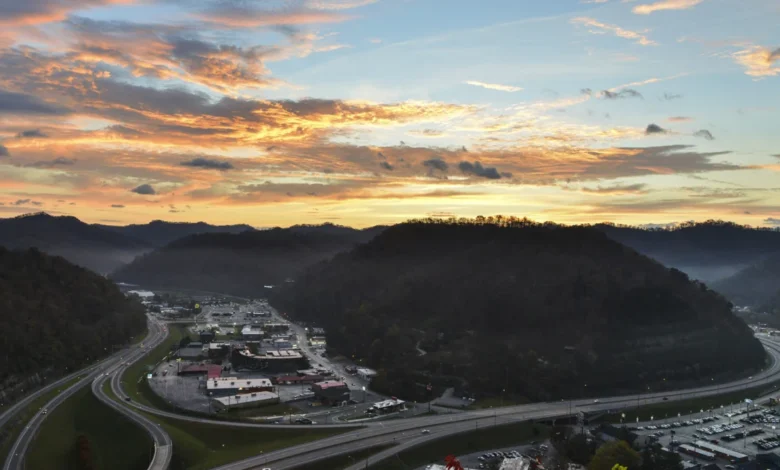
The political landscape of Kentucky has undergone a seismic shift that marks the end of an era for the American Democratic Party. While the national midterm elections saw a surge of Democratic enthusiasm and suburban gains across the United States, the Commonwealth of Kentucky witnessed the final erasure of rural representation for the Democratic Party in its General Assembly. With the loss of a state House seat based in Floyd County—a region historically synonymous with coal mining and Democratic loyalty—the party has effectively retreated entirely to the urban centers of Louisville, Lexington, and the northern suburbs near Cincinnati.
This development is not merely a statistical anomaly; it is a profound historical bookend. For decades, the mountainous eastern counties of Kentucky served as a bastion of the New Deal coalition. As recently as the 1972 presidential election, while the nation shifted toward a Republican realignment under Richard Nixon, Floyd County stood as a solitary island of Democratic resistance. That historical identity, built on the back of labor unions and a deep-rooted, populist political culture, has now been fully supplanted by a robust, state-wide Republican dominance that has successfully bridged the gap between rural mountain voters and the broader conservative movement.
A Chronology of Declining Influence
The erosion of the Democratic base in rural Kentucky was neither sudden nor unexpected. It has been a slow-motion realignment spanning more than five decades.
In the late 20th century, the "Bluegrass" model of politics relied on a conservative Democratic brand—lawmakers who were often socially traditional but economically populist. This allowed candidates to maintain a grip on the "holler" and the farm simultaneously. However, the 2016 cycle served as the primary inflection point. The loss of the Kentucky state House majority in 2016 signaled that the structural advantages the party had enjoyed for over a century were no longer sufficient to counter the growing nationalization of local politics.
By the early 2020s, the trend accelerated. In 2020, a significant symbolic blow occurred when veteran state Senator Johnny Ray Turner—a man who had survived legal scandals and political shifts—was defeated by a Republican with a confusingly similar name, Johnnie Lloyd Turner. This was not just a branding failure; it was a symptom of a district that had fundamentally stopped looking to the Democratic Party for representation. The recent 2026 election cycle simply finalized the process. The loss of the remaining state House seat in Floyd County represents the last point of failure in a rural strategy that had been on life support for years.
The Geography of the New Political Divide
The current map of Kentucky politics is starkly polarized by geography and population density. The Democratic Party, while successful in gaining seven seats in the state House and two in the state Senate during the most recent election, achieved these victories exclusively in suburban areas surrounding Louisville. These gains, while significant for urban advocacy, have had zero impact on the state’s legislative balance of power.
Republicans continue to hold a "super-duper majority" in both chambers of the Kentucky General Assembly. This legislative reality renders the Democratic Party’s urban victories largely symbolic, as the GOP retains the power to override any veto issued by Governor Andy Beshear. The Governor, whose personal popularity remains high despite his party’s rural collapse, has been forced to govern from a position of near-total legislative impotence.
The divide is best illustrated by the performance of statewide candidates. Despite the persistent popularity of Governor Beshear, who often polls well even among Trump-voting rural residents, the party’s legislative candidates have failed to transfer that goodwill to their own campaigns. The failure to leverage the Governor’s personal brand into down-ballot success suggests that voters are increasingly decoupling local and state legislative concerns from executive leadership.
Data and Demographic Realities
The collapse of the rural Democratic vote is rooted in a fundamental shift in the Appalachian economy. Historically, the coal industry provided the economic engine that fueled the union-heavy, pro-Democratic politics of the region. As coal production plummeted and the region suffered from persistent poverty and population decline, the social contract between the Democratic Party and the coalfields began to fray.
Data from recent election cycles shows a recurring pattern: even in districts where voters support Governor Beshear, the same voters reject the party’s legislative candidates by double digits. This phenomenon highlights a "split-ticket" reality that is becoming increasingly difficult to maintain. Progressive-populist efforts, such as the Senate campaign of Charles Booker, sought to appeal to a broad demographic from "the hood to the holler." While Booker showed improvement in his performance, the cold reality remains that he lost 117 of the state’s 120 counties. The Democratic base has effectively contracted into a small, geographically concentrated cluster of urban and suburban enclaves.
Institutional Responses and Internal Critique
The leadership of the Kentucky Democratic Party remains defiant, pointing to the successes in the suburbs as a blueprint for the future. Nat Turner, the party’s communications director, emphasized the strategic investments made during the cycle, noting that the party successfully flipped nine state legislative seats. According to official party figures, the Governor’s fundraising apparatus raised seven figures for the cycle, which was directed toward digital and mail-based outreach in contested suburban districts.
However, critics within the party and political analysts suggest that this strategy comes at a cost. There is a growing sentiment that the party has abandoned its duty to compete in rural areas entirely. One prominent Kentucky political commentator noted that while the Governor has maintained his personal brand, he has not effectively utilized his political capital to rebuild the party’s rural infrastructure. Instead, the focus has shifted toward nonpartisan judicial races and urban legislative targets, leaving the eastern and western rural reaches of the state to the Republican machine.
The Future of Kentucky Governance
As the 2027 gubernatorial race approaches, the stakes for both parties are high. Republicans are expected to field candidates like Congressman James Comer, who has maintained a strong, pugilistic brand of politics that resonates with the rural base. The Democratic challenge will be to determine whether to lean into a more progressive urban identity or to attempt a resurrection of the "compassionate conservative" model once perfected by figures like Rocky Adkins.
However, the recent movement of former party stalwarts—who have begun to backtrack on long-held social positions in favor of more liberal platforms—suggests that the party is moving away from the "conservative Democrat" mold that once allowed it to win in the mountains. Whether this evolution will alienate the remaining rural voters further or attract a new generation of urban voters remains the central question for the party’s survival.
Implications for the National Democratic Party
The situation in Kentucky serves as a microcosm for the broader challenges facing the Democratic Party across the United States. As rural areas continue to trend toward the GOP, the party’s reliance on suburban, college-educated voters is becoming an existential necessity. This shift carries significant implications for legislative strategy. If the party continues to lose its capacity to speak to rural constituents, it risks permanent minority status in many state-level legislatures across the South and Midwest.
The case of Richard Ojeda—a populist who found success in North Carolina’s growing suburban corridor after failing in his native West Virginia—is perhaps the most telling example of the modern Democratic reality. Even those who attempt to maintain a populist, working-class message are finding that their home regions have become inhospitable. The path to victory for the Democratic Party, at least in the short term, appears to be paved with concrete and suburban cul-de-sacs, rather than the valleys of the Appalachian coal country.
As the sun sets on the final rural representation in the Kentucky General Assembly, the Commonwealth provides a clear lesson: political coalitions are not static. The "Paducah to Pikeville" reach that defined Kentucky politics for generations has been broken, and the resulting vacuum is being filled by a political movement that has successfully consolidated the state’s rural identity. For the Democrats, the challenge now is not to reclaim the past, but to define a future in a state that is rapidly becoming a landscape of two distinct, and increasingly estranged, political worlds.