The Lingering Toll of Drought: New Research Reveals Delayed Tree Mortality in Papua New Guinea Rainforests

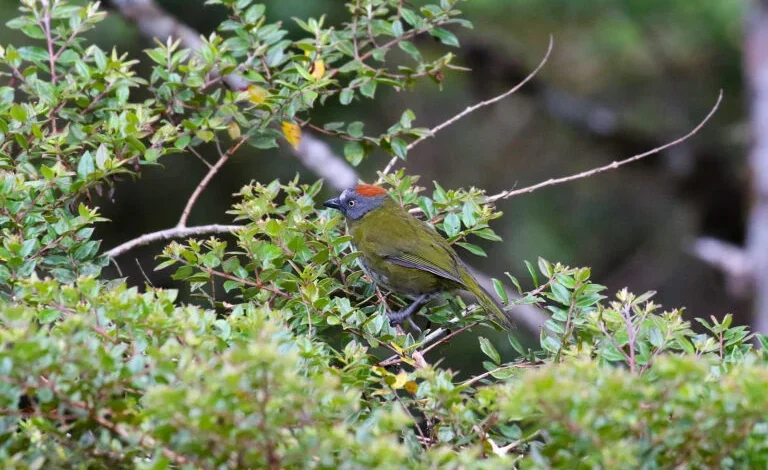
When the El Niño drought finally subsided in the dense, biodiverse rainforests of northern Papua New Guinea, observers might have expected the ecosystem to begin an immediate process of regeneration. Instead, the Wanang Forest Dynamics Plot—a 50-hectare research site serving as a critical window into tropical forest health—began to witness a haunting, silent collapse. According to a recently published study in the journal Biotropica, the most significant wave of tree mortality did not occur during the height of the 2015-17 drought, but in the years immediately following the return of seasonal rains.
This discovery challenges long-held assumptions regarding how tropical forests recover from extreme climate events. By tracking more than 21,000 individual trees, researchers have identified a "mortality lag," suggesting that the structural integrity of tropical rainforests may be far more fragile than previously understood.
A Chronology of Climatic Stress
The 2015-2017 El Niño event was one of the most intense in recorded history, triggering extreme meteorological shifts across the Pacific. In the Wanang region, the impact was immediate and measurable through the lens of precipitation. Before the onset of the drought, the dry season accounted for approximately 13.1% of the forest’s annual rainfall. During the peak of the El Niño event, that figure plummeted to a mere 5.2%.

As the drought took hold, the forest faced unprecedented water scarcity. However, the data reveals that the forest’s "death knell" did not ring when the water was scarcest. It was in the aftermath—the two-year period following the drought—that the rate of tree loss surged. This phenomenon of delayed mortality implies that the trees were not dying from a lack of water at the moment of death, but rather from the cumulative, systemic damage sustained during the dry period.
Topographic Sensitivity and Survival Patterns
One of the most striking revelations of the study is the role of terrain in survival. The Wanang research team observed a stark dichotomy in how different sectors of the forest responded to the environmental stress. Trees situated in valleys displayed a pattern of "acute" response: mortality was relatively high during the drought, but these trees showed signs of rapid recovery once rainfall normalized. In contrast, trees located on ridges exhibited a delayed, sustained increase in mortality that persisted long after the drought had officially ended.
The researchers hypothesize that this variance is fundamentally linked to hydrological retention. Valleys, by their nature, act as catchment areas for moisture, allowing trees to tap into deeper or more consistent water reservoirs. Ridge trees, however, are exposed to more wind and higher rates of soil erosion, which diminishes the ability of the landscape to store water. Once the drought ended, the ridge-dwelling trees were already compromised; the lack of moisture retention in the soil meant they could not capitalize on the return of the rain to repair damaged biological functions.
Biological Mechanisms of the "Mortality Lag"
Why do trees die years after the water returns? Plant ecophysiologists point to several internal structural failures that occur during extreme drought. First, severe water stress induces cavitation—the formation of air bubbles within the xylem, the tissue responsible for transporting water from roots to leaves. Once the xylem is compromised, the tree’s plumbing system is permanently scarred, limiting its ability to move water even when it is readily available.

Furthermore, trees facing prolonged drought are forced to consume their internal carbohydrate reserves to survive, leaving them with no energy for defense or growth. By the time the rains return, these trees are essentially "living dead," lacking the metabolic resources to resist pathogens or insects, or even to perform basic photosynthesis.
Broader Implications for Climate Resilience
The findings from the Wanang Forest Dynamics Plot carry significant weight for global climate modeling. As global temperatures rise, the frequency and intensity of El Niño events are expected to increase. If tropical forests, which are vital carbon sinks, suffer from these delayed mortality waves, the global capacity to mitigate climate change could be severely hampered.
David Galbraith, a researcher at the University of Leeds who has extensively studied Amazonian forest responses to climate change, emphasizes that there is no "one-size-fits-all" model for how forests react to drought. While his own work in the Amazon highlighted the particular vulnerability of larger, older trees, the Wanang study indicates that in certain environments, smaller trees may face higher cumulative mortality rates. This variation underscores the complexity of forest ecology and the difficulty of predicting which species or size classes will be the first to vanish in a warmer, drier world.
The Need for Long-Term Monitoring
The lead author of the study, Hayden Wagia, a faculty botanist at the Papua New Guinea University of Technology’s School of Forestry, argues that the results highlight a critical gap in our current understanding. "It was after the drought, the post-drought period, that you could actually see those trees dying," Wagia noted. His team’s work underscores the necessity of moving away from short-term impact studies toward long-term, continuous monitoring of forest dynamics.

The concern is not merely the loss of individual trees, but the potential for a fundamental shift in forest composition. If recurring droughts favor only the most drought-tolerant species, the biodiversity of these unique ecosystems will decline, leading to a "homogenization" of the forest. Such a shift would alter the structure of the canopy, the types of fauna the forest can support, and the total volume of carbon it can sequester.
Conclusion: Conserving What We Understand
The scientific community is in agreement that the interconnection of the Earth’s climate system means that the lessons learned in the Wanang forest are relevant far beyond the borders of Papua New Guinea. German Vargas Gutierrez of Oregon State University suggests that future research must focus on "hydraulic safety margins"—the threshold at which a tree’s water transport system fails. By identifying which species have the narrowest margins, conservationists can better prioritize which areas of the forest are in the most urgent need of protection.
As we look toward an uncertain climate future, the "ghost forest" effect observed in Papua New Guinea serves as a somber reminder. Tropical forests are not merely static backdrops; they are dynamic, sensitive systems that carry the scars of past environmental crises long after the skies have cleared. Protecting these vital regions requires not only local action against logging and land-use change but a global commitment to understanding the subtle, delayed, and often invisible impacts of climate change. We can only effectively conserve the ecosystems we truly understand, and the case of the Wanang forest suggests that our understanding of post-drought mortality is only just beginning to take root.