
Creatine-HCl vs Creatine Monohydrate: Is the Premium Price Tag Justified by Science

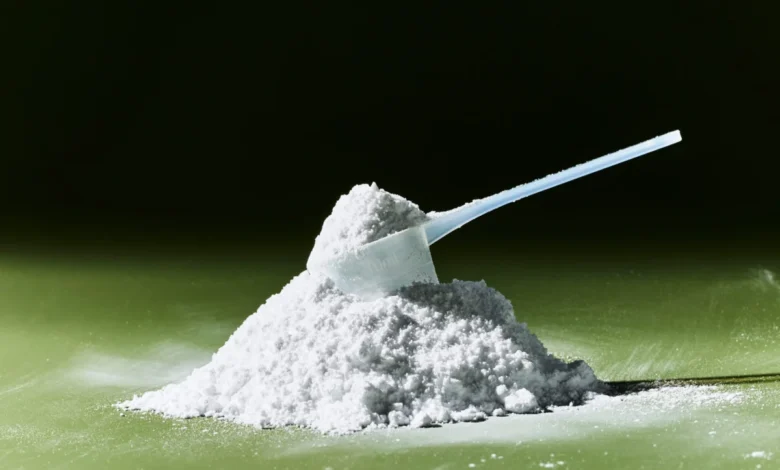
For decades, creatine monohydrate has stood as the unchallenged titan of the sports nutrition industry. Since its commercial emergence in the early 1990s, it has been subjected to thousands of clinical trials, consistently demonstrating its efficacy in improving high-intensity exercise capacity, increasing lean body mass, and supporting cognitive function. However, the fitness supplement landscape is perpetually shifting, and in recent years, a challenger has gained significant traction on social media platforms and retail shelves: creatine hydrochloride, or creatine-HCl.
Marketed as a more sophisticated, highly soluble, and "bioavailable" alternative, creatine-HCl has attracted a dedicated following. Proponents often argue that it circumvents the minor digestive discomfort sometimes associated with monohydrate and allows for smaller, more efficient dosing. But as the retail price for creatine-HCl often dwarfs that of the time-tested monohydrate, consumers are left questioning whether they are paying for a superior scientific breakthrough or merely an expensive marketing campaign. A rigorous examination of the biochemistry, clinical data, and industry trends suggests that while creatine-HCl offers a functional niche for some, its reputation as a superior muscle-builder remains unsupported by evidence.
The Chronology of Creatine Evolution
The history of creatine as a sports supplement began in earnest following the 1992 Barcelona Olympics, where rumors circulated that gold-medal-winning athletes had used the compound to enhance performance. By the mid-90s, creatine monohydrate became a household name in gym culture. It was essentially a raw powder, often gritty and difficult to dissolve, leading to the early "loading phase" protocols—consuming 20 grams per day for a week—to rapidly saturate muscle stores.
As the supplement industry matured, manufacturers sought to solve the physical limitations of monohydrate, specifically its poor solubility in water and the bloating some users reported. This led to the introduction of various "buffered" and salt-based forms, including creatine-HCl. By bonding creatine to a hydrochloride group, the molecule becomes more acidic and significantly more water-soluble. While this makes for a clearer, easier-to-mix drink, the transition from a laboratory solution to a "performance enhancer" was largely driven by lifestyle influencers and direct-to-consumer branding rather than peer-reviewed clinical longitudinal studies.
Defining the Biochemistry: Monohydrate vs. Hydrochloride
At the molecular level, creatine is a nitrogenous organic acid that aids in the production of adenosine triphosphate (ATP), the primary energy carrier in human cells. Creatine monohydrate consists of a creatine molecule with a water molecule attached, making it the most stable and researched form of the supplement.
Creatine-HCl is formed by attaching a hydrochloride group to the creatine molecule. According to Scott Keatley, RD, co-owner of Keatley Medical Nutrition Therapy, the primary distinction between the two is purely chemical: hydrochloride dissolves more readily in water. This high solubility is often touted by manufacturers as a gateway to better absorption. The logic provided in marketing materials suggests that because the powder dissolves better in a shaker cup, it must dissolve better in the stomach and thus require less volume to achieve the same systemic saturation.
However, absorption is not synonymous with effectiveness. Research into the pharmacokinetics of creatine suggests that the human gut is highly efficient at absorbing creatine monohydrate even without the modification of a hydrochloride group. Once in the bloodstream, the creatine is transported into the muscle cells via specialized transporters. Once the muscle is saturated, excess creatine is excreted, regardless of whether it arrived as monohydrate or hydrochloride.
Clinical Evidence and Comparative Studies
The most damning evidence against the necessity of creatine-HCl comes from the lack of data suggesting it provides any ergogenic advantage over its predecessor. Dr. Shane Davis, a sports medicine physician at Tufts Medical Center, notes that while the industry is rife with claims, the scientific literature remains firmly rooted in favor of the established standard.

A landmark study published recently in the medical literature sought to settle the debate once and for all. By splitting 40 participants into two distinct groups, researchers compared the outcomes of eight weeks of resistance training supplemented by either monohydrate or hydrochloride. The findings were conclusive: both groups experienced significant enhancements in strength and muscle mass, but there was no statistically significant difference between the two forms. The "benefit" of creatine-HCl was essentially non-existent when controlled for total dosage and training intensity.
This reflects a broader trend in sports nutrition where "novelty" is often confused with "innovation." Albert Matheny, RD, CSCS, co-founder of SoHo Strength Lab, compares the two options to a slight variance in purity—the difference between 99 percent and 100 percent—that fails to translate into a meaningful physiological outcome for the average athlete.
The Digestive Argument: Fact or Marketing?
One of the strongest selling points for creatine-HCl is the claim that it is "gut-friendly." Many athletes report mild stomach distress—cramping, diarrhea, or bloating—when taking high doses of monohydrate, particularly if they are sensitive to the "loading" phase.
Because creatine-HCl is more soluble, it is often suggested that it does not draw as much water into the digestive tract, potentially mitigating these side effects. While anecdotal reports from gym-goers often support this, clinical consensus is more cautious. Keatley notes that while it may be easier on the stomach for a small subset of the population, the evidence is largely circumstantial. Furthermore, the modern understanding of creatine dosing has largely eliminated the need for a loading phase entirely. Consuming 3 to 5 grams of standard monohydrate daily will saturate muscle creatine levels within three to four weeks without the need for high-dose loading, thereby negating the digestive issues that the loading phase once caused.
Economic and Strategic Implications
From an industry perspective, the rise of creatine-HCl serves as a case study in strategic product differentiation. In a saturated market, companies cannot easily raise prices on a commodity like pure creatine monohydrate, which has become a low-margin staple. By introducing a "premium" form like hydrochloride, brands can justify a significantly higher price point, often marketing the product as "advanced" or "scientifically superior."
This creates a psychological premium. Consumers often equate a higher price tag with a higher quality of raw material or superior potency. However, when evaluating the cost-per-serving, the disparity is stark. Users of creatine-HCl are often paying two to three times the price for a substance that provides identical metabolic outcomes to the budget-friendly monohydrate.
Conclusion: The Path Forward for Athletes
For the professional athlete, the recreational gym-goer, and the aging individual looking to maintain muscle mass, the advice from nutrition experts is consistent: stick with the gold standard. Creatine monohydrate has been the subject of thousands of studies involving thousands of participants across different age groups, genders, and athletic disciplines. Its safety profile, cost-effectiveness, and proven efficacy remain unmatched.
While creatine-HCl is not "bad" or ineffective—it is, after all, still creatine—it represents an unnecessary expense for the vast majority of users. The claims surrounding superior absorption and massive performance gains are, at this stage, unsupported by robust, peer-reviewed science. In the world of sports nutrition, the most effective tool is rarely the most expensive one. Instead, it is the one with the longest history of clinical validation. For those looking to optimize their performance, the evidence confirms that the "old" way remains the best way.