How Godzilla Minus Zero Reimagined King Ghidorah Through Ground-Level Terror and Scientific Realism

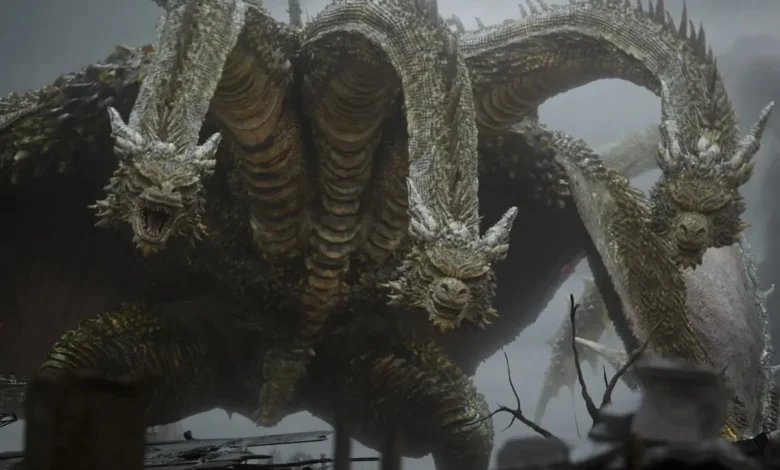
The release of Godzilla Minus Zero marks a significant creative evolution for Toho’s iconic kaiju franchise, expanding upon the visual framework and emotional gravity established by director Takashi Yamazaki in his critically acclaimed predecessor, Godzilla Minus One. While that 2023 feature earned widespread praise—including high-profile endorsements from filmmakers like Christopher Nolan—for its intimate human narrative set against the devastating backdrop of post-war Tokyo, the follow-up film ventures into new stylistic territory by introducing one of the genre’s most legendary antagonists
: the three-headed mutant space dragon, King Ghidorah.
Historically, translating King Ghidorah to the screen has been constrained by technological limitations and budgetary thresholds. Because of the immense complexity required to animate three independent heads, sweeping wings, and dual tails simultaneously, previous cinematic iterations have predominantly emphasized the creature’s scale from a distance. Whether soaring through the clouds or towering over urban landscapes in Hollywood productions like Godzilla: King of the Monsters, Ghidorah has traditionally been framed as an aerial menace or a distant deity of destruction.
Godzilla Minus Zero upends this convention by keeping its primary antagonist grounded. Rather than viewing the golden dragon exclusively from afar, director Yamazaki and the visual effects team at studio Shirogumi made the deliberate artistic choice to bring Ghidorah down to the human level. The result is a radically different visual dynamic that prioritizes intimate, claustrophobic terror, fundamentally altering how audiences experience the creature’s immense destructive power.

The Theme Park Origins of Ground-Level Terror
This unprecedented close-range depiction of King Ghidorah did not emerge in a vacuum; it has direct roots in Yamazaki’s previous work within the franchise ecosystem. In 2021, the director was tapped by Toho to spearhead Godzilla the Ride: Giant Monsters Ultimate Battle, an immersive attraction housed at Seibuen Amusement Park in Saitama, Japan. Designing an attraction that places theme park visitors directly behind a safety rail facing a towering kaiju required Yamazaki and his creative team to solve a unique spatial problem: how to make a colossal alien dragon feel terrifyingly close without losing its imposing silhouette.
According to producer Kazuaki Kishida, the development of the theme park ride laid the crucial technical groundwork for Godzilla Minus Zero.
"We wanted it to feel as though the audience was under attack by Ghidorah itself, so it had to be very scary and very close-up," Kishida explained in interviews regarding the production. "In the ride, we see Ghidorah basically crawling on the ground with its neck—because it has a very long neck—and then really going after the audience. To bring King Ghidorah very close to humans and bring the eyeline closer was a huge core concept for this. So there was a lot of research that had gone into the ride that we were able to apply to Godzilla Minus Zero."
This philosophy manifests vividly throughout the film’s narrative. During the chaotic sequence depicting the monster’s initial assault on Matsumoto City, the camera deliberately adopts the low-angle perspectives of fleeing human characters and frantic scientists, such as Kanji Murakami (portrayed by Min Tanaka) and Akira Hagiwara (Ko Maehara). Instead of sweeping drone shots, the cinematography forces viewers into uncomfortably close proximity with Ghidorah’s reptilian eye, establishing a chilling sense of direct eye contact between the apex predator and its insignificant prey.
Grounding Sci-Fi Destruction in Real-World Physics
Complementing this shift in perspective is a rigorous commitment to tangible, science-based visual effects. While previous cinematic entries relied on stylized energy beams that flashed across the screen and instantly vanished, the visual effects team behind Godzilla Minus Zero sought to ground Ghidorah’s signature destructive lightning in actual atmospheric physics.

Visual effects artist Tatsuji Nojima undertook extensive research into the natural phenomena of electrical storms, analyzing slow-footage captures of lightning strikes to understand how energy interacts with the atmosphere.
"Everyone sort of recognized the string of light, that line of light. But if you look at lightning in slow motion, it leaves a line of something that lingers—this is apparently just water vaporizing instantly and turning into plasma," Nojima noted. "I don’t fully know the science behind it, but there’s a visual effect that lightning leaves behind. So for Ghidorah’s destruction beam, I wanted to emphasize that element of it. I scatter particles around, kind of blur the imagery, and then let it linger longer than it normally would."
This meticulous attention to detail elevates the horror of the creature’s attacks. When Ghidorah unleashes its electrical discharge, the residual plasma clouds, particulate scatter, and delayed dissipation create a suffocating atmosphere of devastation. The lingering visual aftermath of the blast reinforces the notion that the monster’s power is not merely fantastical, but an overwhelming elemental force that fundamentally disrupts the laws of physics within its environment.
Context and Franchise Evolution
To understand the significance of Godzilla Minus Zero, one must examine the broader historical trajectory of Toho’s cinematic catalogue. Launched in 1954 by director Ishirō Honda, the Godzilla franchise has continually evolved to reflect contemporary societal anxieties, transitioning from nuclear-age trauma in the Shōwa era to corporate and environmental commentary in later decades.
Yamazaki’s recent contributions represent a renaissance for Japanese-produced kaiju films, proving that domestic productions can successfully compete on a global scale through a combination of character-driven storytelling and cutting-edge digital craftsmanship. Following the historic international box office success and Academy Award recognition achieved by Godzilla Minus One, the studio was afforded greater creative freedom to explore deeper cuts from its historic monster roster.

Introducing King Ghidorah—a character first introduced in the 1964 classic Ghidorah, the Three-Headed Monster—into Yamazaki’s grounded universe presented a severe tonal challenge. Ghidorah has historically belonged to the more fantastical, space-faring adventures of the Shōwa and Heisei eras, often standing in stark contrast to the gritty realism of standalone monster features. By subverting traditional expectations and forcing the cosmic threat to operate within a visceral, low-to-the-ground paradigm, the filmmakers successfully bridged the gap between classic monster lore and modern prestige filmmaking.
Broader Industry Implications and Audience Reception
The commercial and critical reception of Godzilla Minus Zero underscores a growing appetite among global audiences for distinct tonal variety within blockbuster franchises. Rather than relying solely on massive, CGI-heavy brawl spectacles, the film demonstrates that scale is most effective when paired with intimate human stakes and deliberate pacing.
Industry analysts note that the cross-pollination of techniques between theme park attractions and feature-film visual effects represents a growing trend in modern entertainment design. As immersive entertainment demands increasingly sophisticated real-time rendering and spatial audio engineering, filmmakers who bridge these mediums are uniquely positioned to craft more visceral cinematic experiences.
As Godzilla Minus Zero continues its theatrical run, its legacy within the franchise appears secure. By reimagining a legendary monster through the twin lenses of theme park-tested proximity and scientific atmospheric research, Yamazaki and his team have redefined what is possible for kaiju cinema, ensuring that the golden dragon remains as terrifying to modern audiences as it was six decades ago.