Ford Data Reveals That EV Battery Longevity Fears Are Largely Misplaced for Modern Mustang Mach-E Owners

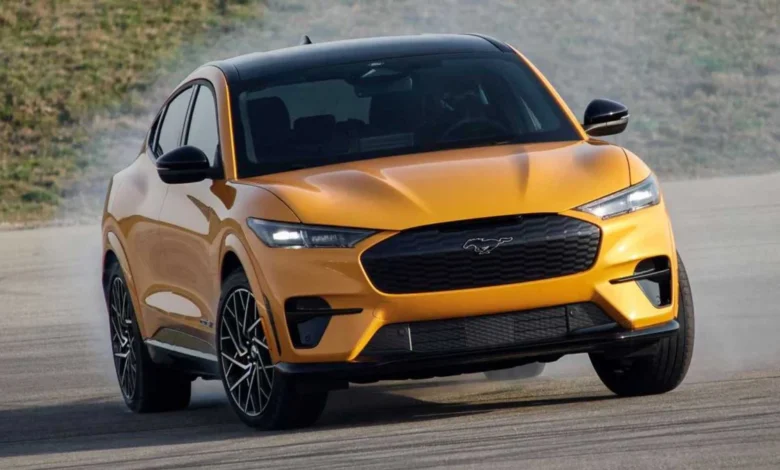
For years, the widespread adoption of battery-electric vehicles (BEVs) has been hampered by a pervasive psychological barrier among consumers: "range anxiety" paired with the fear of inevitable, premature, and prohibitively expensive battery pack failure. Prospective buyers frequently cite the high cost of replacement batteries and the perceived fragility of lithium-ion technology as primary reasons to stick with internal combustion engines. However, a comprehensive analysis of real-world performance data from Ford Motor Company suggests that these concerns, while understandable, are not supported by the actual operational longevity of modern electric vehicles.
By examining the health metrics of 36,000 first-year Ford Mustang Mach-E units from the 2021 model year, the automaker has provided a rare, data-backed glimpse into the lifecycle of contemporary EV battery systems. The findings indicate that these high-voltage power plants are remarkably resilient, with the vast majority retaining a high percentage of their original energy storage capacity even after several years of rigorous use.
The Anatomy of the Data: 36,000 Vehicles Analyzed
The cohort of 36,000 Mustang Mach-E vehicles analyzed represents a significant cross-section of early adopters who have put their vehicles through a variety of climates, driving styles, and charging habits. According to Ford’s internal reporting, 95 percent of these SUVs currently demonstrate a state of health (SoH) ranging between 87 percent and 97 percent. The mathematical mean for this massive fleet sits at an impressive 92 percent, suggesting that the rate of degradation is significantly lower than many industry skeptics initially predicted.
This data is particularly vital because it moves the conversation away from hypothetical laboratory stress tests and into the realm of daily, real-world ownership. These vehicles, which have been on the road since the 2021 model year, represent the first wave of mass-market, long-range electric SUVs from a legacy automaker. That they are maintaining such high capacity after multiple seasonal cycles provides a benchmark for the expected lifespan of modern nickel-cobalt-manganese (NCM) battery chemistries.
Longevity Milestones: Beyond the 100,000-Mile Threshold
One of the most persistent myths surrounding electric vehicles is that they reach a "cliff" in performance or reliability once they cross the 100,000-mile mark. Ford’s data directly challenges this narrative. Among the more than 2,000 units in the study that have surpassed the 100,000-mile milestone, the average battery health remains above 91 percent.
Perhaps even more telling are the "hyper-milers"—a group of over 30 Mustang Mach-E owners who have pushed their vehicles past the 200,000-mile mark. Despite the immense number of charge cycles these batteries have endured, they continue to operate at an average of 88 percent health. This level of retention effectively refutes the idea that a high-mileage EV is destined for a battery replacement, which would traditionally be considered a total-loss financial event for the owner. Instead, these vehicles remain fully capable of performing their primary duty, with only a marginal reduction in their original EPA-estimated range.
Understanding Battery Chemistry and Evolution
It is important to note that the Ford dataset primarily focuses on vehicles equipped with NCM battery packs. NCM technology is favored for its high energy density, which allows manufacturers to package a significant amount of range into a relatively lightweight, compact footprint. However, the industry is currently undergoing a shift toward lithium iron phosphate (LFP) chemistry for entry-level and standard-range models.

LFP batteries are inherently more stable and, in many cases, offer a higher cycle life compared to their NCM counterparts. While they are generally less energy-dense—meaning they require more mass to achieve the same range—they are more resistant to the degradation associated with frequent 100-percent charging. As Ford continues to integrate LFP technology into its production lines, the average longevity of their EV fleet is expected to remain stable, if not improve further, particularly as software management systems become more sophisticated at protecting the internal chemical stability of these cells.
Best Practices: How Owners Influence Battery Health
While the hardware is designed to be robust, Ford emphasizes that owner behavior remains a significant variable in the long-term health of an EV battery. The company has released a set of guidelines aimed at minimizing the thermal and chemical stress that leads to accelerated degradation.
- Thermal Management: Extreme temperatures are the primary enemy of lithium-ion cells. Ford recommends that owners utilize the "preconditioning" feature while the vehicle is plugged into a charger. This allows the car to draw power from the grid to heat or cool the battery to its ideal operating temperature before the vehicle is driven, reducing the strain on the pack during the initial minutes of operation.
- Charging Habits: The convenience of DC fast charging is often touted as a necessity for road trips, but for daily use, it is not ideal. Ford advocates for the use of Level 2 home charging as the primary method. Frequent, high-speed DC charging generates significant heat, which, over hundreds of cycles, can lead to a more rapid decline in battery health.
- Strategic Charging Limits: Owners are encouraged to utilize the Ford mobile application to set charge-level recommendations. By limiting the charge to 80 or 90 percent for daily commuting, owners can significantly extend the cycle life of the battery, as keeping a lithium-ion pack at 100 percent state-of-charge for extended periods puts unnecessary pressure on the internal components.
- Environmental Awareness: Simple steps, such as parking in the shade during the summer, can prevent the vehicle’s thermal management system from working overtime to keep the battery within a safe temperature range while parked.
Industry Context and the Broader Implications
The data from Ford is not an outlier; it aligns with several independent studies conducted on the broader EV market. Research consistently shows that, barring catastrophic failure or manufacturing defects—which are usually covered under the industry-standard eight-year/100,000-mile warranty—battery degradation is a slow, linear process rather than a sudden drop-off.
A study analyzing vehicles with over 150,000 miles found that capacity retention typically hovers between 81 percent and 91 percent. This suggests that the battery is likely to outlive the vehicle itself in many cases. The implication for the secondary market is significant. As more high-mileage EVs enter the used market, buyers will be able to look at battery health reports with the same confidence they once had when evaluating the engine compression of a used gasoline vehicle.
The Road Ahead: Why Reliability Matters for Adoption
The transition to electric mobility is predicated on trust. For the average consumer, a car is one of the largest financial investments they will make, and the fear of a "hidden" $15,000 battery replacement bill has served as a powerful deterrent. By releasing this data, Ford is attempting to normalize the ownership experience and provide transparency that has previously been lacking in the EV sector.
As the industry moves toward 2030 and beyond, the focus will likely shift from simply proving that EVs can work to proving that they are as reliable and long-lasting as the internal combustion vehicles they aim to replace. With 92 percent average health across a massive fleet of 36,000 vehicles, the Mustang Mach-E serves as a compelling proof-of-concept.
The data confirms a critical reality: modern battery management systems, combined with thoughtful engineering, have effectively mitigated the risk of premature failure. As technology advances and manufacturing processes mature, the "battery anxiety" that currently plagues the market may eventually be viewed as a relic of the early adoption era, much like the range anxiety of the early 2010s has been mitigated by the expansion of fast-charging networks and increased vehicle range.
For current and prospective owners, the message is clear: the modern electric vehicle is a long-term investment. Provided that owners adhere to basic, manufacturer-recommended charging and thermal management protocols, their vehicles are poised to provide many years and hundreds of thousands of miles of reliable, low-maintenance service. As the secondary market for EVs continues to grow, this documented durability will be the cornerstone upon which the next decade of automotive electrification is built.