Navigating the sprawling parking infrastructure of a major theme park resort has long been a notoriously frustrating preamble to the magical experience inside. For millions of visitors arriving annually at destinations managed by The Walt Disney Company, the search for a vacant parking stall often involves navigating vast, congested asphalt seas under the pressure of tight schedules and impatient children. Seeking to alleviate this universal friction point, the entertainment giant has begun evaluating an innovative technological intervention: autonomous, artificial intelligence-powered parking guidance robots infused with the whimsical aesthetic of Pixar’s animated universe.
Previewed during the recent Disney Accelerator Demo Day, these experimental robotic assistants represent a novel intersection of cutting-edge industrial automation and consumer-facing entertainment. Rather than relying solely on traditional human traffic coordinators, static signage, or digital overhead counters, Disney is exploring whether mobile, character-driven units can streamline vehicle placement, enhance guest sentiment, and inject a touch of trademark storytelling into the mundane act of parking a car.
Collaborative Innovation and Technological Foundations
The development of these autonomous parking assistants is the result of a strategic partnership between The Walt Disney Company and Field AI, a specialized robotics startup established in 2023. Field AI was founded by a cadre of elite engineers and researchers recruited from some of the technology sector’s most prominent research institutions and corporate laboratories, including Google’s DeepMind, NASA, Nvidia, and Tesla.
While much of the contemporary commercial robotics landscape is heavily saturated with bipedal, humanoid machines designed to emulate human laborers in controlled industrial and warehousing environments—exemplified by products from Boston Dynamics, Tesla, and several emerging Chinese manufacturing firms—Field AI and Disney have chosen a decidedly different form factor for this application. Rather than building a bipedal robot that walks lanes and directs traffic with hand gestures, the engineering teams settled on a compact, four-wheeled chassis. This architecture shares structural and operational DNA with the autonomous food delivery robots that have become increasingly common sights on university campuses and select metropolitan sidewalks across the United States.
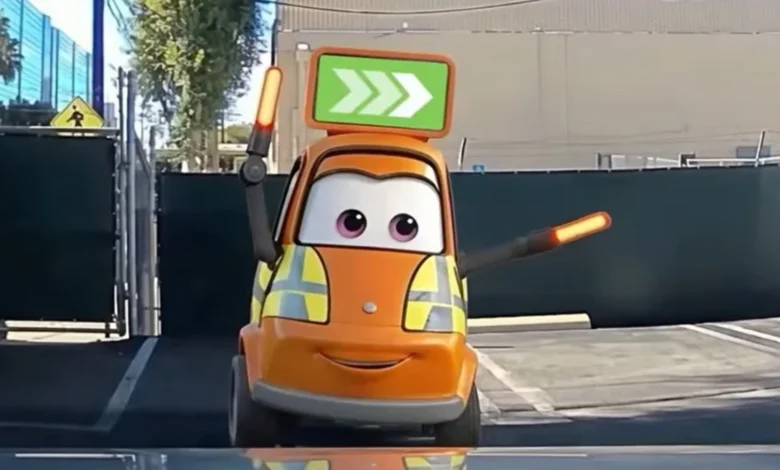
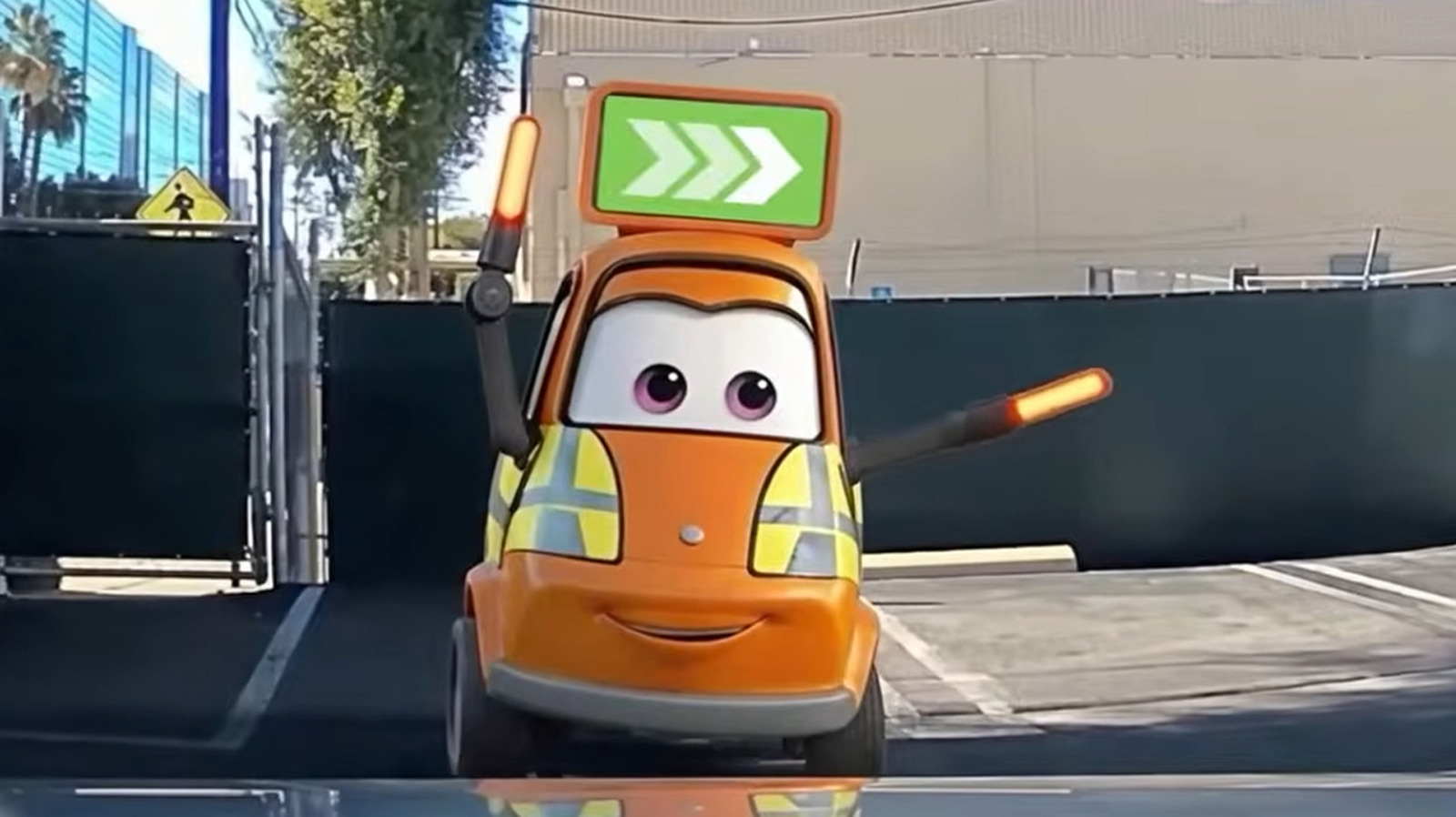
The aesthetic execution of the hardware pays explicit homage to Disney and Pixar’s beloved intellectual property. During the demonstration, one of the prototype units was showcased wearing a vibrant coat of high-visibility orange paint accented by bright yellow highlights, intentionally mimicking the fluorescent safety vests worn by traditional human parking attendants. In lieu of a traditional windshield or empty sensor array hood, the front-facing portion of the robot features a dynamic digital screen capable of rendering expressive eyes with active, blinking eyelids. This design choice directly echoes the anthropomorphic vehicle characters featured prominently in the popular "Cars" franchise, transforming an otherwise utilitarian piece of municipal hardware into a recognizable, approachable character.
Functionality and Field Operation
Beneath their playful exterior, these robots are sophisticated autonomous agents equipped with advanced sensor suites, computer vision algorithms, and real-time path-planning software capable of operating safely within dynamic, high-traffic environments.
Positioned atop the chassis of the autonomous unit is an adjustable, electronic directional sign that dynamically updates to point motorists toward open parking stalls as traffic patterns shift throughout the day. Furthermore, the robot features two articulated mechanical arms fitted with illuminated red signaling lights. These appendages are programmed to function similarly to traditional airport marshalers, providing clear, visual cues that guide drivers safely into their designated spaces without requiring verbal communication.
This operational methodology aims to address several systemic inefficiencies inherent in large-scale parking management. Human parking attendants, while effective, are vulnerable to fatigue, weather extremes, and limited visibility when managing expansive lots containing thousands of vehicles. Autonomous units can theoretically operate continuously, maintaining precise spatial awareness and adapting instantaneously to real-time lot capacity changes while remaining completely insulated from environmental discomfort.
Economic Realities and Infrastructure Challenges
Despite the technical ingenuity on display, the deployment of robotic parking assistants introduces significant operational, financial, and logistical hurdles that Disney must carefully evaluate before committing to a commercial rollout.
Foremost among these considerations is the physical vulnerability of the hardware. The environment of a theme park parking lot is notoriously chaotic. Motorists are frequently distracted by navigation systems, searching for family members, or managing restless passengers in the backseat. The combination of heavy vehicular traffic, tight turning radiuses, and high-stress driving conditions creates a high-risk setting for delicate robotic machinery. Industry analysts have noted that despite robust onboard collision-avoidance systems, accidental impacts—or potentially intentional vandalism by frustrated guests—pose a very real threat to the longevity and financial viability of the fleet.
Furthermore, the initial capital expenditure required to procure, program, and maintain a fleet of advanced autonomous robots is substantial. While Disney has not disclosed financial figures regarding the development or unit cost of the prototypes, cutting-edge robotics equipped with specialized AI processing hardware and custom display panels are notoriously expensive.
These fiscal realities inevitably raise questions regarding broader consumer impacts. The cost of admission to Disney resort properties has risen steadily over the past decade. Currently, standard single-day admission for a family of four typically ranges between $476 and $836, depending on the specific park, seasonal demand tier, and ticketing options selected. Consumers and industry watchers are understandably sensitive to whether capital investments in experimental resort technologies will be subsidized through further adjustments to gate prices, parking fees, or auxiliary resort services.
Strategic Implications for Theme Park Automation
The integration of artificial intelligence and autonomous systems into consumer-facing hospitality spaces reflects a broader industry trend. Major entertainment and leisure corporations are aggressively exploring automation to mitigate rising labor costs, address staffing shortages, and elevate the baseline guest experience.
For Disney, maintaining market leadership relies heavily on differentiating its properties through immersive storytelling and operational excellence. By transforming a historically stressful bottleneck—parking—into an engaging, character-driven interaction, the company demonstrates a willingness to reimagine every touchpoint of the consumer journey.
However, the path from successful demonstration to widespread deployment is fraught with regulatory, safety, and logistical milestones. Disney has not yet published an official timeline or roadmap indicating when—or even if—these "Cars"-themed parking assistants will transition from controlled testing environments to active service at major resort destinations such as Walt Disney World in Florida or the Disneyland Resort in California.
Conclusion and Outlook
As testing continues in partnership with Field AI, the industry will be watching closely to determine whether robotic traffic marshalers can successfully transition from concept art and controlled demonstrations to the rigorous realities of daily theme park operations. If successful, the initiative could redefine how large-scale entertainment venues manage vehicular logistics, proving that even the most mundane administrative tasks can be successfully integrated into a branded narrative framework. Until then, motorists visiting Disney resorts will continue to rely on human attendants and traditional signage, awaiting the day when a cheerful, four-wheeled Pixar character waves them into their final vacation parking spot.