Federal agents found fake Honda airbags at an Ohio dealership, including several covered by a towel inside a clothes hamper

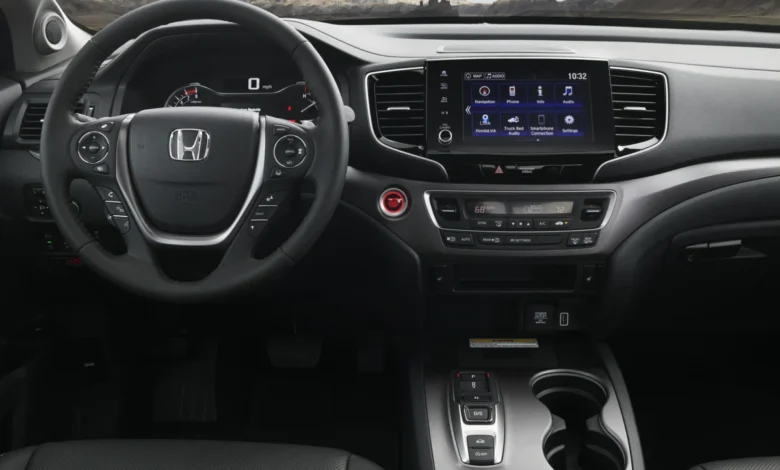
The modern automotive aftermarket is a sprawling ecosystem filled with everything from performance-enhancing upgrades to budget-friendly cosmetic replacements. While opting for aftermarket wheels, trim pieces, or badges may carry minor aesthetic or durability risks, substituting safety-critical components with unverified alternatives introduces catastrophic hazards. Airbags represent the ultimate line of defense in modern vehicular safety, engineered through rigorous computational modeling, explosive testing, and precise material sciences. When an unauthorized, counterfeit alternative replaces a factory-certified safety device, the margin between minor injury and fatal failure vanishes.
This terrifying reality was recently laid bare in the state of Ohio, where a used-car dealer formally pleaded guilty to federal charges after orchestrating a scheme to import and install counterfeit Honda airbags. Operating under the guise of an ordinary pre-owned car business, the dealership slipped fraudulent safety equipment into customer vehicles, evading regulatory oversight through deceptive shipping manifests. The criminal case, prosecuted by the U.S. Department of Justice, has exposed critical vulnerabilities in international supply chain security and raised urgent concerns regarding public safety on American roadways.
Anatomy of a Smuggling Scheme: From Overseas Warehouses to Ohio Showrooms
The federal investigation centered on JB Ohio Auto Sale, a pre-owned vehicle dealership located in Galloway, Ohio. Court documents filed by the U.S. Attorney’s Office for the Southern District of Ohio revealed that the illicit operation was spearheaded by 35-year-old John Bojorquez, the owner and operator of the business. According to federal prosecutors, Bojorquez engaged in a systematic conspiracy to import counterfeit automotive safety equipment directly from manufacturing sources in China, bypassing official Honda distribution channels entirely to maximize profit margins.
The illicit enterprise came to light through the vigilance of federal border enforcement agencies. In August 2024, officers with U.S. Customs and Border Protection (CBP) stationed at Chicago O’Hare International Airport intercepted a suspicious cargo consignment arriving from overseas. Upon inspecting the paperwork accompanying the shipment, border agents noted a stark discrepancy between the declared contents and the physical reality of the cargo. The shipping manifests explicitly described the contents as "desktop night lights"—a deliberately mundane classification designed to bypass stringent customs inspections reserved for automotive hardware and hazardous materials.
When CBP officers opened the crates, however, they discovered no illumination devices. Instead, the shipment contained 20 counterfeit airbags bearing fraudulent Honda labeling, holograms, and branding intended to deceive mechanics, inspectors, and vehicle purchasers. Investigators soon discovered that this interception was merely the tip of the iceberg. Further analysis of international shipping records revealed that the same Chinese supplier had dispatched at least four additional shipments to Bojorquez during that same month. These subsequent consignments utilized similarly deceptive customs declarations, labeled interchangeably as "desktop night lights" or "blue desktop nightlights."
While federal authorities confirmed the interception of the initial 20-unit shipment at O’Hare International Airport, the exact status and contents of the four accompanying August shipments remained a subject of ongoing federal scrutiny. It remains unclear whether those subsequent packages successfully cleared customs clearance protocols or what precise volume of fraudulent inventory they introduced into the domestic market.
The Federal Raid and the Discovery in the Clothes Hamper
The investigation culminated months later, in May 2025, when federal agents armed with search warrants executed a raid on the premises of JB Ohio Auto Sale in Galloway, Ohio. Investigators combed through the dealership’s inventory, office spaces, and storage areas looking for physical evidence of counterfeit trafficking.

The search yielded damning results. Federal agents recovered several additional counterfeit Honda airbags hidden on the property. Rather than being stored in professional automotive packaging or inventory shelving consistent with legitimate collision repair operations, some of the fraudulent airbags were discovered haphazardly piled inside a household clothes hamper, casually concealed beneath an ordinary bath towel. The brazen concealment highlighted the casual disregard for safety and regulatory compliance within the operation, treating life-saving pyrotechnic devices with the carelessness typically reserved for dirty laundry.
Faced with mounting physical evidence and federal indictments, Bojorquez formally entered a guilty plea to charges of trafficking in counterfeit goods. Under federal sentencing guidelines, the offense carries a maximum statutory penalty of up to 10 years in federal prison. While the statutory maximum provides a severe upper limit, the final sentencing determination will be handed down by a federal judge following a comprehensive review of pre-sentence investigation reports, criminal history, and the overall scope of consumer endangerment.
Unanswered Questions and the Immediate Consumer Threat
Despite the guilty plea, federal prosecutors and safety regulators emphasize that the investigation is far from complete. A multitude of critical questions remain unanswered, presenting an ongoing logistical challenge for law enforcement and consumer protection agencies alike.
Most notably, authorities have not yet publicly released the specific Vehicle Identification Numbers (VINs) or the exact makes and models of the Honda vehicles that received the counterfeit airbags. Investigators are still working to determine the precise number of fraudulent units that were successfully installed in customer vehicles versus those that remained warehoused at the dealership or stored under towels in the back room. Admitting to trafficking at least 44 counterfeit airbags does not automatically mean that precisely 44 vehicles left the lot with fake safety devices, but the statistical probability that unsuspecting buyers are currently driving potentially lethal vehicles remains high.
The U.S. Department of Justice and the National Highway Traffic Safety Administration (NHTSA) have expressed grave concern over the incident. To mitigate potential harm, federal authorities have established a dedicated communication channel for consumers. The U.S. Attorney’s Office has urged anyone who purchased a vehicle from JB Auto Sale in Galloway, Ohio, and suspects that their car may be equipped with a counterfeit airbag to come forward immediately. Affected vehicle owners are encouraged to contact federal investigators directly at 888-529-2820 to arrange for safety inspections and documentation.
The Hidden Dangers of Counterfeit Automotive Safety Equipment
To understand the gravity of the Galloway dealership case, one must examine the engineering complexity of modern automotive safety systems. An airbag module is not merely a fabric cushion connected to a gas storage tank; it is an integrated, highly calibrated electro-mechanical assembly. It relies on precise sensors, sophisticated electronic control units (ECUs), and pyrotechnic inflators designed to deploy within milliseconds of a collision at velocities exceeding 200 miles per hour.
According to technical advisories issued by NHTSA, counterfeit airbags frequently fail to meet even the most basic federal motor vehicle safety standards. Common structural and operational defects found in black-market airbags include:
- Complete Failure to Deploy: Substandard electronic wiring, incompatible crash sensors, or degraded igniters can prevent the airbag from receiving or processing the deployment signal during an impact, leaving occupants entirely unprotected.
- Shrapnel Ejection: Inferior metal alloys used in counterfeit inflator canisters can fracture under the extreme pressure of chemical ignition, transforming the housing unit into a deadly claymore mine that sprays metal shrapnel directly into the cabin.
- Incorrect Deployment Vectors: Poorly stitched fabrics and improperly designed folding patterns can cause the cushion to deploy at an incorrect angle, reducing its ability to absorb kinetic energy or causing it to strike the occupant forcefully in a vulnerable posture.
- Chemical Degradation: Unregulated propellant compounds can destabilize over time due to ambient temperature fluctuations and humidity, leading to either an under-inflation that fails to cushion the driver or an over-pressurized explosion that ruptures the steering wheel hub.
Unlike counterfeit aesthetic components—such as imitation alloy wheels that may crack under stress or replica body kits that feature poor paint adhesion—a counterfeit airbag remains completely invisible to the vehicle owner. It sits silently inside the steering wheel hub or the passenger-side dashboard, indistinguishable from a factory original component during routine driving, only to reveal its lethal defects at the exact moment of a high-speed crash when lives depend on its flawless execution.

Broader Implications and Industry-Wide Vulnerabilities
The Ohio case highlights a disturbing and growing trend in transnational trade: the proliferation of counterfeit automotive safety hardware through e-commerce platforms and deceptive import channels. Counterfeiters increasingly exploit global shipping networks by disguising hazardous automotive components as mundane household goods, toys, or electronics to bypass the scrutiny of customs inspectors.
Major automakers, including Honda, have ramped up collaborative efforts with federal agencies such as CBP and Homeland Security Investigations (HSI) to combat intellectual property theft and intercept dangerous counterfeit parts at ports of entry. However, as the Galloway operation demonstrates, local bad actors operating within the pre-owned vehicle market can still source fraudulent components independently, bypassing certified supply chains to cut corners and inflate profit margins at the direct expense of consumer safety.
For the pre-owned automotive sector, the incident serves as a stark warning regarding the integrity of dealership reconditioning practices. When consumers purchase used vehicles, they implicitly trust that dealerships have maintained or repaired the vehicles using components that meet stringent original equipment manufacturer (OEM) standards. Cases like that of JB Ohio Auto Sale threaten to erode public trust in independent dealerships and underscore the urgent need for stricter regulatory oversight, mandatory supply chain transparency, and harsher penalties for businesses that compromise structural safety for financial gain.
As John Bojorquez awaits formal sentencing in federal court, the primary focus for authorities remains public health and safety. Locating the vehicles touched by this illicit scheme is an urgent race against time—one where the discovery of every hidden airbag pulled from beneath a workshop towel represents a potential life saved from an invisible hazard on the highway.