For decades, Alpina Burkard Bovensiepen GmbH & Co. KG occupied a unique space in the automotive landscape. Operating from Buchloe, Germany, the firm functioned not merely as a tuner but as a manufacturer in its own right, recognized by the German Federal Ministry of Transport. Alpina served as the sophisticated, artisanal counterpoint to BMW’s M Division. While BMW M focused on aggressive, track-oriented performance, Alpina cultivated a reputation for "grand touring" excellence, prioritizing effortless high-speed capability, refined torque delivery, and bespoke, hand-finished luxury. From the iconic B10 Bi-Turbo of the early 1990s to the elegant Roadster V8, Alpina vehicles were defined by their signature multi-spoke wheels, subtle aerodynamic enhancements, and meticulously upgraded interiors.
However, the automotive world witnessed a significant shift in 2022 when the BMW Group announced the acquisition of the Alpina brand. This transition, which will see the formal integration of Alpina into the BMW corporate structure by 2026, marks the end of an era. The Buchloe-tinged models—those independent, highly modified vehicles that blurred the line between factory-stock and coach-built luxury—are being phased out. This regulatory and corporate evolution has prompted automotive enthusiasts and digital artists to look back at the brand’s history, leading to imaginative "what if" scenarios that explore how the Alpina design philosophy might have been applied to vehicles outside of the BMW ecosystem.
The Digital Transformation: Introducing the B1 Turbo
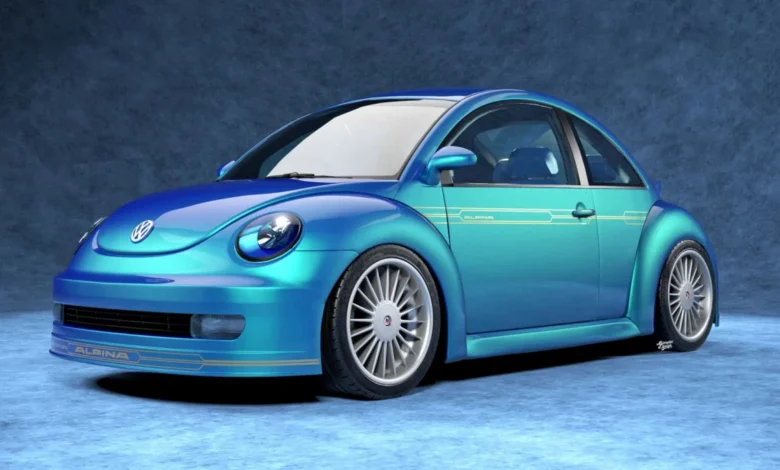
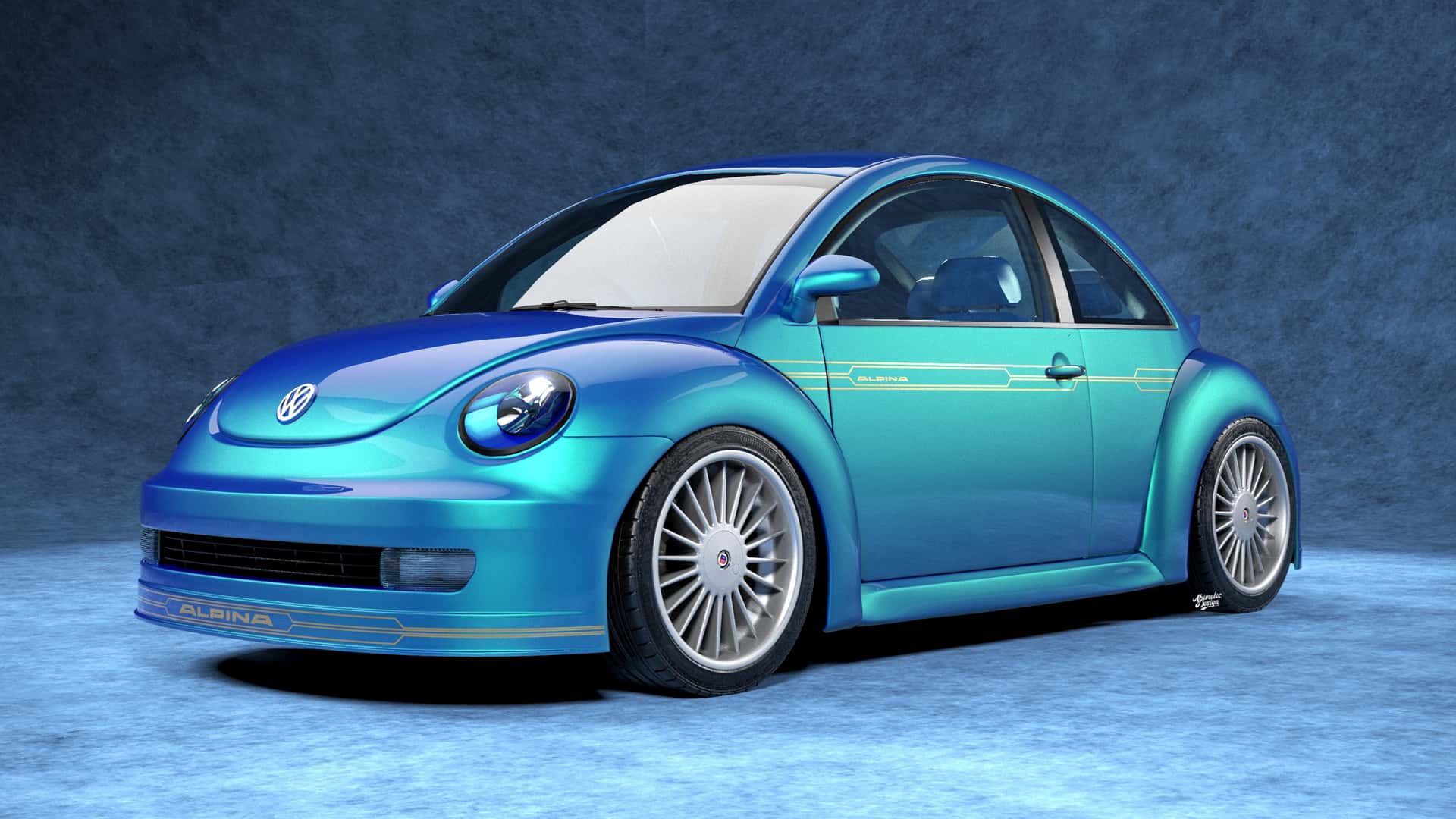
The latest project to capture the attention of the design community comes from Abimelec Design, an independent digital artist known for high-fidelity automotive visualizations. In a departure from the brand’s traditional portfolio, Abimelec has rendered an "Alpina-fied" Volkswagen New Beetle. Titled the "B1 Turbo," the rendering applies the hallmark aesthetic of the Buchloe tuner to the platform of the iconic German economy car.
The rendering features a sophisticated deep blue metallic paint finish, a hallmark color associated with Alpina’s classic palette. The vehicle sits on the brand’s signature 20-spoke alloy wheels, which are synonymous with the Alpina identity. Subtle pinstriping runs along the flanks of the car, a classic touch that reinforces the vintage touring aesthetic. While the Beetle is historically grounded in utilitarian roots, the digital transformation elevates the compact vehicle into a segment that feels distinctly more premium.
Contextualizing the Inspiration: The Volkswagen Beetle RSi
The conceptual foundation for this project stems from a real-world encounter with the Volkswagen New Beetle RSi. Produced in a limited run of only 250 units between 2001 and 2003, the RSi was a rare, performance-focused variant of the New Beetle. Unlike the standard production models, the RSi featured a wide-body kit, a fixed rear wing, and a 3.2-liter VR6 engine producing 221 horsepower, mated to a six-speed manual transmission and 4Motion all-wheel drive.
During a visit to Mexico City last year, the artist had the opportunity to study a friend’s RSi firsthand. The primary point of interest was not just the exterior modification, but the interior craftsmanship. The RSi featured a cabin that moved away from the plastic-heavy aesthetic of the base Beetle, incorporating carbon fiber, aluminum, and leather trim that felt substantially more upscale. This encounter served as the catalyst for the "B1 Turbo" project. The artist noted that the interior quality of the RSi was far closer to a boutique manufacturer product than a standard Volkswagen, bridging the gap between mass-market production and exclusive grand touring.
Technical Speculation: The Case for a Turbocharged VR6
In the realm of automotive design, the technical specifications are as important as the visual aesthetic. Abimelec envisions the hypothetical B1 Turbo as being equipped with a turbocharged VR6 powertrain paired with an automatic transmission. This configuration aligns with the historical performance ethos of both Alpina and the spirit of the Beetle RSi.
The original RSi utilized a naturally aspirated VR6, which was noted for its unique sound and linear power delivery. By introducing a turbocharger—a component that defined some of Alpina’s most famous models, such as the B10 Bi-Turbo—the B1 Turbo would represent a modern interpretation of a high-speed cruiser. While the rendering is strictly a design exercise, it highlights the potential for the "hot hatch" segment to be treated with the same level of luxury as a high-end executive saloon.
Broader Implications of Brand Identity
The "Alpina-fied" Beetle serves as a testament to the enduring influence of the Alpina design language. For years, the firm’s visual identity—the classic wheels, the pinstripes, and the understated front spoilers—has become a shorthand for automotive refinement. By applying these elements to a vehicle as recognizable as the Beetle, the project highlights how design cues can influence the perception of a vehicle’s status.
Historically, Alpina maintained a strict exclusivity, focusing solely on BMW models to ensure that their chassis engineering and engine modifications remained perfectly synchronized with the base vehicle’s architecture. This rigorous approach is what allowed them to maintain a reputation for reliability that many aftermarket tuners struggle to achieve. However, as the brand transitions under the stewardship of the BMW Group, these digital renderings serve as a "what if" archive, exploring the flexibility of the design language that shaped the German luxury market for half a century.
The Legacy of Independent Tuning
The end of independent Alpina production marks a broader trend in the automotive industry: the consolidation of specialized engineering firms into large-scale automotive conglomerates. As safety regulations, electrification requirements, and global emissions standards become increasingly complex, the overhead required for an independent manufacturer to certify vehicles has become prohibitive.
In this context, the B1 Turbo is more than just a piece of digital art; it is a nod to the "golden age" of independent tuning, where a small team of engineers in a town like Buchloe could take a standard production car and transform it into a world-class performance machine. The Beetle, a car designed for the masses, represents the polar opposite of the exclusive, bespoke nature of an Alpina. Combining the two creates a contrast that appeals to enthusiasts who value the history of European automotive engineering.
Why Renderings Matter in Modern Automotive Culture
The rise of high-quality digital renderings has changed how automotive enthusiasts interact with car history. Platforms like Instagram have allowed designers like Abimelec to foster a global community where concepts that would never be approved by corporate boardrooms can be explored. These projects provide a safe space for innovation and nostalgia.
While there is no possibility of a partnership between the now-integrated Alpina and the long-discontinued Beetle, the B1 Turbo remains a favorite among the digital community. It bridges the gap between the accessible charm of a classic Volkswagen and the sophisticated, performance-oriented legacy of the Alpina brand. It suggests that even the most "everyman" vehicle can be reimagined through the lens of luxury, provided the right design elements are applied with precision.
Conclusion: A Lasting Impression
The Volkswagen Beetle, which saw its final production run in 2019, remains one of the most recognizable automotive silhouettes in history. Alpina, while continuing its journey under the umbrella of the BMW Group, leaves behind a legacy of performance and elegance that few can match. By conceptually merging these two entities, the B1 Turbo rendering serves as a creative intersection of two distinct German automotive philosophies.
While the "B1 Turbo" will never roll off an assembly line, it stands as a tribute to the craftsmanship of the Alpina team. As the automotive world moves toward a future defined by standardized platforms and electrification, the appreciation for the artisanal, manual-focused, and highly bespoke nature of the "old guard" of tuners will likely only grow. The B1 Turbo remains a fascinating exercise in design, reminding enthusiasts that even the most unlikely combinations can create something that is, at the very least, visually captivating and conceptually intriguing. For now, the legacy of Alpina remains secure in the hearts of those who appreciate the subtle art of the high-speed, luxurious, and uniquely German grand tourer.