Deep within the dense, emerald canopy of the South American rainforest, along the border separating Suriname and French Guiana, a quiet conflict is reshaping the future of the Amazon. In the remote village of Kawemhakan, the Wayana people find themselves at the center of a volatile gold-mining frontier, navigating a precarious existence as illegal, small-scale operations and foreign interests threaten their ancestral lands, health, and cultural heritage. While Suriname extracts roughly one million ounces of gold annually through legal channels, the vast, unregulated interior tells a darker story of systemic environmental degradation, violence, and the absence of state authority.

The Geography of a Gold Frontier
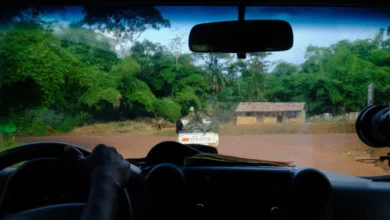
The Lawa River, which serves as the natural boundary between Suriname and French Guiana, has become the primary artery for a sprawling, illicit mining economy. Here, the rainforest is not merely a pristine ecosystem but a theater of industrial extraction. Miners, ranging from local opportunists to organized syndicates from Brazil and beyond, utilize rudimentary tools—high-pressure water pumps, generators, and excavators—to strip the forest floor in search of gold.
This region is notoriously difficult to police. The absence of road infrastructure means that transit is limited to river navigation and rare, small-engine aircraft flights. Kawemhakan possesses the only viable airstrip for kilometers, granting its Indigenous leadership a fragile leverage. For miners who require supplies and transportation to the capital, Paramaribo, maintaining a functional relationship with the village is often a matter of logistical necessity. However, this dynamic is increasingly strained as the sheer number of outsiders begins to eclipse the resident population.

A Chronology of Exploitation and Resistance
Gold mining in the Lawa River region is not a new phenomenon; it has been part of the local landscape for over a century. However, the intensity of operations has surged in the last decade.
The 1960s marked the first formal permissions granted by the Indigenous leadership to miners. By the 2020s, however, the situation had shifted toward a more predatory model. The COVID-19 pandemic served as a catalyst for this transformation. As international supply chains faltered and global gold prices remained high, the region saw an influx of opportunistic actors.

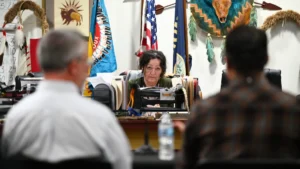
A notable case study involves the Spence family, who once operated as trusted, long-term fixtures in the community. Over several years, they transitioned from small-scale miners to powerful intermediaries who leveraged their knowledge of Dutch and local political connections to expand their influence. By 2020, they were allegedly enforcing a "protection" racket, extorting other miners and employing young Indigenous men to intimidate competitors. This period of instability culminated in a 2023 community meeting, after which the family was effectively sidelined, and their influence in Kawemhakan largely dissipated.
Following their departure, the legal landscape shifted again. Large-scale corporate entities, including Canadian-based firms like Founders Metals, have begun consolidating land concessions. While these corporations operate under a veneer of legal legitimacy, the Wayana community remains wary, fearing that corporate expansion will be no less destructive to their environment than the illegal "wildcat" mining that preceded it.

Environmental and Health Data
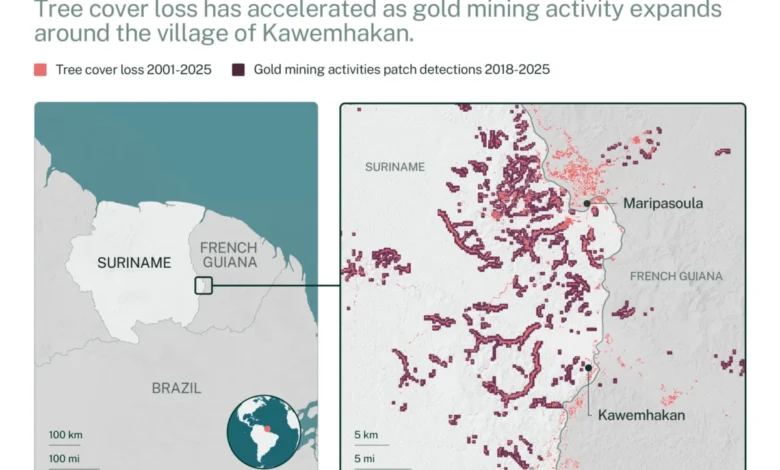
The environmental cost of this mining activity is staggering. According to data from the Monitoring of the Andean Amazon Project (MAAP), an initiative by the NGO Amazon Conservation, approximately 25,000 hectares of forest were lost along the border region between 2021 and 2024. In 2025 alone, an additional 2,800 hectares were cleared.
The damage is not limited to deforestation. The use of mercury—a toxic element used to separate gold from sediment—is endemic to these mining sites. Mercury enters the Lawa River system, bioaccumulating in fish populations, which form the primary protein source for the Wayana. The long-term public health implications for the Indigenous communities are severe, with concerns regarding neurological development in children and chronic health issues among adults.

The Legal Limbo: Land Rights and State Inaction
Suriname remains a global outlier in its failure to grant formal, legally recognized land titles to Indigenous communities. While the government of Suriname has made international pledges—most notably in 2025—to protect forest cover and combat illegal mining, these promises have largely failed to materialize into enforcement on the ground.
The legal framework is complicated by a 2007 ruling from the Inter-American Court of Human Rights, which ordered the state to recognize and title Indigenous lands. Despite this, legislative efforts have stalled repeatedly over the last decade. For Chief Ipomadi Toko Pelenapün and his son, Marciano, the lack of official recognition is the greatest threat to their survival. Without a formal land title, they are unable to legally challenge the government when it grants mining concessions to foreign corporations on their ancestral territory.

"I have no power against the government," Marciano Pelenapün noted. "The government sends the people here."
This creates a paradox where the chief is forced to act as a gatekeeper, negotiating with illegal miners to minimize harm, while simultaneously being undermined by the very state that claims to hold the legal authority over the land.

The Future of the Wayana
The Mulokot Foundation, an Indigenous advocacy group, is currently attempting to bridge the gap between tradition and the modern necessity for economic development. By promoting digital education and monitoring mining activity through satellite imagery, the foundation hopes to provide the Wayana with the tools to defend their territory.
The goal is to move the community toward a future where they are not reliant on the volatile gold economy. However, the path forward is narrow. The youth are caught between the allure of mining wages—often the only available income—and the desire to preserve a traditional lifestyle that is rapidly vanishing.

Implications and Analysis
The situation in Kawemhakan serves as a microcosm of the broader crisis in the Amazon basin. It highlights the failure of state-level environmental governance and the persistent vulnerability of Indigenous peoples in the face of global commodity demand.
If the current trajectory continues, the Lawa River region faces a tipping point. The expansion of corporate mining, combined with the lingering threat of illegal operators, suggests that the environmental degradation will continue to accelerate. For the Wayana, the struggle for land rights is not merely a legal pursuit; it is an existential fight for the right to exist on their own terms.

The international community, particularly those countries where the gold eventually ends up, faces an ethical challenge. As long as the global market provides a high price for gold without stringent requirements for provenance or social responsibility, the "gold culture" of the Lawa River will remain an entrenched, destructive reality. Without a fundamental shift in how the Surinamese state addresses Indigenous land rights and law enforcement in the interior, the Wayana risk losing not just their land, but the very foundation of their culture.
The resilience of the Wayana is evident, but it is being tested by forces far beyond their control. As the government continues to weigh economic interests against international climate commitments, the people of Kawemhakan remain, as they have for generations, the silent sentinels of a rainforest that the rest of the world is only beginning to understand is disappearing.
Related posts: