The island nation of Sri Lanka, a global biodiversity hotspot, currently dedicates approximately 14% of its total landmass to wildlife protected areas, a network that encompasses more than 20 national parks and numerous nature reserves. However, this ecological sanctuary is facing an unprecedented dual crisis. As the country prepares for a severe El Niño weather pattern expected to impact the Indian Ocean region starting in November, conservationists are sounding the alarm over the compounding threats of historical land encroachment and rapid habitat degradation. Protected species, most notably the Sri Lankan leopard (Panthera pardus kotiya) and the Sri Lankan elephant (Elephas maximus maximus), find themselves caught between shrinking habitats and the looming prospect of extreme drought.
The Long Shadow of Encroachment: A Historical Perspective
The struggle to maintain the integrity of Sri Lanka’s protected areas is not a modern phenomenon but rather a complex legacy of the colonial era and the socio-political shifts following the nation’s nearly three-decade-long armed conflict. While wildlife authorities have intensified law enforcement efforts over the past ten years, the results have been inconsistent, particularly in regions where human resettlement and conservation needs collide.
According to Srinath Dissanayake, a wildlife ranger with the Department of Wildlife Conservation (DWC), the geographical distribution of encroachment has shifted significantly over the decades. While many national parks in the southern and central regions have seen stabilized boundaries, the Northern and Eastern provinces—areas heavily affected by the civil war that ended in May 2009—remain vulnerable.

The legal framework for these areas is primarily rooted in the Flora and Fauna Protection Ordinance (FFPO) No. 2 of 1937. However, the practical application of these laws was hindered for years by the conflict. It was only after 2009 that many protected areas in the North were formally gazetted and DWC offices established. This delay allowed for significant human incursion. In parks like Wilpattu, the resettlement of internally displaced persons (IDPs) necessitated the construction of housing schemes and new road networks, often at the direct expense of primary forest cover.
Dissanayake notes that while the DWC has successfully reclaimed some lands through court-mandated eviction orders, the ecological damage is not easily reversed. The transition from a commercialized or agricultural environment back to a natural forest is a generational process. Current initiatives are focusing on forest regeneration in reclaimed agricultural zones, but the "ruggedness" of the original ecosystem is difficult to replicate.
The Disappearing Grasslands: A Crisis of Natural Succession
Beyond human encroachment, a more subtle ecological shift is threatening the survival of Sri Lanka’s megafauna. A landmark 2021 study evaluating habitat changes in Udawalawe National Park from 2005 to 2019 revealed a troubling trend: while forest and scrub cover increased, the vital grasslands essential for herbivores plummeted.
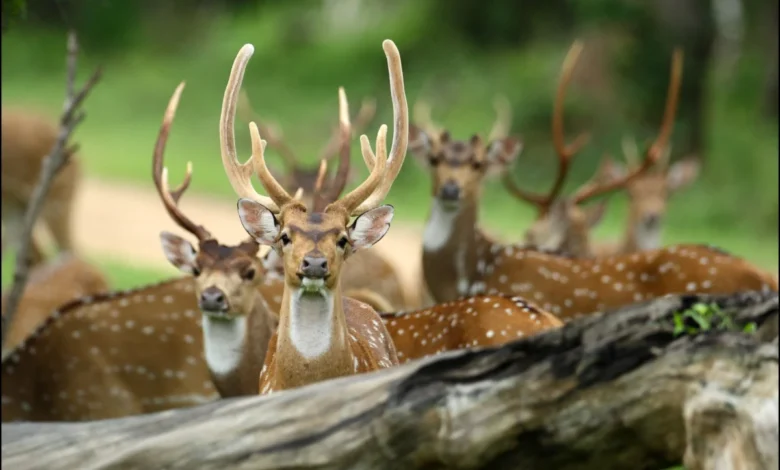
Senior Professor Mayuri Wijesinghe of the University of Colombo explains that this is a result of "natural succession." In the absence of active management, open grasslands naturally evolve into scrubland and eventually into dense dry-zone forests. While an increase in forest cover might seem positive in a vacuum, for elephants and other grazers like the Sri Lankan axis deer, it represents a loss of food security.

Grass constitutes approximately 60% to 70% of an elephant’s diet. When grasslands are invaded by scrub—often dominated by invasive alien species—elephants are forced to look elsewhere for sustenance. This ecological imbalance is a primary driver of the Human-Elephant Conflict (HEC), as herds venture out of protected areas to raid village crops. The 2024 audit report on grassland conservation underscored this, noting that illegal cattle grazing and unauthorized ranches inside national parks further deplete the limited resources available to wild herbivores.
To combat this, experts suggest "prescribed burning"—a controlled management technique used to clear old growth and stimulate the emergence of fresh grass before the rainy season. However, implementing such interventions requires a delicate balance between active management and allowing natural processes to occur.
The Looming Threat of El Niño and Extreme Climate Events
The immediate concern for the DWC and environmentalists is the forecasted El Niño, which is expected to bring extreme heat and prolonged dry spells to the island’s dry zones. This is not the first time Sri Lanka has faced such conditions; major droughts in 2001, 2012, and 2016 serve as grim reminders of the vulnerability of the wildlife population.
Palitha Wickramaratne, a prominent environmentalist, points out that the heat in and around Yala National Park has already reached concerning levels. During previous droughts, the DWC and volunteer groups were forced to intervene by transporting water bowsers into the parks to fill parched natural water bodies. While large-scale infrastructure projects like the 2005 Menik Ganga Diversion and the Weheragala Reservoir were designed to provide water for the Kataragama region and parts of Yala, the internal water bodies of the park—such as Heen Wewa and Gonagala Wewa—remain dependent on seasonal rains and groundwater extraction.

The impact of drought on animal health is often visible and tragic. Emaciated elephants and calves searching for water in cracked lakebeds have become iconic, albeit heartbreaking, images of the climate crisis in Sri Lanka.
The Economic Imperative of Wildlife Conservation
The survival of these species is not only an ethical and ecological necessity but also a cornerstone of the Sri Lankan economy. As the country seeks to recover from recent economic instability, tourism has emerged as a vital source of foreign exchange. In 2025, Sri Lanka welcomed nearly 2.4 million visitors, generating an estimated $3.2 billion in total tourism revenue.
A significant portion of this revenue is driven by wildlife enthusiasts. The Sri Lankan elephant, in particular, is viewed as a major economic asset. A 2022 study by sustainability professional Srilal Miththapala estimated that a single wild elephant could be worth as much as 4.5 million Sri Lankan rupees (approximately $27,000) annually in terms of its contribution to the tourism sector.
Wickramaratne suggests that to protect this "economic asset" during the upcoming El Niño, the government should consider closing high-traffic areas like Yala Block I. Closing the park to tourists would allow animals to move freely toward remaining water sources without the stress and disturbance of safari jeeps, which have often been criticized for overcrowding and speeding.

Official Responses and the Philosophy of Natural Selection
The Department of Wildlife Conservation finds itself in a difficult position, balancing public pressure for intervention with the scientific realities of ecosystem management. DWC Director General Ranjan Marasinghe maintains that while the department is prepared for the drought, there is value in allowing nature to take its course.
"Wild animals develop a ruggedness during drought conditions, and that is required to strike a balance in the ecosystem," Marasinghe stated. He noted that droughts act as a natural population control mechanism for species like wild buffalo, which often overpopulate and compete with other prey for limited resources.
However, the DWC is not remaining entirely passive. The department’s strategy for the upcoming months includes:
- Infrastructure Maintenance: Repairing and deploying water pumps to ensure that established irrigation systems within the parks are functional.
- Resource Allocation: Preparing water bowsers to supplement natural water holes in the event of a total collapse of local water sources.
- Anti-Poaching Patrols: Increasing the deployment of officers to monitor illegal activities. Droughts often make animals more vulnerable to poachers as they congregate around the few remaining water sources. By August, the DWC plans to have its forces at full strength to mitigate these risks.
Analysis of Implications and Future Outlook
The convergence of land encroachment, habitat succession, and climate change represents a "triple threat" to Sri Lanka’s national parks. The findings from the Udawalawe study and the 2024 audit report suggest that a passive approach to conservation may no longer be viable in a rapidly changing climate.

If grasslands continue to disappear, the Human-Elephant Conflict will likely intensify, leading to higher mortality rates for both humans and elephants and increased economic strain on rural communities. Furthermore, if the El Niño impact is as severe as predicted, the resulting loss of wildlife could lead to a significant dip in tourism revenue, hampering the nation’s broader economic recovery.
The path forward requires a multifaceted strategy. Forest regeneration must be coupled with active grassland management and invasive species control. Law enforcement must be consistently applied to prevent further encroachment, particularly in the sensitive Northern and Eastern corridors. Most importantly, the management of these parks must evolve from a reactive model to a proactive one that anticipates the "new normal" of climate extremes.
As Sri Lanka moves toward the end of the year, the eyes of the international conservation community will be on its national parks. The resilience of the island’s iconic leopards and elephants will be tested, and the effectiveness of the DWC’s "balance of science and intervention" will determine the future of one of the world’s most unique natural heritages. The looming El Niño is not just a weather event; it is a stress test for the country’s commitment to its environment and its economic future.
Related posts: