Methane Mitigation and the Global Climate Crisis: Understanding the Science, Sources, and Strategies for Rapid Decarbonization

Methane, a colorless and odorless hydrocarbon, has emerged as a central focus in the global effort to stabilize the Earth’s climate. As the primary component of natural gas, methane ($CH_4$) is responsible for approximately one-third of the global warming experienced since the Industrial Revolution. While carbon dioxide ($CO_2$) remains the most abundant greenhouse gas emitted by human activities, methane’s unique chemical properties make it a far more potent driver of short-term temperature increases. Over a 20-year period, methane is roughly 86 times more effective at trapping heat than $CO_2$. However, because it persists in the atmosphere for only about 12 years—compared to the centuries-long lifespan of carbon dioxide—reducing methane emissions offers a unique "fast-action" lever for slowing the rate of global heating within the next two decades.
The Chemical and Biological Foundations of Methane
Methane consists of a single carbon atom bonded to four hydrogen atoms. It is generated through two primary pathways: geological and biological. Geologically, methane is formed over millions of years as heat and pressure act upon organic matter buried deep within the Earth’s crust. This process creates the fossil fuel deposits currently extracted for energy. Biologically, methane is produced through a process known as methanogenesis. This occurs in anaerobic (oxygen-free) environments where specialized microorganisms called archaea break down organic material. This biological process is responsible for methane production in natural wetlands, the digestive tracts of ruminant animals like cattle, and the decomposing layers of landfills.

In a balanced natural cycle, methane is removed from the atmosphere by "sinks," primarily through chemical reactions in the troposphere and absorption by soil-dwelling bacteria. However, the industrial age has disrupted this balance. Since the mid-18th century, human activity has increased the concentration of methane in the atmosphere by more than 260%, far outstripping the capacity of natural sinks to neutralize the gas.
A Chronology of Rising Atmospheric Concentrations
The history of atmospheric methane is a record of accelerating industrialization and agricultural expansion. In the pre-industrial era, methane levels hovered around 722 parts per billion (ppb). By the late 20th century, these levels began to climb sharply as global demand for meat, energy, and manufactured goods surged.
Data from 2023 indicates that atmospheric methane concentrations reached a record 1,934 ppb, a 265% increase over pre-industrial baselines. The trajectory of these emissions has become increasingly volatile. Between 2000 and 2006, methane levels remained relatively stable, leading some scientists to hope the gas had reached a plateau. However, since 2007, concentrations have resumed a rapid ascent. The years 2020 and 2021 saw the largest annual increases since systematic monitoring began in the 1980s. This surge has alarmed the scientific community, as it suggests that human-caused emissions are being compounded by natural feedback loops triggered by a warming planet.

The Measurement Gap: Satellites vs. Ground Estimates
Accurately tracking methane emissions is a significant challenge for climate scientists. Traditionally, emissions are calculated using "bottom-up" methods, which involve multiplying the number of sources (such as the number of oil wells or head of cattle) by an estimated emission factor. However, recent studies suggest these inventories often underrepresent the true scale of the problem.
In contrast, "top-down" measurements—utilizing aircraft, high-altitude sensors, and satellites—provide a more holistic view of what is actually in the atmosphere. Satellite technology, in particular, has revolutionized methane detection. Missions such as the Environmental Defense Fund’s MethaneSAT and the GHGSat fleet have identified "super-emitters"—specific facilities or leaks responsible for massive volumes of methane. Research has shown that the largest 5% of leaks in the oil and gas industry often account for more than half of the total leakage volume. In the United States, direct measurements have found that methane emissions from oil and gas operations are often 60% higher than the figures reported by the Environmental Protection Agency (EPA).
Primary Anthropogenic Drivers: Agriculture, Energy, and Waste
Human activities are responsible for approximately 60% of total methane emissions. These emissions are largely concentrated in three sectors:

Agriculture (40% of Human-Caused Emissions)
Livestock farming is the single largest source of anthropogenic methane. Ruminant animals, including cows, sheep, and goats, produce methane as a byproduct of enteric fermentation—a digestive process that allows them to break down tough plant fibers. Manure management systems, particularly those involving liquid storage, also contribute significantly to the sector’s footprint. Additionally, rice cultivation accounts for 8% of human-caused emissions. Because rice is traditionally grown in flooded paddies, the waterlogged soil becomes an anaerobic environment perfect for methane-producing archaea.
Fossil Fuels (35% of Human-Caused Emissions)
The energy sector is a major contributor through the extraction, processing, and transport of oil, natural gas, and coal. Methane is frequently vented intentionally for safety or released through accidental leaks in pipelines and wellheads. In coal mining, methane trapped within coal seams is released during the extraction process. Abandoned mines and wells continue to leak methane long after they have ceased production, creating a persistent environmental hazard.
Waste Management (20% of Human-Caused Emissions)
As organic waste—such as food scraps and paper—decomposes in the oxygen-deprived environment of a landfill, it releases significant quantities of methane. Wastewater treatment plants also contribute to this total. With global waste production expected to rise by 73% by 2050, the waste sector represents the fastest-growing source of methane emissions in many developing nations.

Natural Sources and the Threat of Feedback Loops
While human activity is the primary driver of the current crisis, natural sources account for roughly 40% of methane emissions. Wetlands are the largest natural contributor, but they are increasingly being influenced by climate change. This has led to the "wetland methane feedback" loop: as global temperatures rise and rainfall patterns shift, tropical and Arctic wetlands expand and become more biologically active, releasing even more methane, which in turn accelerates warming.
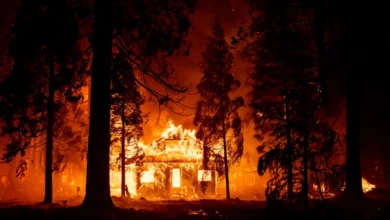
The thawing of Arctic permafrost represents one of the most concerning "tipping points" in the climate system. Permafrost contains vast stores of organic matter and methane hydrates. As the region warms at nearly four times the global average, this frozen ground is melting, potentially releasing a "carbon bomb" that could overwhelm international efforts to limit warming. Furthermore, the increasing frequency and intensity of wildfires are contributing to methane spikes, as incomplete combustion of biomass releases the gas into the atmosphere.
Deconstructing the ‘Bridge Fuel’ Myth
For years, the natural gas industry has promoted methane-based fuels as a "bridge" between coal and renewables. The argument is based on the fact that burning natural gas for electricity produces about half the $CO_2$ of coal. However, this narrative often ignores the methane lost to the atmosphere before it ever reaches a power plant.

Recent analysis suggests that if as little as 0.2% of methane leaks during production and transport, natural gas becomes just as damaging to the climate as coal. In the case of Liquefied Natural Gas (LNG), which must be cooled, transported via tankers, and regasified, the climate footprint is even higher. A 2023 study found that LNG can be 33% more greenhouse-gas-intensive than coal when viewed over a 20-year horizon. This data has prompted a reevaluation of massive LNG infrastructure projects, with critics arguing that building new gas terminals "locks in" decades of high emissions.
Public Health Implications and Ozone Formation
The impact of methane extends beyond temperature rise. Methane is a primary precursor to the formation of ground-level ozone ($O_3$), a hazardous air pollutant. Unlike the protective ozone layer in the stratosphere, ground-level ozone is a powerful respiratory irritant that damages lung tissue and exacerbates conditions like asthma and chronic obstructive pulmonary disease (COPD).
Statistical models indicate that methane-driven ozone is responsible for approximately 500,000 premature deaths globally each year. It also has a devastating effect on food security; ozone inhibits plant growth, leading to billions of dollars in annual crop losses for staples like wheat, soy, and rice. Consequently, reducing methane emissions provides immediate "co-benefits" for public health and agricultural productivity, independent of its climate impact.

Global Policy Responses and the Path Forward
The international community has begun to recognize the urgency of methane mitigation. At the COP26 summit in 2021, the United States and the European Union launched the Global Methane Pledge, which now includes over 150 nations. The pledge aims to reduce global methane emissions by 30% by 2030. If achieved, this could prevent 0.2°C of warming by mid-century—a critical margin in the effort to keep global temperature rise below the 1.5°C threshold established by the Paris Agreement.
However, implementation remains a challenge. Despite the pledge, methane concentrations continue to reach new highs. Experts argue that voluntary commitments must be replaced by rigorous regulation, including mandatory leak detection and repair (LDAR) programs, bans on non-emergency venting and flaring, and incentives for agricultural shifts. Technological solutions—such as feeding seaweed to cattle to reduce enteric fermentation or using "alternative wetting and drying" techniques in rice farming—are available but require large-scale adoption.
Ultimately, the battle against methane is a race against time. Because the gas has such a profound impact in the short term, the actions taken in this decade will determine the climate trajectory for the rest of the century. Transitioning away from fossil fuels, reforming global food systems, and capturing waste-sector emissions represent the most effective path toward a stable and habitable climate.
Related posts: