Bolivia Launches Major Overhaul of National Mining Code Amidst Tensions Between Economic Ambition and Environmental Stewardship

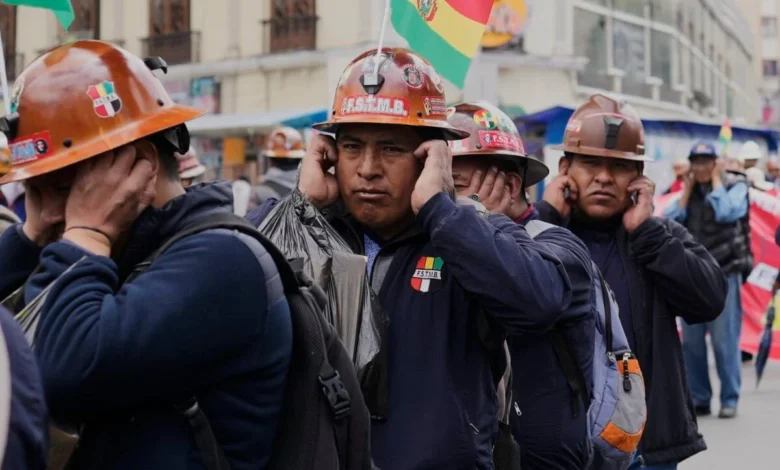
The Bolivian government has officially initiated a comprehensive reform of its national mining framework, a move designed to modernize the industry, stimulate foreign and domestic investment, and consolidate regulatory oversight. This legislative project, which seeks to replace or significantly amend the existing Law 535 enacted in 2014, represents one of the most significant shifts in the country’s economic policy in over a decade. While the Ministry of Mining and Metallurgy maintains that the reforms are essential for creating "legal certainty" and fostering sustainable development, the process has sparked intense scrutiny from Indigenous groups and environmental advocates who fear that the drive for profitability may come at the expense of ecological integrity and community rights.
Chronology and the Path to Reform
The current legislative effort follows years of mounting pressure from various stakeholders within the mining sector, which serves as a cornerstone of the Bolivian economy. In recent years, the industry has faced challenges ranging from fluctuating global commodity prices to the rise of informal, often illegal, mining operations that operate outside of government oversight.
The formal process for the new code began in earnest in mid-2026, characterized by a series of high-level meetings and a "National Mining Summit." The Ministry of Mining and Metallurgy, led by Minister Marco Antonio Calderón de la Barca Quintanilla, has held weekly consultations with representatives from mining cooperatives, private enterprises, and select labor organizations. By late 2026, the inputs gathered from these sessions were handed over to a specialized technical committee. This body is currently tasked with synthesizing the proposals into a preliminary bill, which will eventually be submitted to the Plurinational Legislative Assembly. While the government has yet to announce a firm deadline for the bill’s completion, the rapid pace of the initial consultations suggests a desire to move the legislation forward in the coming months.
The Objectives of Law 535 Modernization
Bolivia’s existing mining code, Law 535, was intended to balance the state’s role as the primary overseer of mineral wealth with the needs of diverse mining actors. However, as global market dynamics shift toward critical minerals and gold, the government argues that the current legal framework is outdated.
According to official ministry statements, the core objectives of the reform include:
- Strengthening Mining Rights: Providing greater security for tenure to encourage long-term capital expenditure.
- Formalization: Implementing mechanisms to bring informal mining operations into the legal fold, thereby increasing tax revenue and regulatory compliance.
- Institutional Restructuring: Streamlining the functions of the Ministry of Mining and the various administrative bodies that govern the sector to reduce bureaucratic friction.
- Environmental Management: Establishing clearer, more enforceable guidelines for responsible environmental stewardship, though the specifics of these standards remain under review.
Potential Legislative Shifts and Industry Proposals
While the full text of the draft legislation remains confidential, information leaked through local reports and stakeholder briefings indicates that several controversial proposals are under consideration. These include the removal of the current 30-year limit on mining contracts, which would allow for indefinite contract extensions, and the introduction of new tax and royalty structures intended to make Bolivian mining more competitive on a global scale.
Perhaps most contentious is the proposal to limit the ability of regional governments to declare "mining-free zones." Furthermore, there is discussion regarding the removal of mandatory prior consultation requirements for Indigenous communities in specific instances, which industry proponents argue will expedite project commencement, but which human rights observers claim violates international treaties such as ILO Convention 169.
Supporting Data and Economic Context
Bolivia’s mining sector remains a primary engine for national growth. According to data from the National Institute of Statistics (INE), the mining and hydrocarbon sectors together account for a significant portion of the country’s export revenue. Gold, in particular, has seen a surge in production and export value over the last five years, largely driven by informal mining cooperatives.

However, this growth is accompanied by significant environmental costs. Scientific assessments of the Beni River basin and other mining hotspots have documented severe mercury contamination. Research published by environmental NGOs indicates that over 160 communities are currently at risk from mercury exposure, a byproduct of gold extraction processes. Additionally, the rapid expansion of lithium exploration projects in the Uyuni salt flats has prompted concerns regarding water usage in a region already prone to arid conditions. These data points provide the backdrop for the skepticism felt by civil society organizations, who argue that the government’s focus on "efficiency" ignores these ecological externalities.
The Stance of Indigenous and Civil Society Groups
The push to reform the mining code has met with significant pushback from organizations such as the National Coordinator for the Defense of Indigenous and Peasant Territories and Protected Areas. Critics argue that the consultation process has been exclusionary, designed to give the appearance of inclusion while favoring the interests of large-scale operators and mining cooperatives.
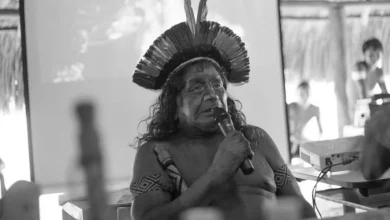
Ruth Alipaz, a prominent representative of the indigenous defense network, has characterized the government’s approach as "talk" that lacks substance. "They are seeking to discuss a new mining code only with mining actors and not with those who can contribute from the perspective of the serious environmental and public health impacts for which gold mining is responsible," Alipaz stated in a recent public address.
The core of the criticism is that by prioritizing "legal certainty" for investors, the government is effectively lowering the bar for environmental compliance. Indigenous groups are particularly concerned that the potential dilution of "prior consultation" requirements will strip them of their primary tool for defending their ancestral lands against encroaching industrial activities.
Official Responses and the Technical Committee
The government has defended the inclusivity of the drafting process by pointing to the presence of the Unified Confederation of Peasant Workers of Bolivia on the technical committee. Officials argue that this ensures that the rural perspective is represented. Furthermore, the ministry emphasizes that the new code will provide the tools necessary to combat illegal mining—a major source of environmental degradation—by creating a more transparent and manageable framework that rewards compliance rather than evasion.
Minister Calderón de la Barca Quintanilla has frequently reiterated that the objective is to create a sector that is "modern, transparent, and legally sound." The government maintains that the current state of the industry is untenable, with conflicting rules and bureaucratic hurdles that discourage legitimate investment while allowing the black market to thrive.
Broader Implications for Bolivia
The outcome of this legislative process will have profound implications for Bolivia’s future. If the government succeeds in creating a robust, modern framework that effectively balances development with environmental safeguards, it could potentially unlock billions in foreign investment. This would be a crucial boost for an economy looking to diversify away from its heavy reliance on gas exports.
However, if the final law is perceived as a "race to the bottom" in terms of environmental and social standards, it could lead to increased social conflict. The history of the region shows that top-down industrial projects that ignore local concerns often result in long-term instability, protests, and project delays that ultimately erode the very "legal certainty" the government seeks to establish.
As the technical committee continues its work, the eyes of the international community, environmental groups, and investors will remain fixed on the draft bill. The challenge for the Bolivian state is to prove that it can foster a mining sector that is not only profitable but also socially responsible and ecologically sustainable—a goal that remains as elusive as it is essential. Whether the new mining code will be the instrument of this transformation or a catalyst for further division remains to be seen. The legislative process, while currently behind closed doors, is destined to become the central theater of Bolivia’s struggle between its resource-rich potential and its commitment to the rights of its people and the health of its environment.