The 2018 Exodus: A Modern Survival Strategy
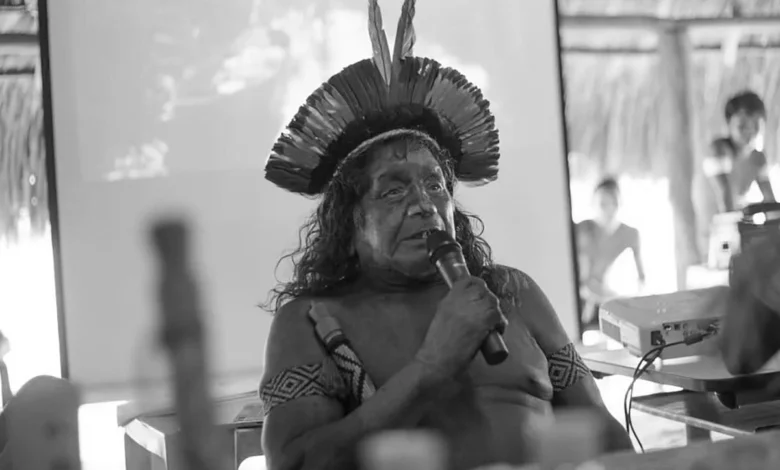
In 2018, Khuiusi Khisêtjê made a choice that echoed the historical displacements of his ancestors, yet was driven by a distinctly modern crisis. The village of Khikatxi, located within the Wawi Indigenous Territory in the state of Mato Grosso, had found itself on the frontline of Brazil’s soy boom. For years, residents watched as single-engine aircraft made repeated passes over the soy fields that hugged the forest’s edge. With each harvest season, the air grew heavy with the scent of agricultural chemicals.
The community reported a litany of health and environmental grievances that have become increasingly common in the "Arc of Deforestation." Residents suffered from persistent itching, respiratory issues, and outbreaks of diarrhea. The local ecology, once the community’s primary supermarket and pharmacy, began to fail. Streams that had run clear for generations turned cloudy; traditional gardens withered; and the wild game that the Khisêtjê relied on for protein began to carry the acrid smell of pesticides.
Recognizing that the invisible wall of the territory’s border offered no protection against chemical drift, Khuiusi directed his people to abandon their established homes. The community moved ten kilometers deeper into the primary forest, away from the agricultural boundary. This move was not merely a physical relocation but a logistical and emotional feat. It required clearing new land, building new longhouses, and re-establishing the complex agricultural cycles of manioc and corn that sustain the village. For Khuiusi, who had spent his life fighting to regain this very land, the move was a pragmatic necessity to ensure the biological survival of the next generation.
A Legacy Born of Near-Extinction
To understand Khuiusi’s leadership, one must look back to the mid-20th century, a period of catastrophic demographic collapse for the Khisêtjê (historically known to outsiders as the Suyá). Khuiusi was born in the 1940s, a time when the Khisêtjê lived in relative isolation in the transition zone between the Amazon rainforest and the Cerrado savannas. However, the "March to the West" promoted by the Brazilian state soon brought the Khisêtjê into contact with frontiersmen, settlers, and government agents.
The results were devastating. Introduced diseases—to which the Indigenous population had no natural immunity—swept through the villages. Smallpox, influenza, and measles decimated the elder population, the keepers of oral history and ritual knowledge. Khuiusi lost his father and most of his male mentors during his youth. By the 1960s, the Khisêtjê population had plummeted to just 50 individuals.
This demographic vacuum forced Khuiusi into a leadership role while he was still a young man. He was tasked with a dual burden: he had to learn the ancient ways from the few remaining elders to ensure the culture did not die with them, and he had to learn the ways of the "white man" (kubẽ) to prevent the total absorption or eradication of his people.
The Reconquest of Wawi: A Decades-Long Legal Battle
The central political achievement of Khuiusi’s life was the recovery of the Wawi territory. When the Xingu Indigenous Park (now the Xingu Indigenous Territory) was created in 1961—the first large-scale Indigenous reserve in Brazil—large portions of the Khisêtjê ancestral lands were left outside its official boundaries. These "orphaned" lands, known as Wawi, were quickly occupied by cattle ranchers and land speculators who viewed the territory as "empty" and available for development.
Khuiusi refused to accept this exclusion. He understood that without their ancestral riverbanks and the burial sites of their ancestors, the Khisêtjê would be a people without a soul. Throughout the 1980s and 1990s, he spearheaded a persistent campaign for the demarcation of Wawi. This involved navigating the labyrinthine bureaucracy of FUNAI (the National Indigenous Foundation) and the Brazilian justice system.
Despite not being fluent in Portuguese and never learning to read or write in the Western sense, Khuiusi became a master of political theater and negotiation. He judged officials not by their rhetoric but by their actions. His persistence bore fruit in the late 1990s when the Wawi Indigenous Territory was officially recognized and demarcated, adding 150,000 hectares to the protected Xingu complex. In a 2008 meeting, he famously rebuffed suggestions that the Khisêtjê were seeking financial compensation for their struggles, stating firmly that their goal was the land itself—the "sacred ground" where their ancestors rested.

Cultural Preservation as Political Resistance
Khuiusi’s approach to cultural preservation was deeply influenced by his collaboration with Western academics, most notably the American ethnomusicologist and anthropologist Anthony Seeger. Seeger, who spent decades living with and studying the Khisêtjê, identified Khuiusi as a brilliant strategic thinker who viewed culture as a tool for survival.
Khuiusi was instrumental in the production of Why Suyá Sing, a seminal work in ethnomusicology. He recognized that as the world changed, the Khisêtjê needed new ways to store their knowledge. He encouraged the recording and transcription of "true songs"—complex musical narratives that contain the history, social laws, and ecological knowledge of the tribe.
He was also a pioneer in Indigenous media. He supported the training of young Khisêtjê filmmakers and photographers, believing that if the tribe documented their own ceremonies and the environmental threats to their land, the world would be forced to acknowledge their existence. He famously argued that the Khisêtjê should not be ashamed to perform their traditional dances in front of politicians or international audiences. For Khuiusi, body paint and ritual song were not "performances" for the benefit of tourists, but assertions of sovereignty. By making the Khisêtjê visible, he made it harder for the state to ignore their rights.
Supporting Data: The Expanding Frontier
The pressures that forced Khuiusi to move his village in 2018 are reflected in broader environmental data for the region. Mato Grosso is currently the largest producer of soy, corn, and cotton in Brazil. According to data from the MapBiomas project, the state has lost millions of hectares of native vegetation to industrial agriculture over the last three decades.
The Xingu Indigenous Territory, which houses 16 different ethnic groups, has effectively become a "green island" surrounded by a sea of monoculture. Satellite imagery shows a stark line where the forest ends and the soy fields begin. This proximity creates a "border effect" where the use of pesticides—Brazil is one of the world’s largest consumers of agrochemicals, including glyphosate and 2,4-D—impacts the health of Indigenous communities and the biodiversity of the protected headwaters of the Xingu River.
Despite these external pressures, the Khisêtjê have seen a remarkable demographic recovery under Khuiusi’s long tenure. From the low of 50 people in the mid-20th century, the population has grown to over 700 people living in 11 different villages. This 1,400% increase is a testament to the stability provided by the recovery of their lands and the improvement of healthcare and food security within the territory.
Analysis of Implications and Future Challenges
The death of Khuiusi Khisêtjê comes at a time of heightened tension for Brazil’s Indigenous peoples. While the current administration has shown more support for Indigenous rights than its predecessor, the legislative "Marco Temporal" (Time Limit) thesis continues to threaten the legal security of many territories. This legal theory argues that Indigenous peoples are only entitled to lands they physically occupied on the day the 1988 Constitution was promulgated—a standard that ignores the history of forced displacement that leaders like Khuiusi spent their lives correcting.
The legacy Khuiusi leaves behind is one of "grounded modernization." He did not reject the outside world; instead, he sought to control the terms of engagement. Today, the Khisêtjê use GPS to patrol their borders, internet-connected radios to coordinate between villages, and legal teams to fight encroachment. However, as Khuiusi often reminded his people, these tools are useless if the "true songs" are forgotten.
His life serves as a blueprint for Indigenous leadership in the 21st century: a combination of uncompromising territorial defense, pragmatic negotiation with state actors, and a fierce commitment to the internal transmission of traditional knowledge. As the Khisêtjê mourn their "primary anchor," the responsibility now shifts to a younger generation of leaders—many of them filmmakers, teachers, and activists trained under his watch—to navigate an Amazon that is increasingly defined by the clash between industrial extraction and ecological preservation.
Khuiusi Khisêtjê’s journey from a youth in a dying tribe to an elder of a thriving, land-owning nation remains one of the most significant success stories in the modern history of the Xingu. His final act of moving the village was a message to the world: the Khisêtjê will do whatever is necessary to remain the masters of their own destiny.
Related posts: