In the twilight hours near the village of Puwakpitiya, perched on the northern periphery of the Knuckles Mountain Range in central Sri Lanka, a team of researchers embarked on a quest that would eventually span two decades. As the mist descended over the lush, rolling paddy fields and the dense, fog-laden forests of the Dumbara mountains, the scientists deployed a sophisticated array of traps, hoping to capture the elusive small terrestrial mammals that navigate the complex boundary between agricultural land and wild forest. While standard rodent survey protocols often rely on global attractants like peanut butter, the researchers quickly realized that the local mouse population of this unique ecosystem was entirely indifferent to such foreign offerings. Instead, they adapted to the local environment, utilizing pieces of burnt coconut—a staple of the region—as a successful lure. This simple, culturally informed adjustment proved to be the key that unlocked the discovery of the Dumbara spiny mouse (Mus dumbara), a new species to science.
The Long Road to Classification
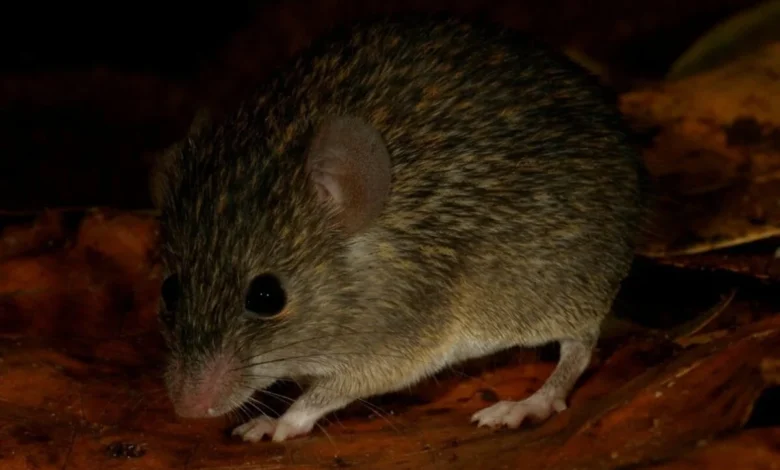
The journey toward identifying the Dumbara spiny mouse began on March 11, 2004, when a field team conducting a biodiversity survey stumbled upon a specimen that defied standard classification. Six days later, a second female specimen was secured in a baited trap. Both animals exhibited physical traits that distinguished them from any known species in the region: they were diminutive, roughly the size of a child’s palm, possessing a fulvous-gray coat interspersed with distinct, spiny guard hairs and a slender, naked tail that exceeded the length of their head and body.

Initially, researchers noted a superficial resemblance to Mayor’s mouse (Mus mayori), a species endemic to the Sri Lankan highlands. However, inconsistencies in tail length and cranial morphology suggested that these specimens might represent a distinct evolutionary lineage. Despite this early promise, the specimens remained a scientific enigma for over 20 years. It was only through a rigorous, multi-year analysis—combining advanced molecular genetics and detailed morphological examinations of skull structures—that the team, led by Suyama Boyagoda of the University of Peradeniya, could formally confirm the existence of a new species. The findings, recently published in the journal ZooKeys, officially designate the rodent as Mus dumbara.
A Genetic Divergence and Morphological Distinctness
The taxonomic validation of the Dumbara spiny mouse is rooted in compelling biological evidence. According to the research, the species belongs to the subgenus Pyromys. A critical factor in its identification was the discovery of a significant genetic divergence; DNA sequencing revealed a 11.7% variance between Mus dumbara and its closest relatives, Mus fernandoni and Mus mayori. This degree of genetic distance is substantial in evolutionary biology, indicating that the Dumbara spiny mouse has likely been evolving on its own distinct trajectory for a considerable period.
Morphologically, the species is distinguished by its unique skull features, including a prominent supraorbital ridge—a bone structure located above the eye socket—that is more developed than in its cousins. Furthermore, the animal’s physical appearance is quite specific: it features pinkish-white toes on its hind feet and a dorsal coat that blends fulvous-brown, gray, and white hues. The thinness of the mandibles and skull bones, when compared across the three related species, provided the researchers with the granular detail necessary to confirm that they were not merely looking at variations of a known animal, but a unique, isolated evolutionary branch.

Challenges in Biodiversity Research
The path to describing Mus dumbara was not without significant hurdles. Between 2014 and 2015, Suyama Boyagoda returned to the original collection site, investing roughly 1,900 "trap nights"—a standard unit of effort in wildlife biology—using identical methods to those that yielded the original specimens. Despite this intensive effort, no additional mice were captured. This failure to recapture the species in the subsequent decade highlights the profound difficulty of studying small mammals in complex, high-altitude tropical environments.
Experts in the field suggest that this elusiveness is a primary reason why mammals, unlike frogs, lizards, or freshwater crabs, have seen fewer new species descriptions in Sri Lanka in recent years. Larger mammals are easier to document, but the "invisible" fauna of the forest floor often requires prolonged, costly, and logistically taxing fieldwork. As noted by Sampath Goonatilake of the IUCN, the scarcity of up-to-date identification guides for small mammals further complicates efforts for researchers and students alike. The discovery of Mus dumbara serves as a poignant reminder that much of the island’s biodiversity remains cataloged only in the deepest, least accessible reaches of its forests.
Conservation Implications and Habitat Vulnerability
The discovery of the Dumbara spiny mouse introduces both a new highlight to Sri Lanka’s endemic mammal list and a new concern for conservationists. Currently, the species has only been recorded from a single valley within the Knuckles Mountain Range. This limited range raises immediate questions regarding the species’ population density and overall survival prospects. While the Knuckles Range is protected as a UNESCO World Heritage Site, the forest edges—the very zones where Mus dumbara was found—are under constant pressure.

Anthropogenic activities, including infrastructure development, road construction, land clearing for agricultural expansion, and plantation encroachment, pose direct threats to these fragile micro-habitats. Furthermore, climate change acts as a force multiplier; as global temperatures rise, species restricted to specific elevational bands may find their habitable range shrinking as they are pushed higher into cooler, potentially less suitable terrain.
Madhava Meegaskumbura, an evolutionary biologist and co-author of the study, emphasized that until further surveys can determine the actual population size and distribution, Mus dumbara should be viewed as potentially at risk. The species might be surviving at extremely low densities, or it may exist in other forest fragments that have yet to be surveyed. Protecting these "unseen" habitats is essential, as small rodents play a vital role in local food webs, serving as a critical prey source for predators such as the black eagle (Ictinaetus malaiensis).
The Path Forward for Taxonomic Research
The description of Mus dumbara serves as a call to action for the scientific community in Sri Lanka. Researchers are now advocating for a comprehensive, island-wide taxonomic revision that employs both classical morphological study and modern phylogenetic approaches. Such an undertaking is essential to clarify the evolutionary relationships of the island’s 16 species of rats and mice, of which six are endemic.

However, the financial barrier remains the most significant obstacle. A robust, nationwide research program would require significant funding—amounting to millions of rupees—and deep collaboration between local universities, government agencies, and international research institutions. Without such sustained support, there is a risk that other, as-yet-undiscovered species may vanish from the landscape before they are ever documented.
The story of the Dumbara spiny mouse is, in many ways, a microcosm of the challenges facing biodiversity in the 21st century. It illustrates that nature still holds many secrets, even in well-studied regions, and that the intersection of traditional ecological knowledge—such as using burnt coconut as a bait—and high-tech molecular science is the most effective tool available to bridge the gaps in our understanding of the natural world. As the international scientific community turns its attention to the Knuckles Range, the future of this tiny, spiny-haired resident remains a subject of intense interest and cautious hope.
Related posts: