Saving the Doring Fiery Redfin: A Landmark Victory Against Invasive Predators in the Breekkrans River

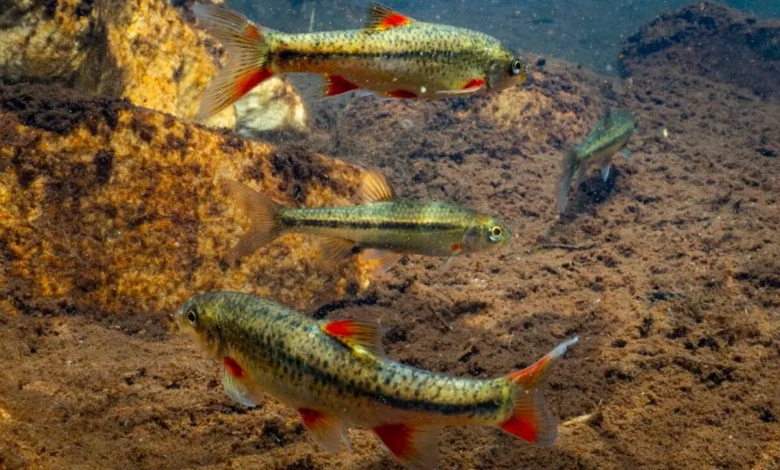
In a significant triumph for aquatic biodiversity, a dedicated restoration project in South Africa’s Western Cape has successfully eradicated invasive spotted bass from an eight-kilometer stretch of the Breekkrans River, providing a vital lifeline to the critically endangered doring fiery redfin. Located approximately two hours north of Cape Town, this ambitious conservation effort marks a turning point in the battle against non-native species that have long decimated the region’s unique freshwater fish populations. By employing mechanical removal techniques and engineering physical barriers, researchers have expanded the habitat of the rare redfin fivefold, offering a scalable blueprint for river restoration efforts across the country.
The Historical Context of the Invasion
The introduction of spotted bass (Micropterus punctulatus) into South African river systems dates back to the late 1930s. During this era, government authorities and angling enthusiasts imported several North American sport fish species, driven by the desire to bolster recreational fishing opportunities. While these fish achieved the intended goal of providing a challenging angling experience, the ecological repercussions were catastrophic.
Bass are apex predators characterized by high reproductive rates and an aggressive foraging behavior that is poorly suited to the delicate evolutionary balance of South African river systems. Unlike many of the native fish species, which have evolved to survive in smaller, isolated pools, the spotted bass thrives in a variety of water conditions, effectively turning native species into prey. According to Martine Jordaan, a faunal ecologist at the provincial conservation authority Cape Nature, the very traits that make the bass a prized catch—its predatory instincts and competitive nature—are precisely what make it a devastating invasive threat. Most native South African river fish, including the doring fiery redfin, rarely exceed 12 centimeters in length, making them easy targets for the larger, voracious bass.
For decades, the spotted bass expanded its range aggressively, moving upstream and downstream until meeting impassable geographic features such as waterfalls. Consequently, many endemic species were pushed into isolated, upstream "refugia"—small, high-altitude stream segments where the larger, more robust bass could not navigate.
The Plight of the Doring Fiery Redfin
The doring fiery redfin (Pseudobarbus doring) serves as a sentinel species for the health of the Breekkrans River ecosystem. Before the intervention, the species was teetering on the brink of total collapse. Jeremy Shelton, a freshwater conservation ecologist with the Freshwater Research Centre (FRC), notes that the Breekkrans River represented the primary stronghold for the species, housing a population of only a few hundred adults. With a secondary, extremely sparse population existing in only one other river, the loss of the Breekkrans population would have almost certainly guaranteed the extinction of the species in the wild.
Prior to the restoration project, the redfin’s existence was confined to a narrow, two-kilometer stretch of the river—the only section that had remained free of bass due to the river’s physical topography. This extreme fragmentation created a high risk of localized extinction caused by drought, pollution, or disease, as there was no connectivity to allow for genetic exchange or population expansion.
The Breekkrans River Restoration Project: A Chronology
The Breekkrans River Restoration Project represents a collaborative synergy between the FRC, Cape Nature, and the Fynbos Fish Trust. The initiative gained significant momentum in 2023, shifting from observation and assessment to active, aggressive intervention.
The project operates on a seasonal cycle, focusing efforts during the Southern Hemisphere summer when water levels are lower and fish are more concentrated, facilitating more effective removal. The methodology is labor-intensive and precise, involving a combination of:

- Mechanical Removal: Conservationists utilize a suite of tools including specialized nets, spear guns, and electrofishing equipment. Electrofishing, which uses a low-voltage current to temporarily stun fish for safe capture, has proven particularly effective for identifying and removing bass from complex rocky habitats.
- Physical Containment: Recognizing that eradication is futile if re-colonization occurs, the team constructed a robust downstream fish barrier. This engineering feat acts as a one-way gate, preventing bass from migrating back into the restored upper reaches of the river while allowing for the natural downstream drift of native organisms.
- Monitoring and Maintenance: Ongoing surveys are conducted to ensure that no bass remain in the treated areas. The project team performs regular sweeps to capture any juvenile bass that may have survived or bypassed initial efforts.
Tangible Results and Ecological Recovery
The impact of the project has been immediate and measurable. By removing the predatory pressure of the spotted bass across an eight-kilometer stretch, the project effectively expanded the habitat of the doring fiery redfin from two kilometers to ten kilometers—a 400% increase in accessible range.
Data collected by the FRC indicates that the recovery is not limited to the redfin. All native fish species present in the Breekkrans have exhibited signs of population rebound. According to Jordaan, the removal of the bass has removed a "predatory ceiling," allowing native species to move, feed, and breed across a much larger expanse of the river. The increased range serves to improve the overall genetic health of the populations, as fish are no longer confined to small, stagnant pools where inbreeding and competition for limited resources were once significant risks.
Broader Implications for South African Freshwater Conservation
The success of the Breekkrans project serves as a "proof of concept" for freshwater management. For years, the prevailing consensus in some conservation circles was that once a river was invaded by bass, the damage was irreversible and full eradication was impossible. The Breekkrans team has effectively dismantled this narrative, demonstrating that with enough resources, long-term commitment, and the correct mechanical approach, invasive species can indeed be purged from entire river systems.
This development is being closely watched by conservationists across South Africa. The Western Cape is home to a unique assemblage of "Fynbos fish"—species found nowhere else on earth. Many of these are currently threatened by the same invasive bass and trout species that occupied the Breekkrans. The techniques refined in this project—particularly the combination of seasonal mechanical removal and structural barrier installation—provide a scalable, replicable model for other threatened rivers.
However, researchers caution that while this is a major victory, it is not a "set and forget" solution. The threat of reintroduction remains a persistent concern. Illicit movement of fish by humans, or extreme weather events such as heavy floods, could potentially allow bass to bypass or breach barriers. Consequently, the project emphasizes the need for continuous community engagement and education to prevent future human-assisted spread of invasive species.
A Future-Oriented Strategy
As climate change alters the hydrology of South African rivers, the importance of maintaining robust, interconnected habitats for endemic fish is becoming increasingly critical. The work performed on the Breekkrans River does more than just save a single species; it restores the structural integrity of the entire riverine corridor.
The project highlights the necessity of multi-stakeholder partnerships. By combining the scientific expertise of the FRC, the regulatory and management capacity of Cape Nature, and the funding support of the Fynbos Fish Trust, the project has overcome hurdles that would have been insurmountable for any single entity.
Looking forward, the success of the Breekkrans project offers a glimmer of hope in an era of declining global biodiversity. It demonstrates that the tide can be turned against invasive threats, provided there is the political will, the scientific rigor, and the dedication to see complex restoration projects through to completion. As the doring fiery redfin begins to repopulate its ancestral waters, the Breekkrans River stands as a testament to the fact that extinction is not inevitable, and that determined human intervention can indeed foster the recovery of the natural world.
Related posts: