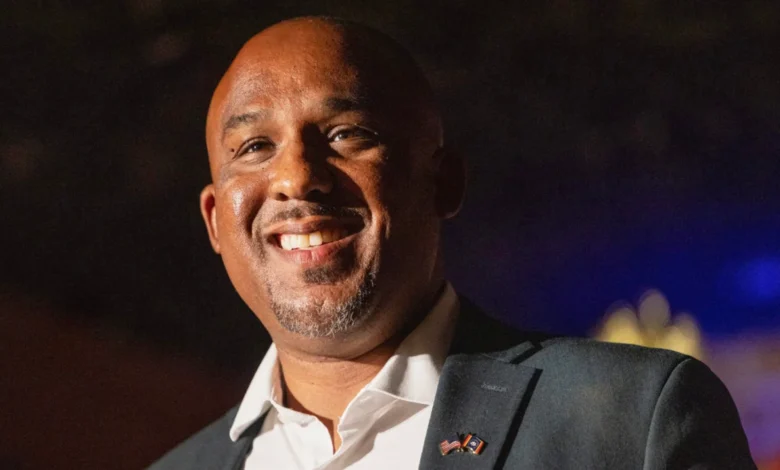
The landscape of American politics shifted fundamentally on November 3, 2026, as Democrat Scott Colom secured a victory in the Mississippi United States Senate race, marking the first time a Black candidate has been elected to the Senate from the state since the Reconstruction era. This outcome represents a watershed moment for Mississippi, a state long defined by its turbulent history of racial tension and systemic voter disenfranchisement. Colom, a career prosecutor, overcame a significant polling deficit and a political environment heavily tilted toward the Republican incumbent, Cindy Hyde-Smith. His triumph, achieved in a state that supported the Republican presidential ticket by a 23-point margin as recently as 2024, signals a potent resurgence of voter mobilization among Black Mississippians.
A Chronology of the 2026 Campaign and the Road to November
The trajectory of the 2026 midterm cycle was dictated by the Supreme Court’s decision in Louisiana v. Callais, which effectively dismantled core protections of the Voting Rights Act. This judicial shift prompted Republican leadership in Mississippi to initiate plans to redraw legislative maps, a move aimed at diluting the influence of the state’s Black electorate.
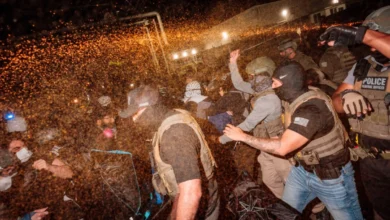
In early 2026, the political atmosphere in the state grew increasingly polarized. Following the Court’s ruling, Governor Tate Reeves publicly signaled his intention to restructure districts to neutralize the influence of Representative Bennie Thompson, the state’s sole Black member of Congress. By May 2026, thousands of citizens gathered in Jackson, Mississippi, for one of the largest civil rights demonstrations seen in decades. This mass mobilization served as the primary catalyst for the surge in voter registration and enthusiasm that would eventually define the general election.
Throughout the summer, Colom’s campaign focused on the theme of "existential democracy," positioning the election as a direct referendum on the rights of marginalized communities. By the time the October debate season arrived, Colom had successfully pivoted from a defensive posture regarding his policy platform to a campaign of cultural engagement, famously utilizing viral media to critique the economic policies of his opponent.
Statistical Analysis of the Electoral Shift
The electoral data from the 2026 midterms reveals a stark reversal of historic trends in the American South. Historically, Black voter participation in Mississippi had lagged behind that of white voters; however, in 2026, that gap closed significantly. Data from TargetSmart indicates that turnout in majority-Black counties reached 87.4 percent of 2024 levels, compared to just 73.8 percent in majority-white areas.
Exit polling conducted by major news organizations confirmed that Colom secured approximately 97 percent of the Black vote, while also capturing 27 percent of the white vote—a margin that proved decisive in a race decided by only a few thousand ballots. Furthermore, voters identified "the health of democracy" as their second most pressing concern, trailing only economic stability. Those who ranked democracy as their top issue favored Colom by a two-to-one margin.
The campaign’s grassroots efforts were unprecedented. The Mississippi NAACP, under the leadership of Executive Director Charles Taylor, deployed a massive mobilization infrastructure. Their efforts included the establishment of 11 dedicated field offices, the registration of over 17,000 new voters, and a digital outreach campaign that accounted for 1.4 million text messages and 700,000 pieces of physical mail. This investment in organizational capacity allowed the campaign to effectively counter systemic barriers, such as the state’s lack of early voting and the restrictive requirements for absentee ballots.
Challenges to the Ballot: Voter Inactivation and Systemic Hurdles
The election was not without significant controversy. In the weeks preceding the vote, Secretary of State Michael Watson implemented a voter roll maintenance program that resulted in the removal of roughly one in nine voters. The state utilized data provided by credit reporting agency Experian to verify voter residency and status. Critics, including civil rights attorneys and voting rights advocates, argued that the use of such data—which is often prone to errors—effectively disenfranchised a segment of the population that was disproportionately low-income and Black.
Despite these hurdles, the sheer volume of provisional ballots cast on Election Day suggests a high degree of voter persistence. Observers noted that the "red flag" status of many voters led to long lines at polling stations as citizens fought to verify their eligibility. This resilience is being studied by political scientists as a primary example of how targeted suppression efforts can inadvertently trigger a "backlash effect" among mobilized communities.
Official Responses and Political Repercussions
The victory of Scott Colom has created an immediate crisis for the Mississippi Republican Party. Prior to the election, legislative leaders had anticipated a special session to finalize new, more restrictive maps for state and federal districts. Following the results, these plans have been indefinitely suspended. Political analysts suggest that any attempt to aggressively gerrymander now risks further energizing the Democratic base ahead of the 2027 state-level elections.
Amir Badat, Southern states director for Fair Fight Action, noted that the results force a recalculation for state Republicans. "If I were in the legislature, I would take a hard look at these results," Badat stated. "It is no longer a mathematical certainty that eliminating majority-Black districts will lead to a guaranteed Republican victory; in fact, it may be the very thing that cements a competitive Democratic challenge in every district."
While the state leadership has yet to issue a formal statement regarding the impact of the election on future redistricting, the silence from the Governor’s office is viewed as an acknowledgment of the newfound political reality in Mississippi.
Broader Implications for Southern Democracy
The elevation of Scott Colom to the U.S. Senate is being analyzed as a potential turning point for the "Black Belt" of the United States. For generations, the state served as a symbol of the most extreme forms of racial violence and political repression, from the lynching of Emmett Till to the assassination of Medgar Evers. That the state has now elected a Black representative to the highest chamber of Congress is a development that resonates far beyond Mississippi’s borders.
The victory also highlights a generational shift in how civil rights organizations operate. The modern strategy, characterized by data-driven voter targeting and a focus on protecting the mechanics of democracy, has proven successful in a climate that many feared would see a total rollback of the progress made since the 1960s.
"Medgar Evers did the work that we did this year," said Charles Taylor, reflecting on the shared history between his office and the civil rights icon. "He took a piece of paper and asked someone to put their name on it so they could be one step closer to exercising the most fundamental promise of our democracy. We have simply picked up that pen."
Looking Toward 2027 and Beyond
The impact of this election is expected to be felt in the upcoming 2027 state legislative races. With a new Senator representing the state in Washington, local activists are shifting their focus toward maintaining the momentum of the 2026 cycle. Angela Grayson, civic engagement director for the Mississippi Black Women’s Roundtable, emphasized that the victory provides a new sense of agency for the youth of Mississippi.
"For my daughters, this means the possibility of staying here and not just surviving, but thriving," Grayson noted. The sentiment is shared by many who see Colom’s election as a transition from a era of protest to an era of governance.
As the state prepares for the next legislative session, the national spotlight remains on Mississippi. The question is no longer whether the state can overcome its history of voter suppression, but how the political apparatus will adjust to a demographic and electorate that has demonstrated an unprecedented capacity for mobilization. With more Black elected officials now serving in Mississippi than at any point in the state’s history, the political landscape is entering a period of profound transition, signaling a potential shift in the balance of power across the American South.