Major News Networks Suspend White House Pool Coverage in Unprecedented Protest Against Access Restrictions

In an unprecedented move that signals a significant breakdown in the relationship between the executive branch and the Fourth Estate, a coalition of the nation’s largest television news networks has collectively decided to suspend participation in the White House television press pool. This action, taken on Monday, September 21, 2026, serves as a direct response to the Trump administration’s decision to ban CNN, Politico, and MS NOW from covering official White House events. The blockade, which began in earnest over the weekend, has effectively created a blackout of traditional, independent reporting at the highest levels of the U.S. government.
The joint decision involves ABC, CBS, CNN, Fox News, and NBC. These organizations constitute the core of the White House television press pool—a long-standing mechanism designed to ensure that the public has access to the president’s activities, regardless of the specific political climate. By refusing to provide a replacement pool, these networks are signaling that they will not participate in a system where the government unilaterally dictates which journalists are permitted to bear witness to the president’s actions.
The Chronology of a Constitutional Confrontation
The roots of the current crisis can be traced back to Friday, September 18, 2026, when the White House moved to exclude specific outlets from the press briefing room and other presidential events. President Donald Trump, citing what he characterized as "constant ‘reporting’ FAKE NEWS," officially rescinded the credentials of reporters from CNN, Politico, and MS NOW.
By Saturday, September 19, the impact of this directive became physically apparent as journalists from the affected outlets were systematically denied entry to the White House grounds. The exclusion of these reporters was not merely a loss of access for the individual organizations, but a disruption of the information pipeline that serves the broader American public.
The escalation continued throughout the weekend, culminating in a legal filing on Monday morning. In a coordinated effort, CNN, Politico, and MS NOW filed a lawsuit in federal court against the Trump administration. The plaintiffs argue that the administration’s actions constitute a flagrant violation of the First Amendment, which protects the freedom of the press, and the Fifth Amendment, which guarantees due process. Legal analysts suggest that the core of the case rests on whether the White House can exercise absolute discretion in managing press access to a public institution, or if such access is a protected right that cannot be revoked as a form of retaliation for unfavorable coverage.
The Collapse of the Pool System
The television press pool is a logistical necessity in modern journalism. It allows a rotating group of reporters to capture audio, video, and photos of the president, which are then distributed to smaller news organizations that cannot afford to maintain a permanent, high-level presence in the West Wing.
Following the bans, Bryan Boughton, the Fox News Washington Bureau Chief and the current chair of the TV pool, communicated the collective decision to subscribers in an email. Boughton confirmed that there would be no replacement pool established to cover the president’s travel. While the networks indicated that they would continue to cover other aspects of the federal government—such as legislative proceedings in Congress and other public-facing events—the silence regarding presidential travel is deafening.
The administration’s attempt to fill the void with "secondary" crews has, thus far, proven technically and journalistically insufficient. On Monday, the White House attempted to proceed with a ribbon-cutting ceremony for a newly constructed helipad on the South Lawn. The event, which was meant to highlight a significant piece of infrastructure, was marred by poor audio quality, with the official feed broadcasting little more than static to the outside world. Reporters from outlets that were not part of the boycott noted the inability to hear the president, highlighting the reliance on the professional expertise and equipment that the traditional pool provides.
Financial and Logistical Context
The friction between the administration and the media comes at a time when the White House is preparing for high-stakes diplomatic visits. Reports indicate that the construction of the new helipad, which was the site of Monday’s technical failure, cost approximately $875,000. The project was expedited specifically to accommodate the upcoming visit of Chinese President Xi Jinping.
The administration’s apparent desire to control the visual narrative of such an event—by limiting the pool to organizations that might provide more favorable coverage—has backfired. By effectively silencing the primary pool, the White House has stripped itself of the professional apparatus required to broadcast its own message to a global audience. The Associated Press has stepped in to provide limited coverage of the upcoming United Nations General Assembly, but the loss of the integrated television pool suggests that the administration may struggle to manage the optics of the Xi visit if the press corps remains in a state of suspended engagement.
Implications for Democratic Norms
The current standoff is not merely a logistical dispute; it is a fundamental test of the relationship between the executive branch and the constitutional role of the press. For decades, the White House press pool has operated under the assumption that the president’s movements are a matter of public record. When that record is filtered through a lens of administrative approval, the risk of propaganda replaces the transparency of journalism.
Constitutional scholars point out that while the White House has a right to manage security and space, it does not have the authority to suppress news organizations based on the content of their reporting. If the administration succeeds in establishing a precedent where journalists are vetted for ideological compliance, the role of the press as an independent check on executive power is fundamentally compromised.
Furthermore, the participation of Fox News—an organization often viewed as sympathetic to the administration—in the joint statement of solidarity is a significant development. It suggests that the institutional necessity of a free and open press is viewed by media executives as a common interest that transcends partisan affiliations. The five networks’ joint statement underscores this: "The public has a vital interest in receiving accurate, independent information about its government. No administration should restrict a news organization because it objects to its reporting."
Looking Ahead: A Standoff in Washington
As the United Nations General Assembly begins this week in New York, the diplomatic and domestic implications of the ban are becoming increasingly clear. The administration is currently operating without the benefit of the primary, independent eyes and ears that usually document the president’s interactions with world leaders.
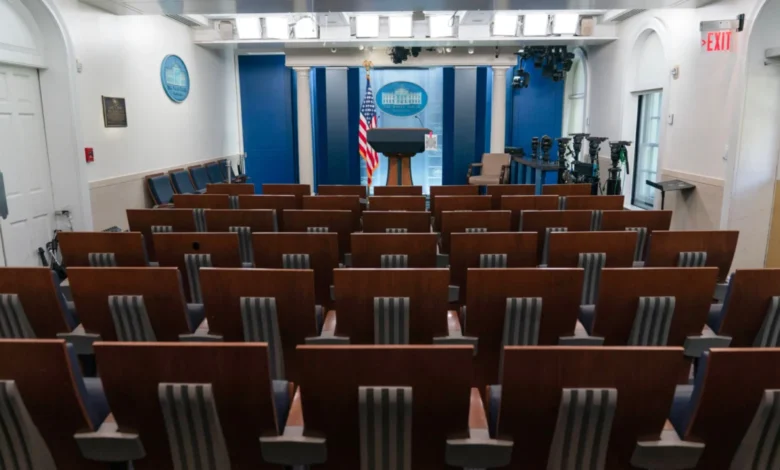
The lawsuit filed by the affected outlets is expected to move through the courts with urgency. Whether a judge will grant an injunction to restore press credentials remains the immediate question. In the meantime, the White House press room sits largely empty—a symbol of the growing rift between the president and the traditional institutions that cover his administration.
The incident highlights a broader, ongoing challenge for the American public: how to maintain access to factual, government-provided information in an era where the boundary between public service and political branding is becoming increasingly blurred. For the time being, the silence from the White House briefing room serves as a stark reminder that when the press is restricted, the public is the one ultimately left in the dark. The coming days will determine whether the administration chooses to restore standard media access or continues to pursue a strategy that, by all current metrics, has significantly hindered its ability to communicate with the nation and the world.
Related posts: