Hollywood Nears Major Relief as Bipartisan Federal Film and Television Tax Credit Gains Crucial Momentum in Washington

The American entertainment industry could be heading toward a significant economic turning point as legislative efforts to establish a federal film and television tax credit gather unprecedented momentum in Washington, D.C. With broad bipartisan backing in Congress and active support from the White House, the push to enact a national production incentive has shifted from a long-shot lobbying effort to a top-tier legislative priority. Proponents of the measure argue that a federal tax credit is no longer merely a luxury for Hollywood studios, but an economic imperative necessary to curb the steady bleeding of domestic production jobs to international hubs offering aggressive financial subsidies.
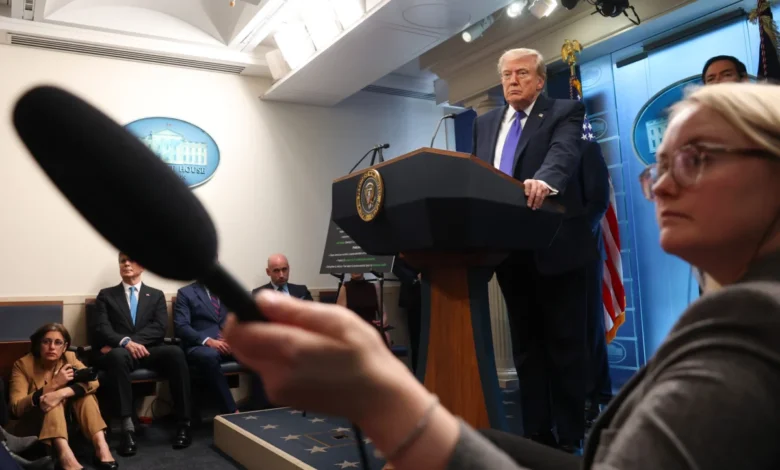
During a widely publicized press conference at the White House, President Trump expressed strong optimism regarding the passage of the legislation, revealing that his administration is actively engaged in negotiations to secure its final approval. Emphasizing the widespread legislative backing behind the initiative, the president noted that the measure is actively moving through congressional channels. He specifically highlighted California Democrat Senator Adam Schiff—who originally introduced the landmark legislation alongside South Carolina Republican Senator Tim Scott—signaling a rare moment of cross-party alignment on an economic policy affecting the creative sector.
The legislative vehicle at the center of these discussions is the Motion Picture, Television, and Entertainment Revitalization Act. Originally introduced in September, the bill has experienced a dramatic surge in political viability. Just days prior to the administration’s public endorsement, the bill’s sponsors announced a major expansion of their legislative coalition, adding more than 60 new cosponsors in the House of Representatives and four key figures in the Senate. This growing roster of bipartisan lawmakers underscores a shared realization among federal representatives: local economies across the United States are missing out on millions of dollars in revenue as film and television crews watch production opportunities systematically migrate overseas.
The Genesis of the Federal Push and Executive Involvement
The momentum behind a national tax credit did not materialize overnight. The policy discussion gained serious executive traction in August, following a high-profile meeting between President Trump and veteran actor Jon Voight, who serves as one of three industry special ambassadors appointed early last year to address the systemic challenges plaguing contemporary Hollywood. Following those consultations, the administration began exploring how federal intervention could revitalize an entertainment workforce heavily impacted by post-pandemic industry contraction, shifting streaming economics, and stiff global competition.
While regional incentives have long existed at the state level—with states like Georgia, New Jersey, New York, and California competing fiercely for domestic projects—industry advocates have argued that localized tax breaks are fundamentally insufficient to counter the massive national subsidies offered by foreign governments. Countries such as the United Kingdom, Canada, Australia, and various European nations have systematically lured major Hollywood blockbusters and high-end television series away from American soil by offering robust, reliable national tax structures.

During his White House remarks, President Trump acknowledged the efforts of states like Georgia and New Jersey in maintaining competitive local tax credits, yet he maintained that state-level incentives alone cannot stop the flight of American capital and labor. According to the administration’s assessment, only a comprehensive federal credit can level the playing field on an international scale, theoretically allowing Hollywood to dramatically expand its domestic footprint and bring shuttered or relocated operations back home. Furthermore, the administration has reportedly explored whether the scope of the legislation could be extended to financially assist struggling domestic movie theaters, though officials note that specific provisions regarding exhibition venues remain under review.
A Bipartisan Coalition and Legislative Strategy
The political coalition supporting the Motion Picture, Television, and Entertainment Revitalization Act has expanded rapidly, bridging ideological divides that frequently paralyze Capitol Hill. The recent wave of legislative support includes prominent Republican senators such as Katie Britt of Alabama and Thom Tillis of North Carolina, alongside influential Democrats including Chris Coons of Delaware and Dick Durbin of Illinois. This geographic and political diversity highlights that the economic footprint of the entertainment industry extends far beyond traditional coastal hubs, heavily impacting local vendor ecosystems, hospitality providers, and small businesses nationwide.
Representative Linda Sánchez of California, a key House sponsor of the legislation, has been vocal about the urgency of passing the measure. In a recent press release distributed by Senator Schiff’s office, Sánchez emphasized that lawmakers from all political backgrounds have witnessed firsthand the loss of well-paying production jobs within their home districts. Urging her colleagues to seize the current political window, Sánchez called for Congress to pass the legislation before the start of the new calendar year so that qualifying productions can immediately factor the federal benefits into their financial planning for the upcoming production cycle.
While a dedicated standalone floor vote has not yet been officially scheduled by congressional leadership, multiple political and legislative sources indicate that the most viable pathway for the bill involves attaching it to an upcoming must-pass legislative vehicle, such as a stopgap government funding measure or an omnibus spending package. Utilizing a larger legislative package would allow proponents to bypass traditional procedural roadblocks, ensuring a faster trajectory toward a final vote before the legislative session concludes.
Financial Structure and Projected Benefits for Industry Workers
If successfully passed and signed into law, the Motion Picture, Television, and Entertainment Revitalization Act would institute a structured federal incentive framework designed specifically to reward productions that hire domestic talent. Under the proposed guidelines, qualifying film and television projects would receive a baseline 20 percent tax credit calculated against qualified labor expenses for American workers. Moreover, this credit possesses the potential to scale up to 30 percent for productions that fulfill specific bonus criteria, such as shooting in designated economically distressed areas or maintaining high standards of workforce diversity and safety.

For below-the-line crew members, craftspeople, and industry technicians who have spent recent years watching staple studio productions relocate to Toronto, Vancouver, London, and other international production centers, the financial incentive promises tangible relief. Producers would face a compelling fiscal motivation to keep projects stationed within the United States, thereby preserving thousands of specialized jobs for American grips, electricians, set designers, costumers, and post-production specialists.
The policy has garnered unanimous backing from organized labor and industry trade organizations. Major unions representing the creative community—including the International Alliance of Theatrical Stage Employees (IATSE), SAG-AFTRA, and the Directors Guild of America (DGA)—have thrown their complete weight behind the legislative push. They are joined by the Motion Picture Association (MPA), the American Hotel & Lodging Association, and the influential labor federation AFL-CIO.
Broader Economic Implications and Outlook
The potential enactment of a federal film and television tax credit carries far-reaching economic implications that extend well beyond traditional studio lots. Industry analysts point out that entertainment production functions as a powerful economic multiplier. Every dollar spent on a film or television shoot ripples directly into local communities, driving revenue for hotels, restaurants, hardware suppliers, transportation companies, and real estate lessors.
The endorsement of the legislation by hospitality and labor groups underscores this broad economic footprint. By keeping productions stateside, the federal credit aims to stabilize not just the entertainment industry, but the vast secondary service economy that relies on steady production schedules.
As negotiations continue on Capitol Hill and the White House maintains its public pressure for a swift resolution, key lawmakers remain optimistic about the bill’s ultimate prospects. Senator Schiff expressed confidence in the unified front presented by both political parties and the executive branch, declaring that the collective political will exists to guide the legislation across the finish line.
As Hollywood looks toward the new year, the convergence of bipartisan congressional leadership, organized labor support, and executive backing suggests that a federal tax credit is closer to reality than at any previous point in modern industry history. If enacted, the legislation could fundamentally reshape the economics of American media production, anchoring future cinematic and television storytelling firmly within the borders of the United States.
Related posts: