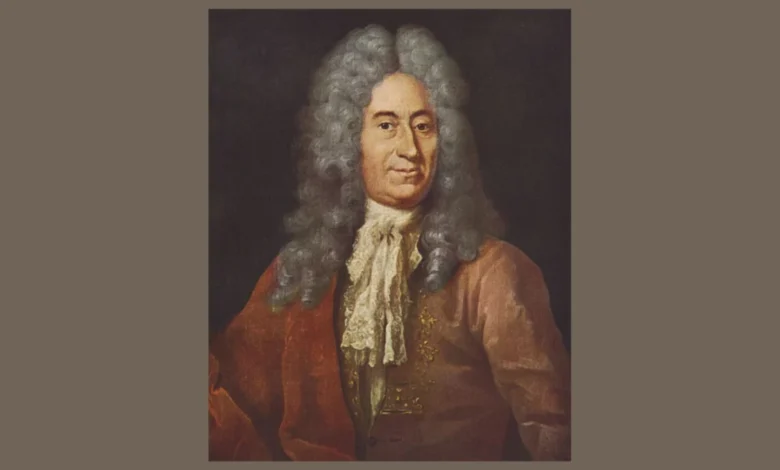
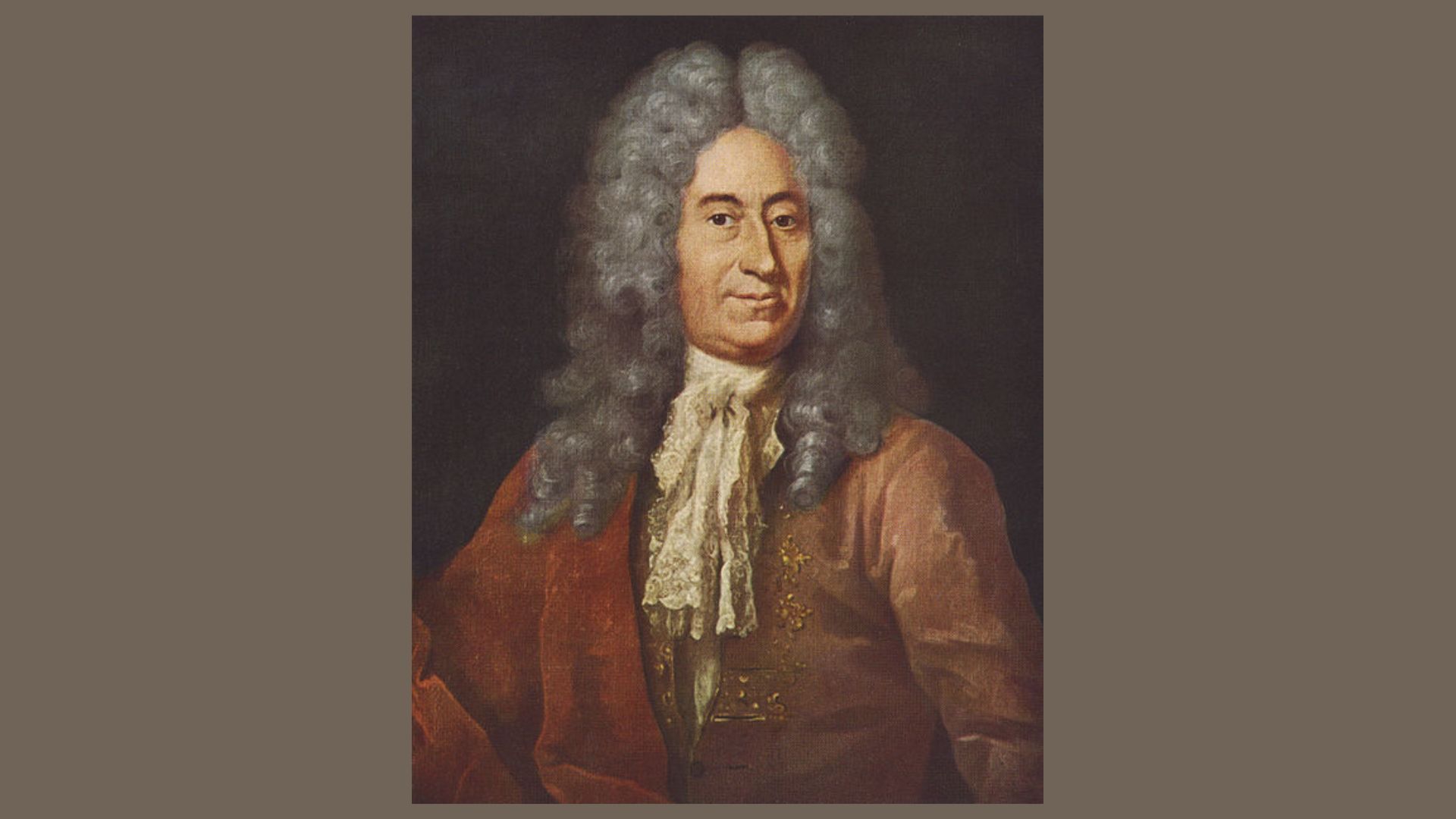
On November 21, 1676, Danish astronomer Ole Rømer formally presented a revolutionary concept to the Royal Academy of Sciences in Paris: light does not travel instantaneously, but rather moves at a finite, measurable speed. Before this monumental declaration, the prevailing scientific consensus—championed by classical philosophers and early modern thinkers alike—held that illumination was an infinite phenomenon, bridging distances across the cosmos in a theoretical fraction of zero time. Rømer’s accidental breakthrough shattered this assumption, fundamentally altering humanity’s comprehension of physics, astronomy, and the very architecture of the universe.
The Accidental Discovery in the Shadow of Jupiter
The foundation of Rømer’s historic discovery was not laid out of a direct desire to measure light, but rather from a pragmatic quest to solve one of early modern navigation’s greatest challenges: keeping accurate time at sea. Working at the Royal Observatory of Paris under the direction of Giovanni Domenico Cassini, Rømer was meticulously tracking the orbital patterns of Io, one of Jupiter’s four largest Galilean moons.
Discovered by Galileo Galilei in 1610, Io fascinated astronomers because of its regular eclipses. As the volcanic moon swept behind the massive bulk of Jupiter, it vanished from view with remarkable consistency, dipping into shadow and reemerging roughly every 42 hours. Cassini and other astronomers hoped to utilize Io as a universal celestial clock. If the timing of its eclipses could be cataloged with absolute precision, sailors could use the moon’s disappearance and reappearance to calculate their longitude while far out on the open ocean, where terrestrial dead reckoning frequently failed.
However, as Rømer tracked these occultations over several years, a perplexing discrepancy emerged. The timings of the eclipses refused to remain uniform.
The Cosmic Discrepancy
Rømer meticulously recorded the precise moments when Io slipped behind Jupiter and when it reappeared. He noticed a distinct pattern tied to the relative positions of Earth and Jupiter in their respective orbits around the sun.
When Earth was positioned at its closest point to Jupiter—striding along the same side of the solar system—Io’s eclipses occurred roughly 11 minutes ahead of the calculated average schedule. Conversely, as Earth and Jupiter drifted toward opposite sides of the solar system, with the sun and immense interplanetary distances lying between them, the observed eclipses fell increasingly behind schedule, eventually lagging by approximately 11 minutes.
To many contemporary scientists, these timing irregularities were dismissed as observational errors, atmospheric distortions, or imperfections in mechanical clocks. Rømer, however, suspected a deeper mechanical truth. He realized that the discrepancy correlated directly with the changing distance between Earth and Jupiter.
When Earth was farther away, the light reflected from Io had to travel a greater physical distance to reach Rømer’s telescope at the Paris Observatory. If light traveled instantaneously, the distance would be irrelevant; the signal would register at the observer’s eye the exact microsecond the event occurred. The fact that the delay scaled predictably with distance meant only one thing: light required a finite amount of time to bridge the vast chasms of space.
From Hypothesis to Historical Presentation
Armed with years of observational data, Rømer developed a mathematical model to account for the delay. He successfully used his calculations to predict an eclipse of Io that would occur on November 9, 1676, demonstrating that his theoretical framework had practical predictive power.
Twelve days later, on November 21, 1676, Rømer formally brought his findings before the distinguished members of the Royal Academy of Sciences in Paris. He posited that the discrepancies in Io’s eclipses were caused by the finite speed of light. He estimated that it took roughly 22 minutes for light to travel a distance equal to the diameter of Earth’s orbit around the sun.
While Rømer’s initial calculation of the travel time was somewhat inaccurate—partly because the exact dimensions of Earth’s orbit were not yet precisely known at the time—his conceptual leap was entirely correct. He had proven beyond a reasonable doubt that light possesses a definitive velocity.
Immediate Scientific Reactions and Skepticism
Like many paradigm-shifting discoveries, Rømer’s proposition was met with a mixture of intrigue and heavy skepticism within the seventeenth-century scientific community. Prominent figures, including the celebrated mathematician and physicist Christiaan Huygens, immediately recognized the profound implications of Rømer’s work. Huygens used Rømer’s observations, combined with his own estimates of Earth’s orbital radius, to calculate a numerical value for the speed of light that was remarkably close to modern standards—translating to roughly 220,000 kilometers per second, a notable achievement given the technological limitations of the era.
However, other traditionalists resisted the idea. The philosophical baggage of instantaneous propagation, deeply rooted in Aristotelian physics and supported by various interpretations of optics, proved difficult for some contemporaries to discard overnight. It took decades of refined measurements and further theoretical developments—most notably by British astronomer James Bradley in 1728, who discovered the aberration of light through stellar observations—to universally cement Rømer’s conclusions into the bedrock of astronomical science.
Why Rømer’s Discovery Mattered
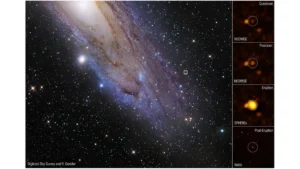
The quantification and conceptualization of the speed of light transformed natural philosophy into modern physics. By establishing that information and illumination travel at a finite rate, Rømer inadvertently laid the conceptual groundwork for understanding that looking out into the night sky is, inherently, looking back in time. Because light takes time to traverse cosmic distances, the starlight reaching human eyes left its source years, centuries, or even millions of years ago.

Centuries later, this foundational realization became the cornerstone of Albert Einstein’s theory of special relativity. In modern physics, the speed of light—commonly denoted as $c$—serves as the ultimate cosmic speed limit. According to relativistic mechanics, objects possessing mass, ranging from macroscopic vehicles to microscopic neutrinos, cannot accelerate to the speed of light because doing so would require an infinite amount of energy.
Furthermore, the constancy of the speed of light in a vacuum provided physicists with a universal invariant. This invariance dismantled Newtonian absolutes of space and time, revealing that both dimensions are malleable and relative to the observer’s frame of reference, united into a single four-dimensional continuum known as spacetime.
Broader Implications for Modern Space Exploration
Today, the legacy of Ole Rømer’s work extends far beyond theoretical physics; it governs every aspect of modern aerospace engineering and deep-space communication.
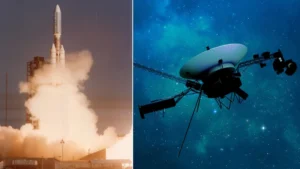
When NASA communicates with the Voyager probes drifting at the edge of interstellar space, or commands the Perseverance rover traversing the Martian landscape, mission controllers must account for the finite speed of light. Radio waves and optical signals, which travel at the speed of light, take minutes or even hours to cross interplanetary distances. A signal sent to Mars can take anywhere from roughly 3 to 22 minutes to arrive, depending on the orbital alignments of the two planets—a modern, high-tech echo of the very delays Rømer observed with Jupiter and its moon Io over 340 years ago.
Without an accurate understanding of the speed of light, satellite navigation systems like GPS would fail entirely. GPS relies on the precise timing of signals transmitted from satellites orbiting Earth to receivers on the ground. Because radio waves travel at the speed of light, even a miscalculation of a fraction of a microsecond would result in positioning errors spanning hundreds of meters.
Conclusion
Ole Rømer’s meticulous recording of an eclipsing moon in the late seventeenth century unlocked the door to the cosmos. What began as an astronomer’s quest to solve a navigational puzzle evolved into a monumental leap for human understanding. By proving that light travels at a finite velocity, Rømer not only gave science its ultimate speed limit but also provided the key required to measure the true scale of the universe—a legacy that continues to illuminate the path of modern science and exploration today.