British Startup Foundational Successfully Tests Ultra-Lightweight Retroreflectors in Low Earth Orbit to Combat the Mounting Space Debris Crisis

As commercial and governmental entities continue to launch satellites at an unprecedented rate, Earth’s orbital environment has grown increasingly congested. Millions of pieces of space debris, ranging from defunct rocket bodies to microscopic paint flecks, now circle the globe at hypersonic speeds. Because even a millimeter-sized fragment can inflict catastrophic damage upon impact, the global space community faces an escalating crisis often referred to as the Kessler Syndrome—a theoretical scenario where the density of objects in low Earth orbit (LEO) is high enough that collisions between objects could cascade, rendering entire orbits unusable.
To combat this growing threat, a London-based startup named Foundational has introduced an innovative tracking solution. Developed in collaboration with the European Space Agency (ESA), the company’s Retro-2 laser retroreflector system has successfully passed its inaugural in-space demonstration. This breakthrough offers a promising method for maintaining the trackability of spacecraft long after they have lost power or gone silent, providing a crucial tool for orbital traffic management.
The Mechanics and Success of the Retro-2 Demonstration
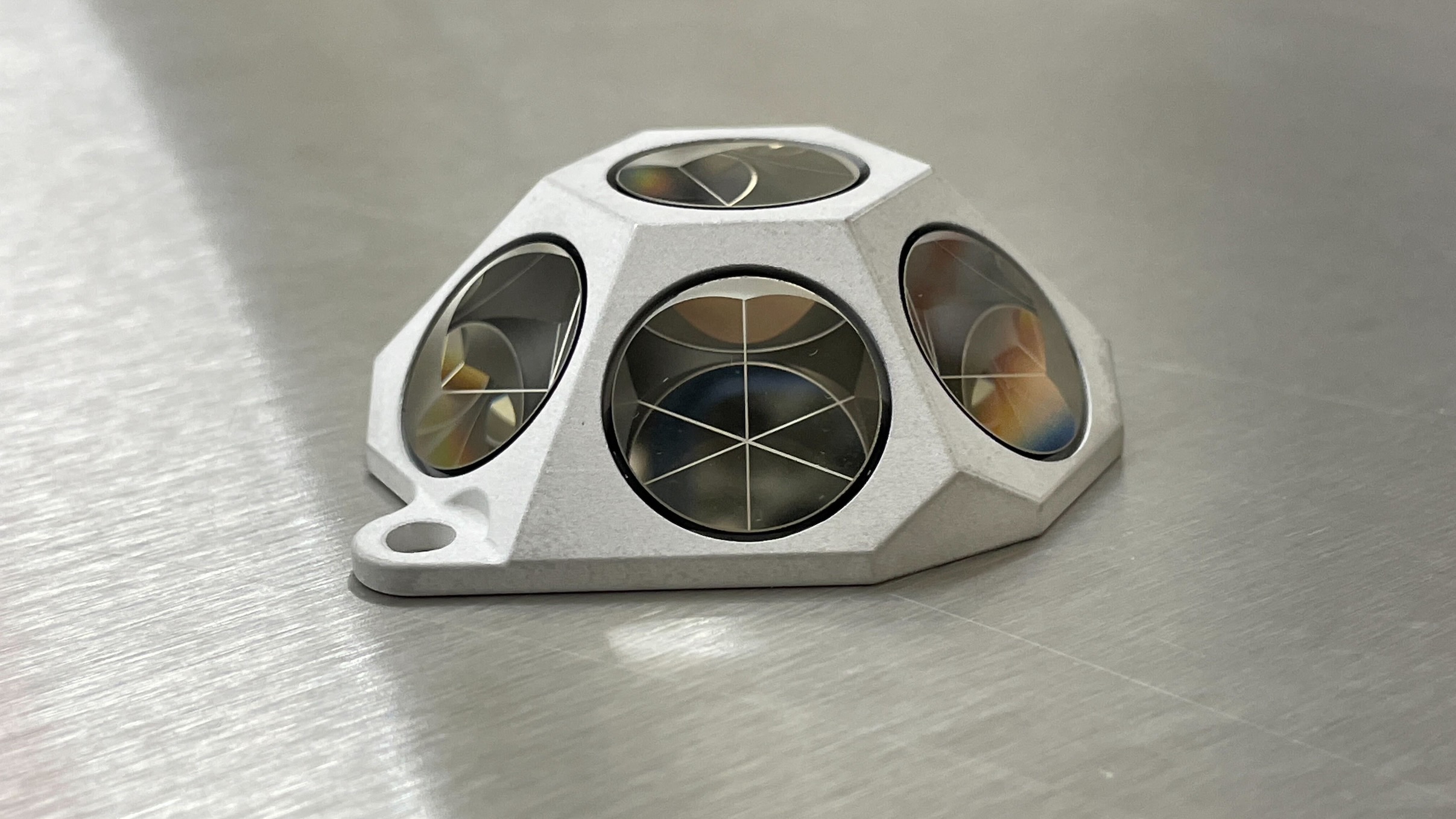
The newly tested Retro-2 system is a remarkably compact device. Weighing a mere 50 grams (1.8 ounces), the miniature payload features seven spherical reflective surfaces designed to bounce laser beams directly back to their source on the ground. Crucially, the technology operates entirely independently of its host vehicle. According to statements released by Foundational, the retroreflector requires "no electronics, power or commands from its host spacecraft," eliminating any single point of failure related to onboard power depletion or command system degradation.
The journey to this orbital milestone began earlier this year. In July, Foundational integrated the Retro-2 device onto a small cubesat, which was subsequently nested within an ION carrier craft operated by the Italian aerospace logistics firm D-Orbit. The entire assembly launched into space aboard a SpaceX Transporter rideshare flight.
Operating in low Earth orbit at altitudes ranging between 600 and 870 kilometers (approximately 370 to 540 miles), the demonstration mission put the retroreflector through rigorous operational checks. During five distinct orbital passes, ground-based laser-ranging stations targeted the tiny device. The Retro-2 system performed impeccably, successfully returning 6,111 laser shots.
Dave Gooding, Foundational’s co-founder and chief technical officer, emphasized the precision achieved during these tests. "Our tests have shown that a device weighing just 50 grams can deliver millimeter-level ranging precision," Gooding stated. "As space becomes increasingly crowded, keeping satellites trackable throughout their lifetime and beyond is critical to managing collision risks."
A Rapid Rise in the Booming Space-Sustainability Sector
Foundational’s successful space test marks a significant leap forward for a company that is still in its corporate infancy. Founded in 2025, the startup only recently emerged from stealth mode in late 2025. Despite its short operating history, the company has already secured significant financial backing, raising £8.2 million ($10.9 million) in pre-seed funding. This capital injection underscores the immense investor appetite for technologies addressing orbital congestion and space sustainability.
Foundational is far from alone in attracting venture capital and commercial interest. The broader space-servicing and debris-mitigation sector has experienced a massive influx of investment throughout 2026. For instance, Starfish Space recently closed a Series B funding round securing more than $100 million to advance its orbital rendezvous and docking capabilities. Similarly, Katalyst Space secured $12 million to deploy robotic systems for satellite servicing in geostationary orbit, while international players like India’s Cosmoserve Space are rapidly expanding their operational footprints.
The Broader Context of Space Traffic Management
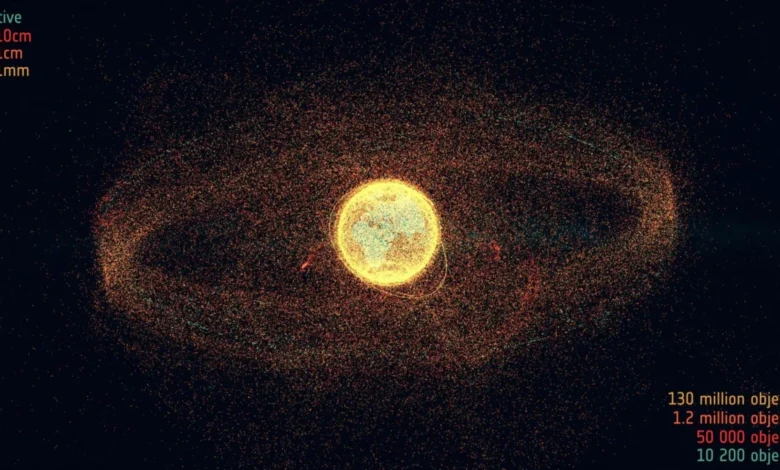
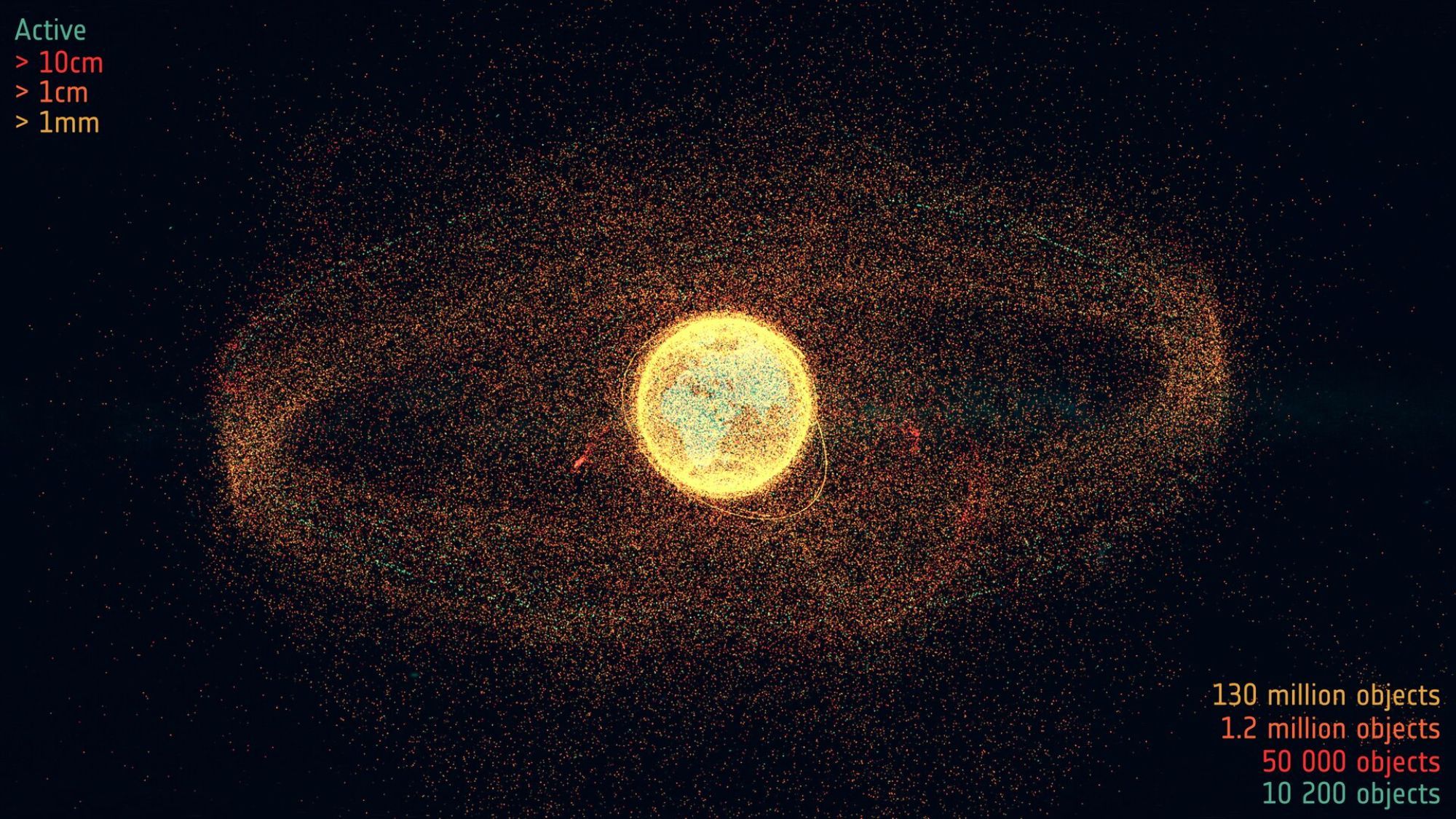
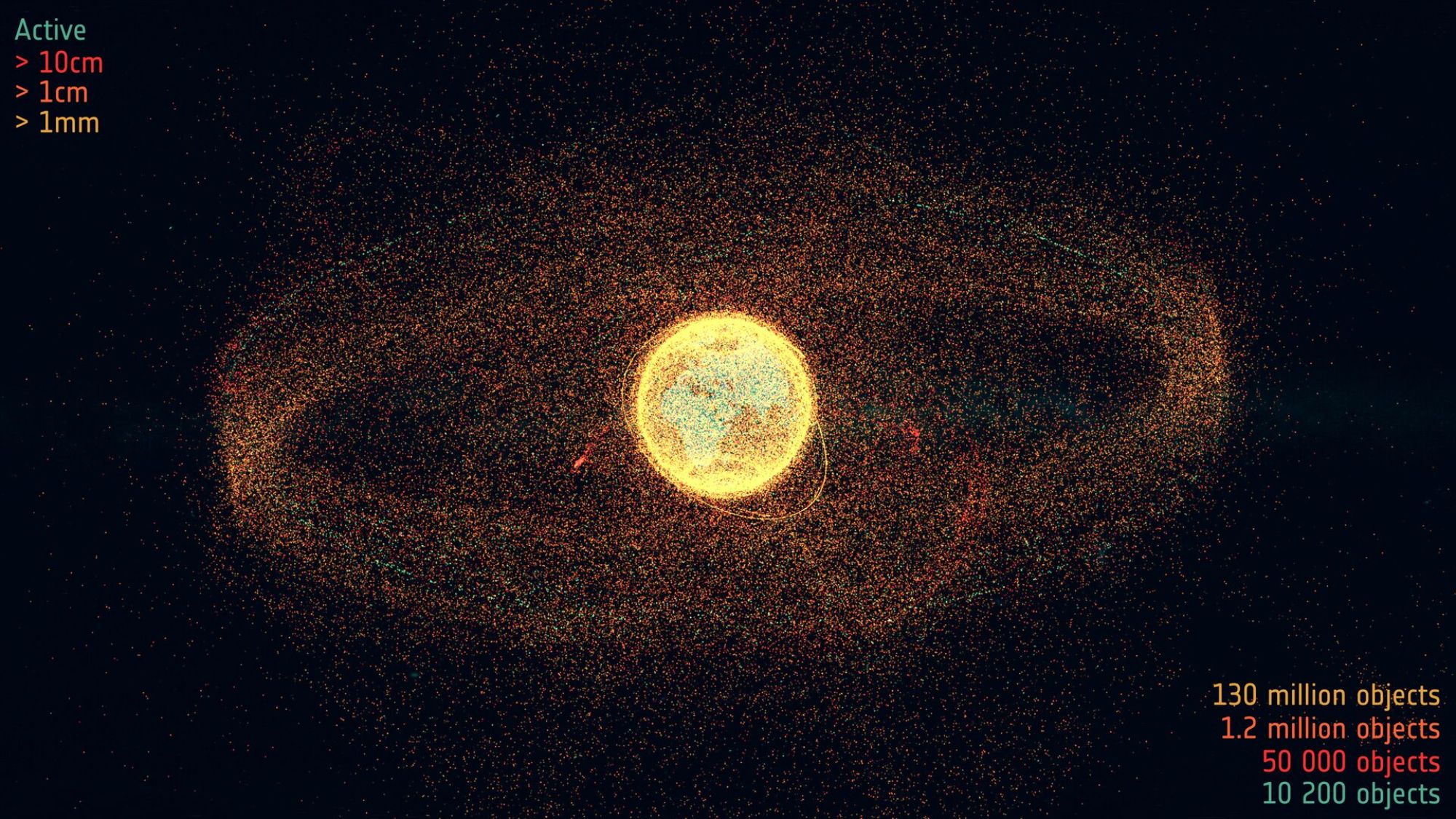
The urgency behind these commercial ventures stems from the sheer volume of material currently orbiting the planet. According to tracking data compiled by the European Space Agency, there are tens of thousands of trackable debris objects larger than 10 centimeters, hundreds of thousands of smaller fragments between 1 and 10 centimeters, and millions of microscopic particles.
Historically, tracking these objects has relied heavily on radar systems and optical telescopes. However, these traditional ground-based tracking methods have severe limitations. Radar cross-sections can be deceptive, and optical tracking requires clear weather and optimal lighting conditions. Furthermore, when a satellite is decommissioned, loses its attitude control, or suffers a catastrophic power failure, it essentially becomes a "dark" target—a tumbling, uncooperative hazard that is exceptionally difficult to predict and track with high precision.
Various mitigation strategies have been proposed or tested over the years. Engineers have experimented with giant space nets, magnetic capture systems, and even ground-based lasers designed to nudge debris into decaying orbits via photon pressure. Meanwhile, regulatory bodies worldwide are increasingly enforcing strict end-of-life deorbiting protocols for newly launched satellites. However, these regulations do little to address the legacy population of silent, defunct spacecraft and debris already populating valuable orbital real estate.
Implications and Future Outlook for Orbital Security
By offering a passive, ultra-lightweight tracking enhancement, Foundational’s retroreflector technology bridges a critical gap in space situational awareness (SSA). If retroreflectors like Retro-2 become standard equipment on future satellite buses, operators and space traffic management agencies will be able to maintain precise, millimeter-level position data on spacecraft throughout their active lives and long after mission termination.
This persistent trackability significantly reduces the uncertainty margins currently required for collision avoidance maneuvers. Today, satellite operators frequently must execute costly fuel-burning maneuvers simply because the tracking uncertainty of a nearby piece of debris or inactive satellite is too wide to guarantee a safe miss distance. By drastically narrowing these uncertainty windows, precise laser-ranging via passive retroreflectors could save millions of dollars in expended station-keeping fuel while extending the operational lifespans of active commercial constellations.
As humanity transitions toward an increasingly space-faring economy, managing the commons of low Earth orbit is no longer an academic exercise; it is an urgent economic and security imperative. With the successful space validation of its Retro-2 system, Foundational has positioned itself as a key innovator in the nascent economy of orbital upkeep, proving that even the smallest technological additions can yield outsized impacts in the fight against space debris.