FAA Lifts Nationwide Ground Stop After Critical Air Traffic Communication Failures Disrupted US Airports

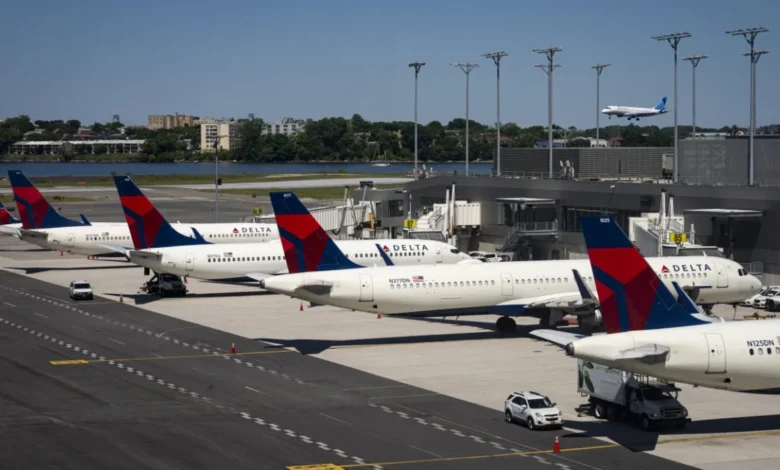
The Federal Aviation Administration officially lifted a nationwide ground stop on Friday evening, bringing an end to a tense and chaotic period that paralyzed commercial aviation across the United States. The unprecedented order, which halted all departing flights at airports nationwide, was triggered by sudden and severe communication issues affecting multiple Air Route Traffic Control Centers. While the regulatory agency acted swiftly to contain the emergency and later confirmed that operations were gradually resuming, the incident immediately raised critical questions regarding the vulnerability of the nation’s core aviation infrastructure, digital resiliency, and the growing integration of advanced automated systems into air traffic management.
The emergency grounding order, issued on Friday afternoon, sent immediate shockwaves through the travel industry, stranding tens of thousands of passengers in terminals from coast to coast and throwing flight schedules into absolute disarray. Industry analysts and transportation experts quickly pointed out the extreme rarity of such a sweeping mandate. In the history of modern American commercial aviation, a nationwide ground stop of this magnitude has been implemented only twice before. The first instance occurred in the immediate aftermath of the terrorist attacks on September 11, 2001, when the entire United States airspace was locked down for days. The second occurred more recently, in January 2023, when a corrupted database file within the Notice to Air Missions (NOTAM) safety alert system forced a 90-minute national grounding, disrupting thousands of flights and prompting intense congressional scrutiny.
As travelers scrambled to make sense of the sudden disruption, federal authorities worked under immense pressure to identify the root cause of the communication failure. According to preliminary statements released by the Federal Aviation Administration, the breakdown originated within data and voice communication networks linking several vital Air Route Traffic Control Centers. These regional facilities are responsible for managing high-altitude, en-route air traffic as aircraft traverse the country between metropolitan areas. When communication links between these centers falter, controllers lose the seamless ability to hand off aircraft tracking data and coordinate flight paths safely across regional boundaries. Recognizing the unacceptable safety risks associated with fragmented radar and communication handoffs, the FAA invoked the ultimate safeguard: a total freeze on all new departures nationwide until the underlying systems could be stabilized and verified.
The timing of the communication failure compounded public anxiety, occurring against a backdrop of heightened sensitivity regarding technological infrastructure stability. Just one day prior to the aviation shutdown, global technology giant Microsoft experienced a massive widespread service outage that disrupted enterprise users, cloud services, and collaboration tools such as Outlook and Teams. While technical investigators initially explored whether the aviation communication glitch could be tied to broader software or cloud infrastructure anomalies, officials cautioned against jumping to premature conclusions before a thorough forensic analysis could be completed. Furthermore, the incident coincided with recent disclosures regarding the FAA’s modernization initiatives. Just days before the ground stop, reports highlighted the rollout of newly expanded artificial intelligence tools designed to assist air traffic controllers in managing complex airspace congestion across the entire United States. Although officials emphasized that the AI tools were intended to optimize traffic flow rather than replace core communication hardware, the juxtaposition of high-tech modernization efforts with a fundamental communications failure underscored the delicate balancing act facing aviation authorities.
How to Track Flights and Navigate the Immediate Aftermath
For passengers trapped in airport terminals, as well as friends, family members, and business associates waiting to pick up arriving travelers, the sudden ground stop created an immediate information vacuum. Navigating real-time flight statuses during a nationwide stoppage requires utilizing a combination of official airline tools, independent third-party aggregators, and built-in mobile device features.
When seeking the most accurate and up-to-date information regarding a specific itinerary, travelers are advised to bypass generic search queries and go directly to the source. Major commercial carriers, including United Airlines, Delta Air Lines, American Airlines, and Southwest Airlines, maintain dedicated digital flight-status portals. By entering a specific flight number or origin-and-destination route pairing, passengers can view real-time adjustments, gate changes, and revised departure estimates directly from carrier operations databases.
In addition to official airline channels, independent global flight tracking platforms such as FlightAware offer comprehensive visibility into airborne traffic and schedule modifications. These services allow users to monitor regional airspace congestion and track specific aircraft movements as long as the origin and destination airports are known. For mobile users, modern smartphones provide convenient native shortcuts. Apple device users, for instance, can input a flight number directly into the iOS Spotlight search bar to pull up a live tracking card powered by integrated data feeds. Alternatively, sending a flight number via text message within the Apple Messages app automatically generates an interactive hyperlink that, when tapped, displays a real-time flight progress map without requiring the user to open a separate web browser or application.
Chronology of the Crisis

The unfolding events on Friday followed a rapid and tightly compressed timeline that caught both airline executives and the traveling public entirely off guard.
Early Friday afternoon, technicians and supervisors at several key Air Route Traffic Control Centers began reporting intermittent anomalies and complete dropouts in internal communication channels. As redundant systems failed to automatically restore stable data links, regional anomalies quickly escalated into a multi-center operational crisis. Recognizing that controllers could not reliably manage handoffs across wide swaths of domestic airspace, FAA safety leadership convened an emergency operational review.
By mid-afternoon, the severity of the communication blackout forced the agency’s hand. The Federal Aviation Administration officially issued the nationwide ground stop order, directing all U.S. airports to halt outbound departures immediately. Aircraft already airborne at the time of the order were permitted to continue safely to their destinations under the guidance of air traffic controllers operating on localized backup frequencies and regional radar scopes, but no new planes were cleared for takeoff.
Throughout the late afternoon and early evening hours, engineering teams and network administrators worked feverishly to isolate the faulty communication nodes, reboot affected servers, and re-establish secure data pathways between the control centers. Airlines scrambled to reposition crews, manage gate congestion, and communicate with millions of disrupted passengers through mobile apps, text alerts, and terminal public address systems.
By approximately 8:41 p.m., the Federal Aviation Administration announced that the critical communication issues had been successfully resolved and verified. The agency officially rescinded the nationwide ground stop, allowing airports and airlines to begin the painstaking process of resuming normal departures. However, transportation experts warned that the ripple effects of the multi-hour freeze would likely cause rolling delays, aircraft misalignments, and scheduling bottlenecks well into the weekend, as airlines worked to clear the massive backlog of stranded planes and passengers.
Broader Implications for Aviation Infrastructure and National Security
The dramatic events of Friday have reignited a fierce debate among lawmakers, aviation unions, and transportation policy experts regarding the overall resilience, modernization timeline, and funding structure of the United States air traffic control system. While the FAA successfully averted a catastrophic safety failure by exercising its authority to ground the fleet, the fact that a communication breakdown could cripple the entire national airspace in the twenty-first century has laid bare systemic vulnerabilities.
Critics and congressional oversight committees have long argued that the nation’s aviation network relies on a patchwork of legacy hardware and aging software systems that are increasingly vulnerable to hardware degradation, cybersecurity threats, and integration glitches. Despite ongoing multi-billion-dollar efforts to transition the National Airspace System to modern digital architecture—such as the Next Generation Air Transportation System (NextGen) and emerging AI-assisted traffic management tools—the transition process has been plagued by bureaucratic delays, budget battles, and technical hurdles.
In the wake of Friday’s ground stop, lawmakers from both parties are expected to demand a comprehensive accounting from FAA leadership regarding the exact technical trigger of the communication failure, the adequacy of current backup and redundancy protocols, and the timeline for completing critical infrastructure upgrades. Furthermore, airlines and consumer advocacy groups will likely scrutinize the financial and logistical impacts of the shutdown, raising questions about passenger compensation, rebooking guarantees, and communication protocols during mass transit emergencies.
As commercial aviation slowly grinds back into motion and the backlog of delayed flights clears, the overarching lesson of the incident remains clear: the hyper-connected nature of modern air travel is only as strong as its most vulnerable communication link. Ensuring that the skies remain both efficient and uncompromised will require sustained federal investment, rigorous technological oversight, and an unwavering commitment to operational redundancy in an increasingly digital world.