Beyond the Surface: How Microplastics and Water Trigger Hidden Chemical Reactions Inside the Human Body

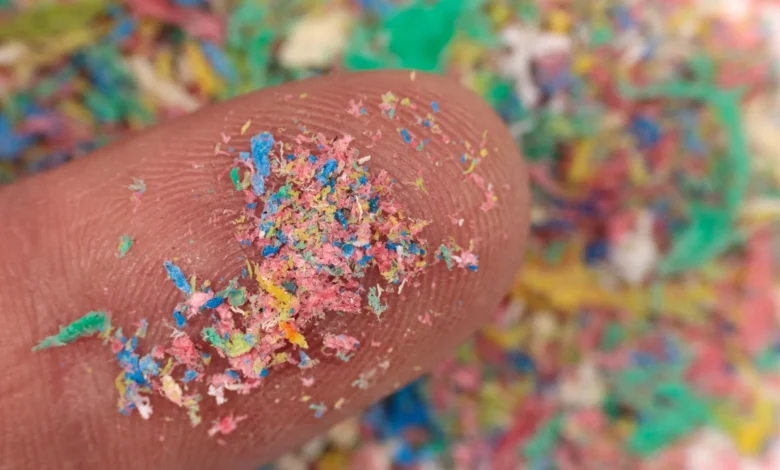
For decades, modern consumer society has relied on plastics for their perceived chemical inertness and stability. From infant feeding bottles and everyday food packaging to synthetic clothing and single-use water containers, polymers have saturated global markets largely because they were assumed to be passive materials incapable of actively reacting with their surrounding environments. However, groundbreaking new research from Columbia University and the University of California, Berkeley, published in the prestigious journal Nature, shatters this foundational assumption. Scientists have discovered that as plastic objects fragment into microscopic particles, their newly exposed surfaces undergo active chemical reactions with water, generating high-energy reactive molecules capable of damaging living cells.
This revelation fundamentally transforms how toxicologists, environmental scientists, and public health officials view plastic pollution. Rather than acting merely as inert physical debris that clogs digestive tracts or accumulates in tissues, microplastics and nanoplastics function as active chemical agents. By altering the chemistry of surrounding aqueous environments—including the fluid matrices of the human bloodstream—these microscopic fragments generate reactive oxygen species (ROS). These volatile molecules represent a missing link in scientific efforts to explain the growing correlation between microplastic exposure and severe medical conditions, ranging from cardiovascular events to neurological disorders.
The Evolution of Plastic Contamination Research
To understand the weight of this latest discovery, it is necessary to examine the rapid acceleration of microplastic research over recent years. For a long time, the scientific community lacked the analytical instrumentation required to detect the smallest fractions of degraded plastic. This limitation changed dramatically in early 2024, when a team of researchers at Columbia University led by chemist and biomedical engineer Wei Min unveiled an advanced laser-based microscopy technique.
Utilizing stimulated Raman scattering microscopy combined with machine learning algorithms, Min’s laboratory achieved unprecedented precision in identifying and counting microscopic plastic fragments. The findings, published in January 2024, shocked the scientific world. Analyzing commercial bottled water, the researchers discovered an average of approximately 240,000 detectable plastic fragments in a single liter. Crucially, the vast majority of these particles were not microplastics visible under standard light microscopes, but nanoplastics—particles measuring less than one micrometer in length. This figure exceeded previous estimates by a factor of 10 to 100.
The 2024 study served as a major catalyst, drawing intense regulatory and public scrutiny toward dietary and environmental plastic exposure. Governments and health organizations quickly realized that humanity was ingesting and inhaling millions of synthetic polymer fragments daily. Yet, despite mounting epidemiological evidence linking these exposures to human pathology, a fundamental scientific paradox persisted. If bulk plastics are chemically stable and generally regarded as biologically inert, how could microscopic fragments trigger systemic health crises? The new study from the Columbia and UC Berkeley collaboration provides a compelling chemical answer to this persistent question.
The Chemistry of Breakdown: How Water Becomes an Active Participant
The crux of the new research centers on the concept of surface-area-to-volume ratios and the peculiar thermodynamic behavior of water when it encounters hydrophobic, or water-repelling, materials. When a large plastic container or fiber breaks down into microplastics and nanoplastics, its total volume remains essentially unchanged, but its cumulative surface area explodes exponentially. Millions of square nanometers of fresh polymer surface are suddenly exposed to the surrounding environment.
Co-led by Columbia postdoctoral researcher Naixin Qian, the research team investigated what happens when these vast, newly exposed polymer surfaces come into contact with water. In conventional scientific models, water is treated as a passive medium through which substances travel. However, this study demonstrates that water is an active, indispensable participant in driving chemical reactivity.
Because most common commodity plastics—such as polyethylene, polypropylene, and polystyrene—are strongly hydrophobic, their interactions with water molecules create unique interfacial physics. Near the boundary separating the water-repelling plastic and the aqueous solution, molecules and electrically charged ions behave abnormally compared to bulk water.
Theoretical calculations and advanced computer simulations performed by collaborators in Professor Teresa Head-Gordon’s laboratory at UC Berkeley illuminated the precise molecular mechanics at play. The Berkeley team discovered that hydroxide ions, which carry a negative charge, become densely concentrated within the microscopic layers of water immediately adjacent to the hydrophobic plastic surface. Trapped in this specialized environment, these hydroxide ions readily lose electrons, initiating a cascading electron transfer that gives rise to hydroxyl radicals and other reactive oxygen species.
"Water is a key active player here, rather than just a spectator," explained Wei Min. "It’s integral to making these microplastics reactive. Water molecules become chemically active when they come into contact with plastic, which is hydrophobic. Contact between the water and plastic creates an environment that facilitates electron transfer, and the formation of reactive radicals."
Naixin Qian emphasized the biological implications of this phenomenon: "Our research found that when microplastics interact with water, as they do when they’re in bottled water, or when they’re absorbed into our bloodstream, they spontaneously generate what we call reactive oxygen species. ROS are textbook examples of the kinds of molecules that can damage animal and human tissue."
Public Health Alarm and Institutional Responses
The publication of these findings arrives at a critical juncture in public health policy. Over the past several years, epidemiological and clinical investigations published in premier medical journals—including the New England Journal of Medicine, Nature Medicine, and Nature Health—have reported troubling
statistical associations between high levels of microplastic and nanoplastic accumulation and acute medical events. Studies have linked these particles to elevated risks of heart attacks, strokes, cognitive decline, dementia, and even brain tumors.
As the scientific consensus solidifies around the systemic risks posed by synthetic particles, governments and regulatory bodies have escalated their response. In 2026, the federal government launched a sweeping $144 million national initiative dedicated to investigating and mitigating the impacts of toxic microplastics within the human body. Concurrently, the U.S. Environmental Protection Agency (EPA) took the historic step of adding microplastics to its federal list of unregulated contaminants of concern for drinking water, marking the first time these polymers have been formally recognized by regulators as a primary threat to aquatic safety standards.
These institutional measures reflect an urgent recognition that microplastics are not merely an aesthetic or ecological nuisance restricted to ocean gyres and shorelines. They are ubiquitous invaders circulating within the human bloodstream, crossing the blood-brain barrier, and lodging within placental tissues. Because human blood and cellular matrices are predominantly aqueous, the discovery that microplastics continuously generate reactive oxygen species inside water provides a mechanistic framework for understanding how these particles inflict cellular trauma over time. ROS are notoriously destructive to lipids, proteins, and DNA, making them primary drivers of oxidative stress, chronic inflammation, and cellular apoptosis.
Environmental Pathways and Everyday Exposure
While the implications for human health are profound, the newly identified chemical pathway also carries sweeping consequences for natural ecosystems. Co-author Beizhan Yan of Columbia University’s Lamont-Doherty Earth Observatory noted that microplastics infiltrate aquatic environments through a myriad of industrial and domestic vectors. Wastewater treatment plants, industrial manufacturing discharges, and residential washing machines—which shed millions of synthetic microfibers from clothing during a single wash cycle—constantly feed these reactive particles into rivers, lakes, and oceans.
Furthermore, everyday domestic routines accelerate the generation of both microplastics and their reactive byproducts. Common household practices, such as heating food in plastic containers inside a microwave, running synthetic textiles through high-temperature laundry cycles, or leaving bottled water stored in vehicles exposed to intense sunlight, actively degrade polymer structures. These thermal and ultraviolet stressors fracture the materials, drastically increasing their surface area and supercharging their capacity to generate hydroxyl radicals in liquids.
"This work has significant implications for environmental and human health," Beizhan Yan stated. "In certain environments, such as discharges from plastic manufacturers and laundromats, microplastics can form and enter aquatic environments. This work also indicates that radicals can form on hydrophobic plastic surfaces in water, which could affect ecosystems and human health following exposure."
Pathways Forward: Redesigning Modern Materials
Despite the alarming nature of the findings, the research offers a glimmer of hope for future mitigation strategies. By isolating the exact chemical and physical mechanisms that render microplastics reactive, scientists have opened a clear pathway toward engineering safer synthetic materials.
Professor Teresa Head-Gordon of UC Berkeley underscored the potential for industrial reinvention based on these discoveries. "Our fundamental work that the most hydrophobic microplastics interacting with water can drive chemical reactivity could ultimately lead to new engineering solutions by redesigning the chemistry of these commodity plastics to reduce the toxic outcomes on health and the environment," she noted.
Future material science initiatives may focus on modifying the surface chemistry of polymers, introducing hydrophilic coatings, or developing entirely new classes of biodegradable bioplastics that do not foster electron transfer when fragmented. Such innovations would aim to decouple the economic utility of lightweight, durable packaging from its destructive biological side effects.
Ultimately, the revelation that microplastics are chemically active participants rather than passive pollutants forces a global reckoning with our reliance on synthetic polymers. As regulatory agencies tighten drinking water standards and pump funding into targeted biomedical research, the scientific community continues to piece together the hidden toll of the plastic age. By uncovering how a simple boundary between plastic and water can generate tissue-damaging radicals, researchers have transformed our understanding of pollution—proving that the greatest dangers of plastic may lie not in what it looks like, but in the invisible chemical battles it wages within us.
Related posts: