Thirty-Year Medical Dogma Overturned: Garvan Institute Researchers Discover New Mechanism Driving Rare Inflammatory Disorder MKD

For decades, the global medical and scientific community operated under a firmly entrenched consensus regarding the pathophysiology of a debilitating and occasionally fatal rare genetic disorder known as mevalonate kinase deficiency (MKD). Textbooks, clinical trials, and therapeutic interventions for the past thirty years have pointed toward macrophages—a class of white blood cells that engulf cellular debris and foreign substances—as the primary culprits driving the severe, recurrent inflammatory episodes characteristic of the condition. However, groundbreaking new research emanating from the Garvan Institute of Medical Research in Sydney, Australia, has systematically challenged this foundational medical dogma.
Published in the peer-reviewed journal Immunity, the landmark study reveals that the true driver of runaway inflammation in MKD patients is not macrophage dysfunction, but rather a profound malfunction within natural killer (NK) cells. This paradigm-shifting discovery not only corrects three decades of misunderstood immunology but has already successfully guided a compassionate-use treatment for a critically ill infant utilizing existing pharmaceutical agents. By pinpointing the exact cellular mechanism responsible for these inflammatory cascades, researchers have opened a viable, highly targeted pathway toward novel clinical trials and expanded therapeutic options for patients who have long exhausted conventional treatments.
Unpacking Mevalonate Kinase Deficiency: A Lifelong Medical Odyssey
MKD is a rare, lifelong autoinflammatory condition that affects hundreds of children and adults globally, though epidemiological experts strongly suspect that many cases remain misdiagnosed or entirely undetected due to the syndrome’s overlapping symptoms with other periodic fever syndromes. Clinically, the disorder manifests as recurring, unpredictable attacks of exceptionally high fevers, painful skin rashes, arthralgia (joint pain), and profound abdominal inflammation accompanied by vomiting and diarrhea. In its most severe presentations, these systemic inflammatory episodes can precipitate life-threatening complications, profoundly impacting the quality of life for patients and their families.
For approximately thirty years, the prevailing scientific hypothesis dictated that these symptoms arose from defective cholesterol and isoprenoid biosynthesis pathways within macrophages, leading to the unregulated release of pro-inflammatory cytokines. Consequently, modern standard-of-care treatments have focused heavily on blocking these macrophage-derived signals. Yet, a stubborn clinical hurdle has persisted: approximately 50 percent of MKD patients fail to respond adequately to these existing biological therapies. This therapeutic ceiling left a critical, unmet need in clinical immunology, prompting researchers to look closer at what might be fundamentally flawed in the prevailing scientific explanation.
The Misdirection of Immunity: How Natural Killer Cells Misfire
To investigate the gaps in current immunological models, a multidisciplinary team led by senior author Professor Mike Rogers and lead researcher Dr. Marcia Munoz analyzed comprehensive blood samples sourced from human MKD patients alongside advanced preclinical models of the disorder. Their experimental methodology probed deeper into cellular subsets that had previously received secondary attention in the context of MKD pathology.
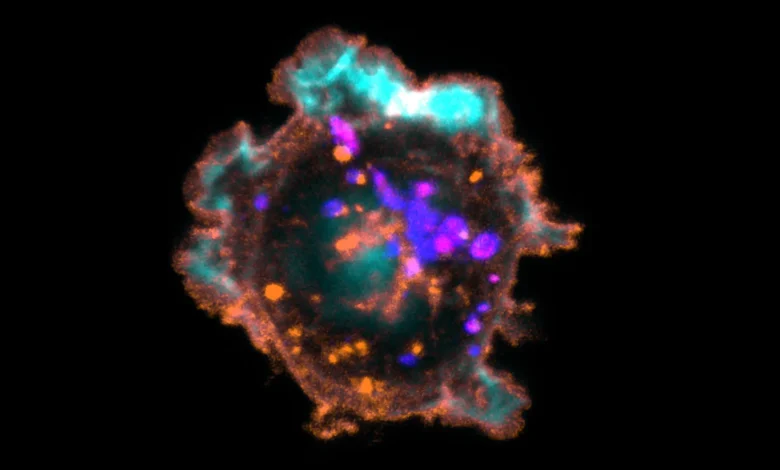
The team uncovered a profound, previously uncharacterized cellular defect residing within natural killer cells. In a healthy immune system, NK cells serve as frontline defenders, specialized lymphocytes tasked with rapidly identifying and destroying virus-infected cells and nascent tumor cells before pathogens can replicate and disseminate throughout the host organism. In individuals afflicted with MKD, however, these vital frontline cells suffer from a severe maturation failure.
Rather than executing their designated apoptotic functions efficiently, MKD-affected NK cells become trapped in a dysfunctional state. These cells are packed with toxic ammunition—potent enzymes and proteins stored in specialized intracellular granules designed to neutralize infected targets. Under normal physiological conditions, these granules are deployed directly into the infected cell. In MKD patients, however, a metabolic disruption prevents the proper exocytosis or release of these toxic granules.
Deprived of their primary mechanism for neutralizing threats, the malfunctioning NK cells compensate through a desperate biological feedback loop. Unable to kill their targets, the NK cells effectively sound a localized alarm, pumping gargantuan quantities of interferon-gamma—a immensely potent inflammatory cytokine—into the extracellular environment. This massive surge of interferon-gamma acts as a chemical megaphone, activating bystander immune cells, driving systemic cytokine release, and ultimately triggering the searing fevers, tissue destruction, and agonizing systemic inflammation that torment MKD patients.
"We found that these immune cells are essentially misfiring," explains Professor Rogers, Lab Head at the Garvan Institute and Conjoint Professor at St Vincent’s Clinical School, Faculty of Medicine and Health, UNSW Sydney. "NK cells are loaded with toxic ammunition, stored in granules that are released to kill infected cells. However, in MKD these toxic granules can’t be released from NK cells and remain trapped inside. When an NK cell fails to kill its target, it compensates by shouting for help, pumping out large amounts of interferon gamma—a powerful inflammatory signal. This activates other immune cells and causes the dangerous fever and widespread inflammation seen in patients."
Challenging Three Decades of Immunological Dogma
The implications of these findings extend far beyond the biochemical mechanics of a single rare disease. By demonstrating that natural killer cell failure—rather than isolated macrophage overactivity—orchestrates the inflammatory pathology of MKD, the Garvan Institute team has upended assumptions that guided grant funding, academic literature, and pharmaceutical development pipelines since the 1990s.
"This really turns on its head 30 years of dogma about what was thought to be the underlying mechanism of disease," states Dr. Marcia Munoz, Group Leader in the Rogers Lab and Conjoint Senior Lecturer at UNSW Sydney. "In MKD, the primary problem is in NK cells and not in macrophages, as previously believed."
To rigorously test this hypothesis, the Garvan researchers forged a critical collaborative partnership with Professor Mariapia Degli-Esposti and a team of immunologists at Monash University. Utilizing sophisticated preclinical models, the collaborative research group definitively mapped the causal chain: when the innate immune system fails to properly clear viral challenges due to defective NK cell maturation, the compensatory interferon-gamma storm inflicts collateral damage across multiple organ systems. These empirical breakthroughs elegantly reconcile a longstanding clinical paradox within the field—how a condition fundamentally rooted in a deficient cellular immune response can concurrently manifest as an episode of extreme, hyper-active systemic inflammation.
Translating Basic Science to Clinical Practice: The Baricitinib Breakthrough
While basic science discoveries often require years or even decades to transition from the laboratory bench to the patient’s bedside, the Garvan Institute’s findings have already yielded profound, life-altering real-world applications. Driven by the identification of interferon-gamma hypersecretion as the central engine of MKD pathology, researchers rapidly coordinated with clinical specialists at the Royal Children’s Hospital in Melbourne to design an innovative therapeutic intervention for a critically ill infant suffering from severe, treatment-refractory MKD.
The clinical team introduced baricitinib—an orally administered pharmaceutical belonging to a class of medications known as Janus kinase (JAK) inhibitors—into the infant’s ongoing medical regimen. JAK inhibitors function by disrupting intracellular signaling cascades utilized by a variety of key immune cytokines, including the specific pathways triggered by interferon-gamma. While baricitinib is more commonly prescribed to manage other immune-mediated disorders such as moderate-to-severe rheumatoid arthritis and atopic dermatitis, its pharmacological profile made it an ideal candidate to intercept the specific inflammatory cascades driving the infant’s deterioration.
The results of this compassionate-use strategy provided immediate, highly encouraging clinical signals. Following the introduction of baricitinib, the infant experienced a dramatic reduction in the frequency and severity of inflammatory flare-ups. Concurrently, severe, debilitating gastrointestinal inflammation that had previously resisted all conventional biological treatments began to definitively heal.
While academic standards dictate that observations from a single patient case study cannot formally establish broad therapeutic efficacy across a wider population, this early clinical success offers a vital roadmap. It validates the hypothesis that redirecting therapeutic targets away from macrophages and toward interferon-gamma neutralization can successfully arrest the disease process. Researchers emphasize that these findings lay an unshakeable foundation for upcoming, formal clinical trials evaluating JAK inhibitors and targeted anti-interferon therapies specifically for MKD patients—particularly those refractory individuals who find no relief in current standard-of-care medications.
Broader Horizons: Implications for ‘Prenylopathies’ and Undiagnosed Patients
The ripples of this discovery threaten to reshape our understanding of an entire category of genetic conditions. MKD does not exist in an isolated biochemical vacuum; rather, it belongs to a broader family of inherited metabolic disorders characterized by defects within the mevalonate pathway, a crucial biochemical cascade responsible for synthesizing isoprenoids that modify cellular proteins. Scientists have collectively categorized these related conditions under the newly popularized diagnostic umbrella term: "prenylopathies."
Preliminary inquiries conducted by the Garvan Institute team suggest that other prenylopathies may share striking mechanistic parallels with MKD. Specifically, researchers suspect that these related genetic diseases may similarly feature natural killer cell impairment, resulting in identical patterns of downstream immune misfiring, defective pathogen clearance, and chronic, debilitating inflammatory signaling.
If subsequent, large-scale studies confirm these suspected links, the medical community stands on the precipice of a sweeping diagnostic and therapeutic revolution. Unifying these conditions under a shared pathomechanism could drastically accelerate clinical identification, finally putting an end to what clinical immunologists describe as the "diagnostic odyssey"—the agonizing multi-year or multi-decade journey many rare disease patients endure before receiving an accurate diagnosis and effective medical management.
"Confirming this link could help end the diagnostic odyssey many patients endure for years or even decades before receiving effective treatment," Professor Rogers concludes. As the Garvan Institute prepares for the next phase of its translational research pipeline, the medical world watches closely, recognizing that overturning thirty years of conventional wisdom may ultimately illuminate the path to healing for hundreds of vulnerable patients worldwide.