Mercedes-Benz admits the industry went too far with touchscreens and is bringing back physical buttons to its vehicle lineups.

The automotive industry is currently undergoing a significant tactile reversal. For over a decade, the primary hallmark of a "modern" vehicle interior was the total eradication of physical switches, dials, and knobs in favor of sleek, monolithic touchscreen interfaces. Mercedes-Benz, once a pioneer of this digital-first philosophy, has officially signaled a change in direction. During a candid question-and-answer session on Reddit, Mercedes-Benz CEO Ola Källenius acknowledged that the automaker’s aggressive pivot toward screen-heavy cabins may have overstepped the boundaries of ergonomic utility, confirming that future and updated models will see the strategic return of physical controls.
This admission from the top executive of one of the world’s most prestigious luxury brands marks a turning point in the “war on buttons.” It reflects a growing consensus among automotive manufacturers that while digitalization offers unparalleled aesthetic appeal and over-the-air update potential, it has frequently come at the cost of driver safety, intuitive operation, and long-term user satisfaction.
A Chronology of the Digital Shift
The trajectory toward the current "all-screen" interior began in earnest around 2012, fueled by the rapid proliferation of smartphone technology. As consumers became accustomed to the pinch-and-swipe gestures of tablets and mobile devices, automakers saw an opportunity to reduce production complexity and manufacturing costs by replacing expensive, specialized physical switchgear with a single, multifunctional screen.
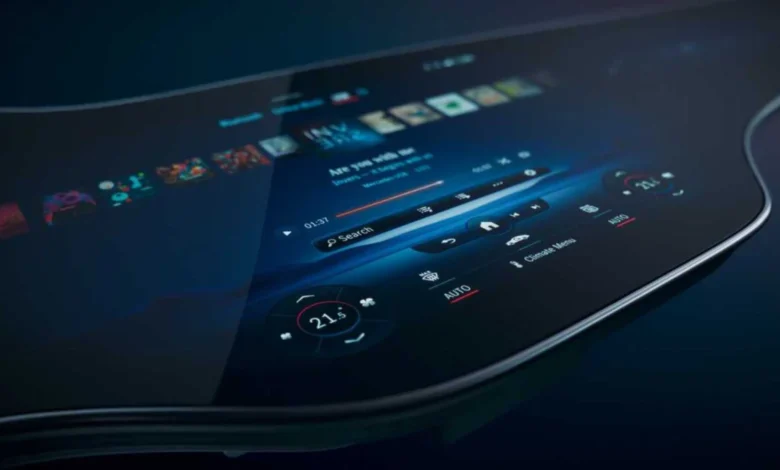
Between 2015 and 2020, the industry reached an inflection point. Mercedes-Benz introduced the MBUX (Mercedes-Benz User Experience) system, which eventually culminated in the breathtaking, pillar-to-pillar "Hyperscreen." This massive, glass-covered dashboard display became the gold standard for luxury automotive design. Other manufacturers, including Tesla, Volvo, and Volkswagen, followed suit, often removing critical climate, audio, and vehicle setting controls from the physical dashboard and burying them within deep, nested software menus.
By 2022, however, the tide of public opinion began to turn. Automotive journalists and consumer advocacy groups began to report on the "distraction factor" associated with touchscreens. Unlike a physical button, which provides haptic feedback and can be operated by muscle memory, a touchscreen requires the driver to divert their eyes from the road to confirm an input, creating a significant safety concern.
The Case for Tactile Feedback
The move away from buttons was largely driven by the desire for "clean" design—a minimalist aesthetic that many luxury brands prioritized to convey a sense of high-tech sophistication. However, research into human-machine interface (HMI) design consistently suggests that physical controls are superior for tasks requiring high frequency or immediate reaction.
The science behind this is grounded in cognitive load. When a driver adjusts volume or temperature via a physical knob, they use peripheral vision and touch to make the adjustment. When a driver must navigate a submenu on a high-resolution display, they are forced into a cognitive task that takes several seconds. At highway speeds, a three-second glance at a screen at 65 mph means the vehicle travels nearly 300 feet effectively "blind."
Källenius’s acknowledgement that he personally prefers "a good rocker and roller on a steering wheel" underscores the disconnect that had developed between the design departments of major automakers and the actual needs of the driving public. By admitting that the industry simply "moved on with the times" rather than focusing on the practical ergonomics of the cockpit, the CEO has signaled a pivot back toward human-centric design.

Impact on Product Strategy
Mercedes-Benz has already begun the process of integrating physical controls back into its fleet. Recent updates to the GLS, GLE, and S-Class, along with the rollout of the GLC EV and GLB EV, have begun to reintroduce tactile interfaces for commonly used functions. While the company has not provided a comprehensive list of which models will receive further button integration, the message to design engineers is clear: the "screen-everything" era is being reevaluated.
This shift is not a full-scale retreat from digital innovation. Källenius emphasized that "turning back the clock" is not the goal. Instead, the objective is to reach a "Goldilocks" equilibrium—where high-resolution digital displays are used for navigation, entertainment, and deep system settings, while high-frequency operations are relegated to physical hardware. This hybrid approach represents the next generation of luxury automotive interiors.
Broader Industry Implications
Mercedes-Benz is not alone in this reconsideration. The entire automotive sector is feeling the pressure from a vocal customer base. Volkswagen, for example, recently faced widespread criticism for its implementation of touch-sensitive haptic sliders on the steering wheels of its latest models. The feedback was so overwhelmingly negative that the company’s leadership publicly pledged to return to physical steering wheel buttons in future refreshes.
The financial implications of this shift are notable. Developing a robust, high-quality physical button is, in some ways, more expensive than programming a software interface. It requires physical testing for durability, mechanical assembly, and the sourcing of high-quality materials. However, as brand loyalty becomes increasingly tied to the ease of use of a vehicle’s interface, automakers are discovering that "less is not always more."
Data from J.D. Power and other automotive analysts indicates that customer satisfaction scores for infotainment systems have stalled or dipped in vehicles that rely too heavily on touchscreen-only controls. In a competitive market where tech-savvy buyers value "seamlessness," the frustration caused by a laggy or unintuitive touchscreen can be a primary driver of brand switching.
Future Perspectives on HMI Design
As the industry looks toward the next decade, the role of voice command and augmented reality (AR) will likely complement, rather than replace, physical controls. While voice assistants have become significantly more accurate, they are not a universal solution. In noisy environments, or when passengers are conversing, physical buttons remain the most reliable method of control.
Furthermore, the legal landscape regarding distracted driving is tightening. European and North American safety regulators are increasingly scrutinizing the number of "clicks" required to perform basic functions while driving. Some safety organizations have suggested that in the future, vehicles could be penalized in safety ratings if they do not feature physical controls for critical functions like hazard lights, defrosters, and volume.
Mercedes-Benz’s decision to re-embrace the physical button is a testament to the fact that user experience (UX) design in cars is fundamentally different from that in consumer electronics. A smartphone can be put down; a vehicle, however, requires constant, split-second attention. By reintroducing tactile interfaces, Mercedes is not just correcting a design error—it is re-aligning itself with the fundamental requirement of driving: safety through intuitive, accessible interaction.
As this trend continues to permeate the industry, we can expect a new generation of "digital-physical" hybrid cockpits. These will likely feature large, beautiful displays for information and long-form entertainment, paired with high-quality, tactile-rich physical controllers for the essential tasks of driving. This shift marks the maturation of the digital interior—a move away from the "cool factor" of screens toward the true requirements of the driver, proving that in the quest for the future of mobility, the past still has a significant role to play.