Trump Calls for Creation of a U.S. Space Academy, Sparking Debate Over Military and Civilian Boundaries

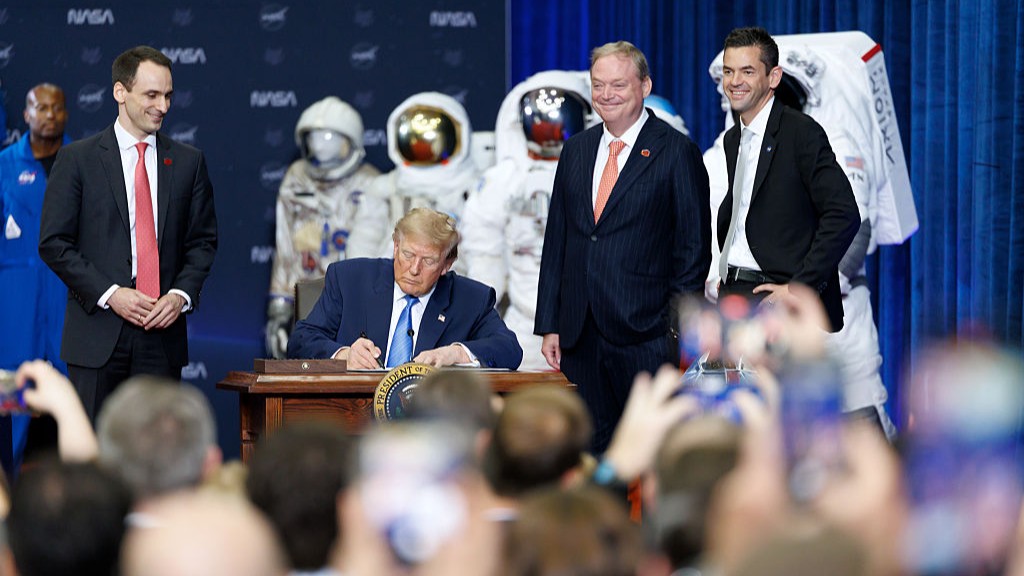
President Donald Trump signed an executive order during a visit to NASA’s Johnson Space Center in Houston on August 28, 2026, initiating the formal process to establish a United States Space Academy. The proposed institution is envisioned as a NASA-led federal academy structured similarly to traditional military service academies such as West Point, the U.S. Air Force Academy, and the U.S. Naval Academy.
According to the administration’s stated goals, the academy would educate and train a professional corps of leaders equipped to advance American interests across the rapidly expanding space domain. However, the proposal has immediately ignited a complex debate among space policy experts, lawmakers, and aerospace industry professionals regarding the traditional separation between civilian space exploration and military operations. While proponents argue that a specialized academy is a necessary step to meet the workforce demands of a booming commercial and national security space sector, critics have raised significant concerns about blurring the lines between civilian agencies and the armed forces, substantial federal funding requirements, and institutional oversight.
The Evolution of U.S. Space Policy and Institutional Precedents
To understand the weight of the proposed U.S. Space Academy, it is essential to examine the historical architecture of American space policy. Since the dawn of the Space Age in the late 1950s, United States policy has maintained a strict institutional firewall between civilian space endeavors and military applications.
This division was formally codified with the passage of the National Aeronautics and Space Act of 1958, which created NASA as a civilian agency dedicated to peaceful exploration, scientific discovery, and aeronautics research. Concurrently, military space activities were kept under the purview of the Department of Defense. Although collaboration and technology transfer between NASA and the military have been commonplace for decades—with many early astronauts coming from military test-pilot backgrounds—the administrative and organizational boundaries remained distinct.
The landscape shifted significantly during Trump’s first term in office. In 2017, the administration established the Artemis program, aiming to return American astronauts to the lunar surface. Shortly thereafter, the administration championed the creation of an entirely new branch of the armed forces dedicated to operations beyond Earth’s atmosphere. This materialized in December 2019 with the signing of the National Defense Authorization Act, which officially established the United States Space Force as the sixth branch of the armed forces.
Given this foundational history, the introduction of a Space Academy that purportedly serves both NASA and the Space Force directly challenges the traditional dichotomy that has guided U.S. space policy for more than 65 years.
Chronology of the Executive Order and the Commission Phase
The journey toward a potential U.S. Space Academy began with public announcements and culminated in formal executive action during the summer of 2026.
On August 28, 2026, during a high-profile address at the Johnson Space Center in Texas, President Trump outlined his vision for the institution, comparing its prestige and rigorous training model to elite military service academies. Later that same day, the White House published the official executive order establishing the framework for the initiative.
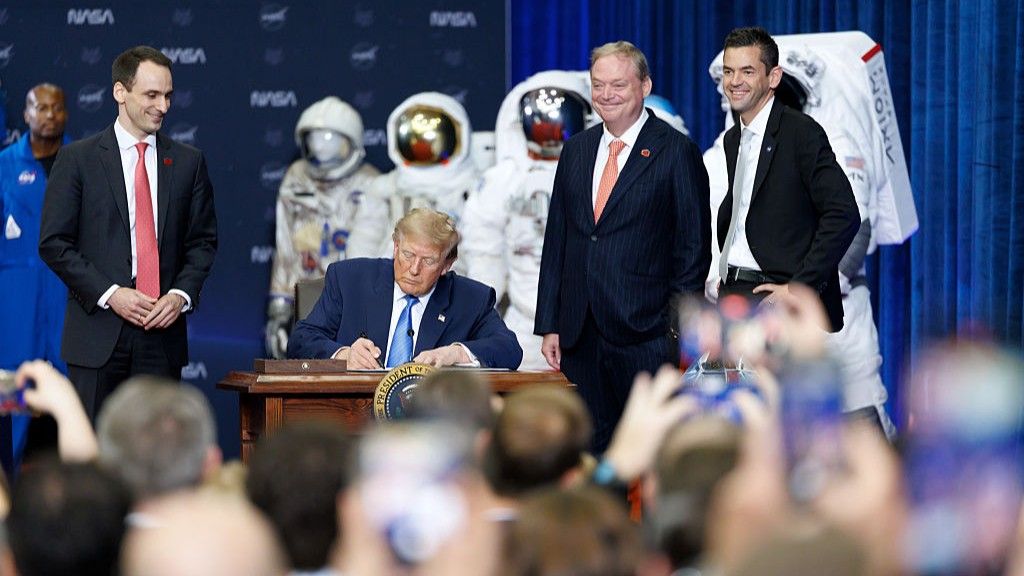
Crucially, the executive order does not instantly construct or fund the academy. Instead, it establishes a specialized commission tasked with conducting a comprehensive feasibility study. The commission is mandated to deliver a detailed report and recommendations within 120 days of its formation.
Jared Isaacman, the NASA administrator, was designated to lead the commission. The high-level advisory body also includes key federal figures, such as the Secretary of Defense, the National Security Adviser, and the Director of the Office of Management and Budget. This cross-agency composition underscores the overlapping jurisdictions of civilian space administration, national security, and federal budgeting that the academy would inevitably navigate.
Core Objectives and Curriculum Uncertainties
The executive order outlines a broad mission for the proposed academy: to develop a professional corps of civically grounded leaders prepared to advance American interests within the space domain. In his remarks in Houston, Trump elaborated that the institution would serve the United States Space Force, NASA, and the broader commercial spaceflight industry.
Despite these broad strokes, substantial questions remain regarding the curriculum and operational structure. Traditional military service academies combine rigorous undergraduate degree programs—primarily in engineering, physical sciences, and social sciences—with mandatory military training, leadership development, and post-graduation active-duty service commitments.
Policy analysts and educators are currently grappling with several unresolved curriculum questions:
- What balance will be struck between military strategy, national security operations, and civilian scientific exploration?
- Will graduates be subjected to mandatory military service obligations within the Space Force, or will they retain the freedom to enter the civil service or the private commercial space sector?
- How will the institution differentiate its academic offerings from established aerospace engineering programs at civilian universities?
Legislative Hurdles and Funding Projections
Moving from an executive order to a fully operational federal academy requires legislative action and substantial financial commitment from the United States Congress. Under the U.S. Constitution and federal law, the creation of new federal bureaucratic institutions and the appropriation of funds fall under the authority of the legislative branch.
Lawmakers have already voiced mixed reactions. While some view the concept as a forward-thinking initiative reminiscent of fictional institutions like Starfleet Academy from popular culture, others have expressed immediate skepticism regarding cost and necessity.
Estimating the financial impact of a new federal academy is challenging, but existing benchmarks provide a sobering perspective. Members of Congress and policy analysts estimate that operating a single traditional military service academy costs approximately $1 billion annually. Constructing and launching an entirely new federal academy from the ground up would require significant initial capital outlays for campus infrastructure, specialized laboratory facilities, faculty recruitment, and student support systems.
Furthermore, tying the academy’s leadership and management structure primarily to NASA introduces potential budgetary vulnerabilities. Unlike mandatory spending programs, NASA’s budget is discretionary and frequently subject to political debates and fiscal constraints. Funding a dedicated federal academy under a NASA-led model could place the institution in competition with core scientific exploration missions, Earth science programs, and deep-space research initiatives during tight federal budget cycles.
Industry Reactions and Perspectives from the Aerospace Sector
The commercial space sector, which has experienced exponential growth over the past decade through public-private partnerships and independent commercial ventures, has reacted with a mix of cautious interest and practical inquiry.
Companies specializing in satellite constellations, launch services, and orbital infrastructure rely heavily on a specialized talent pool of engineers, software developers, and spacecraft operators. Proponents of the academy argue that a dedicated institution could streamline the pipeline of highly trained professionals entering the workforce, helping to address industry-wide talent shortages.
However, leaders within the commercial sector have questioned whether a government-run academy can remain agile enough to keep pace with the hyper-fast innovation cycles characteristic of private aerospace companies. Traditional federal educational institutions often operate within rigid bureaucratic frameworks, whereas commercial space firms emphasize rapid prototyping, iterative design, and commercial adaptability.
Implications for National Security and Geopolitical Stability
Beyond budgetary and administrative hurdles, the establishment of a U.S. Space Academy carries profound implications for international relations and global space governance. As orbital congestion increases—highlighted by tens of thousands of active commercial and government satellites—the geopolitical environment in space has grown increasingly tense.
Strategic competitors, including nations like China and Russia, closely monitor U.S. organizational changes in the space domain. Analysts note that maintaining a clear and visible distinction between peaceful, civilian scientific exploration and military space operations has historically served as a diplomatic guardrail. This separation helps prevent misunderstandings, reduces the risk of escalation during crises, and reassures international partners regarding America’s peaceful intentions in scientific endeavors like lunar exploration and planetary science.
If a single federal institution trains personnel for both civil space exploration and military space warfare, foreign observers may interpret this integration as a further militarization of American space policy. Navigating this perception will require careful diplomatic communication and transparent institutional mandates.
Next Steps and the Road Ahead
As the 120-day countdown for the presidential commission’s feasibility report progresses, policymakers, educators, and industry leaders will be closely watching for answers regarding the academy’s location, governance structure, student selection criteria, and degree-granting authority.
The debate over the United States Space Academy touches on fundamental questions about the nation’s priorities in orbit. Whether the initiative ultimately overcomes its legislative and financial hurdles or serves as a catalyst for a broader national conversation on the future of space governance, it underscores a permanent reality: space has transitioned from an arena of rare exploratory missions to an essential domain deeply integrated into global economics, national security, and everyday life.