Trending Up: Feist’s Indie Revival, Season 25’s Viral Breakout and the Resurgence of 2013 Trap Classics

The landscape of modern music discovery is increasingly defined by the cyclical nature of digital trends, where archival tracks and emerging artists collide to reshape streaming charts overnight. This week’s data analysis highlights a fascinating intersection of these phenomena: the enduring cross-generational appeal of Canadian singer-songwriter Feist, the meteoric rise of a UK-based R&B newcomer, and the unexpected reclamation of a decade-old hip-hop collaboration. These developments underscore how platform-specific micro-trends, particularly on TikTok, continue to serve as the primary engine for streaming volume in the mid-2020s.
The Enduring Resonance of Feist: A Second Life for My Moon, My Man
Feist’s 2007 indie-pop staple My Moon, My Man has experienced a remarkable sustained revival, marking a rare instance of a song achieving "doubly viral" status within a single calendar year. The track, originally a hallmark of the late-2000s indie-rock boom, has transcended its initial cultural footprint to become a perennial fixture on digital streaming platforms.
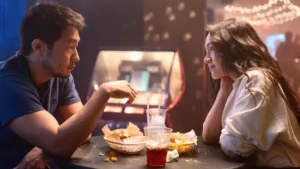
The current momentum is a layered narrative. Initially, the song received a significant infusion of listeners in late 2025, following its prominent inclusion in the inaugural season of the acclaimed Canadian television drama Heated Rivalry. The sync placement provided the catalyst for a streaming surge that maintained its intensity throughout the first three quarters of 2026. However, the song’s recent trajectory shifted into higher gear following a high-profile cover by Grammy-nominated singer-songwriter FINNEAS, released in September to commemorate Feist’s induction into the Canadian Hall of Fame.
FINNEAS’s interpretation of the track became the backbone of a viral couples-based content trend on TikTok. The trend, characterized by users syncing the vocal inflection of the lyrics to successive video frames, has proliferated rapidly, occasionally drawing criticism from purists regarding the execution of the trend’s specific rhythmic formula.
Data provided by Luminate confirms the intensity of this renewed interest. During the tracking week of November 10–16, My Moon, My Man generated 4.3 million official on-demand U.S. streams, representing a 61% increase over the 2.7 million streams recorded the previous week. Concurrently, the FINNEAS version—currently restricted to an Amazon Music exclusive release—saw its own substantial growth, logging 68,000 streams in the same period, a 98% increase over the prior week’s figures. This symbiotic relationship between a legacy track and a contemporary reinvention demonstrates how platform-specific exclusivity and social media interaction can act as a force multiplier for catalog music.
The Emergence of Season 25: A Blueprint for Viral Success
While established artists benefit from the resurgence of their back catalog, emerging artists are utilizing similar mechanisms to bypass traditional label discovery pipelines. The UK R&B scene has long been a breeding ground for global talent, and the rapid ascent of artist Season 25 serves as a modern case study in digital-first artist development.
Season 25’s breakout single, Shotta’s, has become an inescapable presence on social media. The track, produced by Tobiswag and Katzy, first gained traction through a short snippet shared by the artist on August 29. The post, which has since surpassed 1.2 million views, established an immediate connection with an audience drawn to the song’s atmospheric, R&B-infused production—often compared by listeners to the work of Partynextdoor.
The lyrical content, which leans into themes of interpersonal tension, sparked significant online debate, further driving engagement. As of mid-November, the official sound for Shotta’s had been integrated into over 3.4 million user-generated TikTok posts. This digital visibility transitioned into real-world momentum on November 12, when prominent rapper Swae Lee invited Season 25 to perform the track during a concert in London.

The statistical impact of this momentum is stark. Luminate reports that the song has seen a 705% explosion in streaming activity over the last five weeks. For the week of November 6–12, Shotta’s pulled in 1.83 million official on-demand U.S. streams, up 53% from the period of October 20–November 5. This rapid growth has already resulted in concrete industry shifts; on November 12, it was reported that Season 25 secured a seven-figure contract with London-based Isekai Records and New York-based broke Records, illustrating the speed at which viral streaming success is currently being converted into professional label partnerships.
The 2013 Nostalgia Cycle: Gucci Mane and Lloyd
The final notable trend of the week involves a significant reclamation of 2013 hip-hop. The collaboration between Atlanta trap pioneer Gucci Mane and R&B vocalist Lloyd, Fly S—t, has emerged from the depths of the 2013 Trap God 2 mixtape to capture the attention of a new demographic.
The track’s resurgence is largely attributed to the distinctive, melodic hook provided by Lloyd. Unlike the aforementioned tracks, which were driven by influencer-led trends, the interest in Fly S—t has been fragmented across several distinct sub-cultures. Notably, members of the historically Black fraternity Kappa Alpha Psi have utilized the track as a definitive anthem for their "strolling" performances, particularly during the Halloween season, creating a sustained influx of interest.
The analytical data regarding this resurgence is unprecedented in scale. Between October 23 and 29, the song registered a modest 16,200 official U.S. streams. By the following week (October 30–November 5), that number climbed to 227,000, a 1,296% increase. By the week of November 6–12, the figure hit 806,000 streams, marking a total two-week growth of 4,858%.
This trajectory highlights a phenomenon in music consumption where long-form projects, once considered "buried" in an artist’s discography, can be unearthed and revitalized by specific segments of the user base. For an artist like Gucci Mane, whose discography is vast, this demonstrates the power of the "deep cut" in the streaming era, where a single viral moment can fundamentally alter the historical performance metrics of an album released over a decade ago.
Analytical Implications for the Music Industry
The collective trends observed this week suggest several key takeaways for industry stakeholders. First, the barrier between "catalog" and "new" music is becoming increasingly porous. Whether it is a 2007 indie-rock track or a 2013 trap song, the longevity of a track is now determined less by its original release date and more by its "remixability" or potential for contextual re-use in short-form video.
Second, the role of the "platform-exclusive" remains a double-edged sword. While the FINNEAS cover of My Moon, My Man successfully drove interest back to the original Feist recording, its growth as an independent entity was hampered by its limited availability. For artists and labels, the decision to restrict content to a single streaming platform may protect brand value but potentially limits the velocity of viral growth.
Finally, the success of Season 25 reinforces that the traditional gatekeepers of the music industry—A&R representatives and radio programmers—are increasingly looking to social media metrics as a primary indicator of viability. The conversion of a 1.2 million-view TikTok post into a major label signing within less than three months is indicative of a market that prioritizes proven digital engagement over traditional development timelines.
As we look toward the remainder of the 2026 calendar year, these patterns suggest that the music industry will continue to favor agility. The ability to identify, engage with, and capitalize on these organic, user-driven trends is no longer a peripheral strategy; it is the central pillar of modern music success. Whether through the lens of nostalgia or the discovery of new voices, the audience remains the primary architect of the charts, with platforms serving as the stage upon which these cultural dialogues are held.