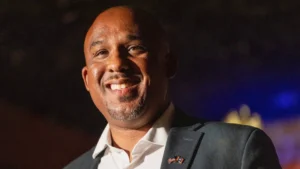
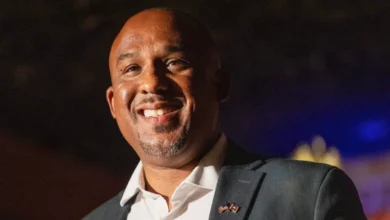
Rep. Delia Ramirez signals legislative offensive to dismantle DHS and challenge Trump administration immigration policy

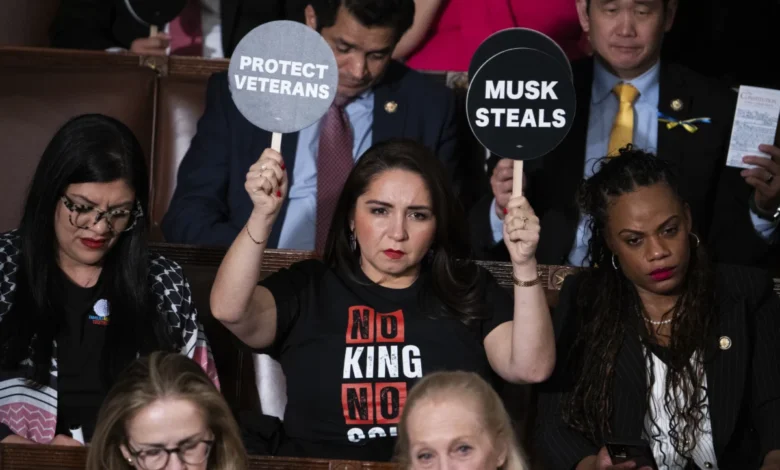
The political landscape in Washington has entered a state of heightened volatility as the 120th Congress prepares to convene following a midterm election that saw Democrats regain control of both the House and the Senate. Amidst this transition, Rep. Delia Ramirez (D-Ill.) has emerged as a central figure in the push for a radical restructuring of the Department of Homeland Security (DHS). Her legislative agenda comes in direct response to the incoming administration’s aggressive immigration stance, marked notably by President-elect Donald Trump’s decision to appoint Stephen Miller, a primary architect of previous mass-deportation policies, as his chief of staff.
The tension between the executive branch’s stated desire for "tough" immigration enforcement and the new legislative majority’s demand for accountability has created a profound dissonance in national discourse. While President Trump has recently suggested in interviews that his past rhetoric regarding "too tough" immigration policies may have alienated segments of the electorate, the appointment of Miller signals a continuation, if not an escalation, of hardline tactics.
The Legislative Strategy: A Call for Oversight
Rep. Ramirez, who is currently vying for the chairmanship of the House Homeland Security Subcommittee on Oversight, Investigations, and Accountability, has made it clear that her primary objective is to subject the DHS to rigorous congressional scrutiny. Her strategy involves a multi-pronged approach: issuing subpoenas for key administration officials, conducting deep-dive investigations into the financial management of federal agencies, and utilizing the power of the purse to curb what she terms "the weaponization of immigration enforcement."
"It feels like gaslighting," Ramirez stated in a recent interview, referring to the contrast between the President’s conciliatory public comments and the selection of staff known for championing mass deportations. "The dissonance could not be greater than what we are seeing."
Ramirez’s legislative roadmap includes the Reimagining Safety Act, a bill intended to systematically dismantle the current structure of the DHS. The argument presented by proponents of this legislation is that the agency has consolidated excessive power at the expense of civil rights, often under the guise of national security.
Chronology of Escalation: 2025–2026
The current conflict is rooted in a series of administrative actions taken throughout 2025 and 2026.
- Early 2025: Following the initial inauguration, the administration began shifting resources from critical infrastructure sectors—including the Cybersecurity and Infrastructure Security Agency (CISA) and FEMA—toward the expansion of Immigration and Customs Enforcement (ICE) and Customs and Border Protection (CBP).
- Late 2025: Chicago became a focal point for federal enforcement actions, most notably through "Operation Midway Blitz," which sparked significant local opposition and served as a catalyst for lawmakers like Ramirez to call for federal oversight.
- March 2026: Reports surfaced regarding the gutting of oversight mechanisms within immigration detention centers, leading to allegations of widespread medical neglect and due process violations.
- November 2026: Following the midterm elections, the administration promoted Stephen Miller to chief of staff, a move interpreted by the opposition as a doubling-down on previous policies. This was immediately met with a public call from Rep. Ramirez for key officials—including Kristi Noem, Tom Homan, and Gregory Bovino—to prepare for congressional hearings.
Economic and Humanitarian Data
The debate over immigration policy is inextricably linked to the broader economic conversation regarding affordability and labor. Data from the Migration Policy Institute suggests that the integration of immigrants into the workforce is a significant factor in the long-term solvency of Social Security and other safety net programs.

However, the current administration’s focus on mass deportation has created what economists describe as "labor market volatility." By removing individuals who have long been integrated into the service, construction, and agricultural sectors, the administration faces the risk of driving up costs for consumers. Ramirez argues that the "obsession" with deportation is not only a human rights issue but a fiscal one, as the diversion of funds from the Coast Guard, TSA, and FEMA weakens national readiness in other critical areas.
Institutional Responses and Political Dissonance
The Republican caucus, while currently recalibrating after the election results, has maintained that strict enforcement is necessary for national sovereignty. Supporters of the administration’s policies point to the need for border security as the primary driver for the expansion of DHS funding.
However, the Democratic majority is now positioning itself to challenge this narrative. By leveraging the committee system, they intend to focus on how federal funding has been directed toward private entities operating detention centers. Investigations into the "for-profit" nature of these facilities are expected to be a major theme in the upcoming session.
"We are going to be able to lead investigations into a number of things, including the use of federal funding to reward campaign donors and the medical neglect we have seen in detention centers," Ramirez noted. She emphasized that for the new majority, the goal is not merely to obstruct but to force a pivot toward systemic reform that prioritizes legal pathways and family reunification over mass expulsion.
Broader Implications for American Democracy
The clash between Congress and the executive branch regarding the scope of the DHS is likely to test the limits of constitutional checks and balances. If the House subcommittee moves to issue subpoenas for officials such as Stephen Miller, it is expected to trigger a series of legal battles that could reach the Supreme Court.
Furthermore, the ideological divide within the party on how to approach immigration remains a hurdle. While progressives like Ramirez are pushing for a total reimagining of border enforcement, more moderate members of the Democratic Party may favor a more incremental approach. The success of the Democratic agenda will depend on whether they can present a unified front that balances "accountability" with a legislative proposal that the public perceives as functional.
As the 120th Congress convenes, the focus remains on the "people-centered vision" that Ramirez and her allies are promoting. This vision posits that immigration reform is not a side issue but a central pillar of economic stability. By linking the cost of living—such as rent, groceries, and wages—to the stability of the immigrant population, Democrats hope to broaden the appeal of their policy agenda beyond their traditional base.
Ultimately, the upcoming year will serve as a barometer for the efficacy of congressional oversight in the modern era. Whether the legislative branch can successfully claw back funding from the DHS or if the executive branch will successfully circumvent these efforts remains the central question of the term. For Ramirez and those aligned with her, the mission is clear: "There is no democracy if the Department of Homeland Security continues to operate the way it does." As the legislative calendar fills with the promise of hearings and investigative reports, the American public will be forced to confront two competing visions for the nation’s future: one defined by the rapid removal of non-citizens, and another defined by the integration and protection of an immigrant workforce.