Jeff Goldblum Brings Signature Jazz and Franchise Flair to Saturday Night Live U.K. Season Opener

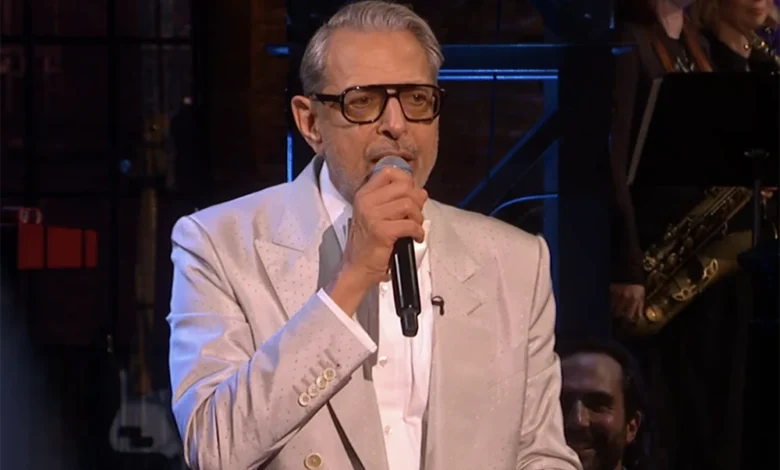
The intersection of late-night television and transatlantic culture reached a distinctive milestone as actor and musician Jeff Goldblum took the helm of the Saturday Night Live U.K. season two premiere. Broadcasting from the heart of the British capital, Goldblum utilized his renowned theatricality, improvisational piano skills, and deep affinity for jazz to deliver an opening monologue that immediately established a whimsical, high-energy tone for the evening. Eschewing the conventional stand-up routine favored by many hosts, the Jurassic Park and Wicked star opted for a bespoke musical number that blended quintessentially British cultural touchstones with self-deprecating humor and nods to his illustrious Hollywood career.
The live studio audience erupted in applause as Goldblum bounded onto the stage, visibly energized by the historic assignment. Addressing the crowd with his characteristic cadence—a blend of breathless enthusiasm and cerebral pauses—he marveled at the magnitude of the occasion. The choice of Goldblum as the host for the opening episode of the second season underscores the program’s strategy of pairing globally recognized cinematic icons with British television sensibilities, aiming to broaden the show’s international appeal while retaining its localized satirical edge.
Musical Monologue and British Cultural References
Sitting comfortably behind a grand piano, Goldblum launched into an original, jazz-infused composition designed specifically for the London broadcast. His lyrics demonstrated a playful awareness of British colloquialisms and consumer culture, effortlessly weaving references to popular institutions into a swinging, syncopated melody.
"I’m hoping to be your precise cup of tea and that you’ll like me more than Nando’s or Marmite," Goldblum sang, eliciting chuckles and knowing nods from the studio audience. He further endeared himself to the British viewers by leaning into wartime stoicism mixed with late-night reality, adding, "Even if I still bomb, I will keep calm and carry on because I’m hosting from London tonight."
True to his dynamic performing style, Goldblum did not remain tethered to the piano. He frequently stood up to dance across the stage, utilizing physical comedy and theatrical gestures. At one point, he playfully referenced his recent cinematic footprint, specifically his high-profile role as the Wizard in the cinematic adaptation of the musical Wicked. "Despite a few wicked flaws, I am the Wizard of Oz!" he belted out, bridging the gap between his current box office successes and the live television format.
A Nod to Cinematic History and CMAT Collaboration
The musical number reached a playful crescendo when Irish alt-pop artist and the evening’s musical guest, CMAT, joined Goldblum on stage. Assisting the host with the lyric delivery, CMAT held up cue cards bearing one of the most famous lines in cinematic history: "Life Finds a Way."
Initially feigning amnesia regarding his iconic role as chaos theorist Ian Malcolm in Steven Spielberg’s 1993 blockbuster Jurassic Park, Goldblum paused dramatically. "I don’t recognize it," he quipped to the amused crowd. However, the momentary lapse in memory was instantly cured when the backing band struck up the unmistakable, triumphant brass notes of John Williams’s legendary Jurassic Park theme.
Visibly re-energized by the familiar melody, Goldblum broke into a wide grin. "I get it now, I can do it!" he exclaimed, seamlessly integrating his past cinematic legacy into the live musical performance. The collaboration between Goldblum and CMAT highlighted the cross-genre and cross-generational camaraderie frequently cultivated on the SNL format, blending indie-pop credibility with classic Hollywood nostalgia.
The grand finale of the monologue encapsulated the celebratory mood of the broadcast. Goldblum brought the jazz number to a close with a rapid-fire succession of local references, rhyming his signature dinosaur mantra with modern British urban life.
"Life finds a way, when you’re live on Saturday," he sang with a theatrical flourish, before bringing the house down with a final lyrical couplet: "Like Sainsbury’s Local, we’re all feeling vocal. And I’m hosting right here, in London tonight!"
Background Context of Saturday Night Live U.K.
The arrival of Saturday Night Live U.K. on television screens represents a significant expansion of the legendary American sketch comedy franchise, which has been a staple of NBC programming since its inception in 1975 by Lorne Michaels. Adapting the format for a British audience required navigating a distinct comedic landscape, characterized by British satire, panel-show sensibilities, and a different rhythm of live television production.
The decision to greenlight a second season of the U.K. iteration indicates that broadcasters and producers have found a sustainable formula that resonates with domestic viewers while maintaining the fast-paced, unpredictable nature of the original American broadcast. Securing a performer of Goldblum’s caliber for the season premiere signals a major investment in the show’s star power and its ambition to capture global headlines.
Goldblum’s long-standing relationship with both film and live performance makes him uniquely suited for the demands of the show. Beyond his extensive filmography—which includes iconic turns in The Fly, Independence Day, and Thor: Ragnarok—Goldblum has maintained a parallel career as a accomplished jazz pianist. For decades, he and his band, the Mildred Snitzer Orchestra, have performed regularly, blending live musical improvisation with audience interaction and trivia. This background ensured that Goldblum’s musical monologue on SNL U.K. was not merely a scripted segment, but a genuine display of his performance expertise.
Chronology of the Production and Performance
The journey to the Saturday Night Live U.K. season two premiere involved rigorous pre-production planning, rehearsals, and script development, standard for the high-pressure environment of sketch comedy.
- Pre-Show Preparations (Week Prior): Goldblum arrived in London days ahead of the broadcast to participate in table reads, pitch sketches with the writing staff, and rehearse musical numbers with the house band and guest artist CMAT.
- Dress Rehearsal (Saturday Afternoon): The studio audience gathered for a full run-through of the episode, allowing producers to test timing, technical cues, and audience reactions to various sketches, including Goldblum’s opening piano number.
- Live Broadcast (Saturday Night): The show went live across the United Kingdom, opening with Goldblum’s grand entrance, piano performance, and the memorable cue-card interaction with CMAT.
- Post-Broadcast Reception: Within hours of airing, segments of the opening monologue circulated widely across social media platforms, drawing praise from international fans and generating positive media coverage regarding Goldblum’s musical talents and self-effacing humor.
Industry Analysis and Broader Implications
The success of the season two premiere of Saturday Night Live U.K. carries several implications for the future of international franchise adaptations of American television staples.
First, it demonstrates the viability of utilizing hosts who possess multi-disciplinary talents. While traditional hosts rely primarily on comedic timing and monologue joke delivery, Goldblum’s integration of live jazz piano and personal musical performance elevated the opening segment into an interactive theatrical event. This approach provides a blueprint for future episodes, suggesting that hosts who can blur the lines between acting, music, and improvisation may find greater resonance with live studio audiences.
Second, the strategic use of hyper-local references—such as Nando’s, Marmite, and Sainsbury’s Local—reflects a sophisticated understanding of localized marketing and audience engagement. For an international format to succeed outside its home market, it must avoid feeling like a direct import and instead embed itself within the cultural vernacular of the host country. Goldblum’s deliberate embrace of British consumer culture served as a cultural handshake, signaling respect and affection for the viewing audience.
Finally, the viral potential of such performances underscores the modern metrics of television success. In an era where linear television ratings are frequently supplemented—and sometimes overshadowed—by digital engagement, segments that feature recognizable intellectual property, such as the subtle nods to Jurassic Park and Wicked, are primed for digital sharing. By leaning into his established pop culture footprint while simultaneously subverting expectations through live musical comedy, Jeff Goldblum ensured that the Saturday Night Live U.K. season opener achieved both immediate broadcast success and enduring online visibility.