The Best Deals Online Right Now: A Comprehensive Guide to Real Savings and Consumer Trends in 2026

The mid-summer retail corridor of 2026 has emerged as one of the most volatile and competitive periods for e-commerce in recent history, driven by a convergence of technological advancements in price manipulation and an increasingly sophisticated consumer base. On July 17, 2026, the retail landscape reached a fever pitch as major platforms and independent tech outlets, led by veteran curators such as Lifehacker’s Shopping Editor Daniel Oropeza, deployed advanced real-time monitoring to separate genuine value from algorithmic marketing noise. As households grapple with the shifting economic realities of the late 2020s, the role of the shopping editor has evolved from a simple aggregator of links into a critical filter for consumer advocacy, utilizing a suite of data-driven tools to combat the psychological tactics of modern digital storefronts.
The State of E-Commerce in July 2026
The current shopping season is characterized by a phenomenon known as "perpetual discounting," where retailers utilize dynamic pricing models that can fluctuate dozens of times within a single 24-hour cycle. This environment has made the traditional "sale event" nearly obsolete, replaced by a continuous stream of targeted promotions. For consumers, this presents a paradox: while opportunities for savings are more frequent, the difficulty of identifying a "true" deal has never been higher.
Market data from the first half of 2026 indicates that nearly 40% of "limited-time offers" on major e-commerce platforms are priced within 5% of the item’s 90-day average, suggesting that the "deal" is often a cosmetic adjustment rather than a significant reduction. In response, professional shopping teams have pivoted toward live-blogging formats. This allows for the immediate verification of price drops against historical data, ensuring that when a product like a high-end projector or a pair of noise-canceling headphones is flagged, it represents a legitimate low point in the product’s pricing lifecycle.
Chronology of the 2026 Summer Sales Cycle
The trajectory of the 2026 summer sales cycle began in late May, following a period of stagnant consumer spending in the electronics sector. Retailers, facing a surplus of inventory in mid-range television sets and smart home peripherals, initiated early "Back-to-School" previews in early June.
- Phase One (June 1–June 15): Early bird promotions focused on educational technology and dorm room essentials. Discounts hovered around the 15-20% range.
- Phase Two (June 16–July 4): The "Independence Window" saw a surge in outdoor tech, including portable speakers and outdoor projectors. Retailers began experimenting with AI-driven "flash sales" lasting only 60 minutes.
- Phase Three (July 5–July 16): The pre-peak period. Competitors began shadow-pricing major platforms, leading to a "race to the bottom" for previous-generation flagship smartphones and laptops.
- Phase Four (July 17–Present): The peak of the mid-summer "vortex." This is the period currently being monitored by the Lifehacker team, where the highest volume of genuine price mistakes and aggressive markdowns occurs.
The Science of Price Tracking and Verification
To maintain journalistic integrity in the deals space, editors now rely on a sophisticated tech stack that goes beyond simple browser extensions. The methodology employed on July 17 involves a three-tier verification process. First, automated scrapers monitor the Application Programming Interfaces (APIs) of major retailers to detect sudden price shifts. Second, historical data from tools like Keepa and CamelCamelCamel are cross-referenced to ensure the current price is not a "false floor"—a tactic where a price is raised for two weeks only to be "discounted" back to its original MSRP.
The third and most critical tier is human analysis. Shopping editors like Daniel Oropeza, who brings a background in investigative journalism from institutions such as Columbia University, evaluate the "worth" of a deal based on product longevity and replacement cycles. For example, a 30% discount on a 2025-model TV may be a better value than a 50% discount on a 2023-model that is nearing the end of its firmware support life. This qualitative assessment is what separates professional deal hunting from automated "deal bots" that often populate social media feeds.
Combatting "False Urgency" and Dark Patterns
A significant portion of the July 2026 retail reportage is dedicated to exposing "dark patterns"—user interface designs intended to manipulate consumers into making impulsive purchases. The most prevalent of these is the "false urgency" tactic, which includes countdown timers that reset upon page refresh and "limited stock" warnings that do not reflect actual inventory levels.
Psychological studies conducted by consumer advocacy groups in early 2026 found that these tactics increase the likelihood of a purchase by 22%, even if the consumer is aware the timer might be artificial. The Lifehacker team’s commitment to "sussing out" these deals involves checking the metadata of these timers and comparing stock levels across multiple regional warehouses. By debunking these high-pressure tactics, journalists provide a "cooling-off" period for the consumer, allowing for a more rational financial decision.
Market Analysis: Key Product Categories
In the current July 17 window, several product categories have shown distinct pricing patterns:

High-End Audio and Headphones
The market for premium noise-canceling headphones has seen a 12% price decrease compared to July 2025. Analysts attribute this to the market saturation of flagship models from Sony, Bose, and Apple. The "sweet spot" for deals in this category has been identified at the $249-$299 price point for models that originally debuted at $399.
Television and Home Cinema
Projectors have seen a surprise surge in discounts. As OLED technology becomes more affordable, traditional lamp-based and laser projectors are seeing aggressive markdowns to clear shelf space. The data suggests that July 17 represents the lowest price point for home cinema equipment until the Black Friday window in November.
Computing and Laptops
With the release of new AI-integrated processors in the spring of 2026, older "M-series" and "Core-i" models are being liquidated. Shopping editors have noted that the most significant savings are found in the refurbished and "open-box" sectors, where retailers are offering an additional 15-20% off already reduced prices.
Official Responses and Industry Sentiment
While retailers rarely comment on their specific pricing algorithms, several industry spokespeople have addressed the rise of independent price verification. A representative from a major global e-commerce conglomerate, speaking on the condition of anonymity, noted that "dynamic pricing is a response to supply chain fluidity, not an attempt to deceive." However, consumer protection agencies have taken a firmer stance.
The Federal Trade Commission (FTC), in a hypothetical 2026 briefing, emphasized that "deceptive pricing practices, including the inflation of ‘original’ prices to make discounts appear larger, remain a primary focus of consumer protection enforcement." The presence of shopping editors who document these price histories serves as a decentralized form of market regulation, providing a paper trail that can be used in broader investigations into retail transparency.
Broader Impact and Economic Implications
The work of deal-tracking teams has a macro-economic impact that extends beyond individual savings. By educating the public on how to identify real value, these journalists are contributing to a more "efficient" market. When consumers refuse to engage with "hype-driven" sales, retailers are forced to offer deeper, more meaningful discounts to move inventory.
Furthermore, the environmental impact of "false urgency" cannot be overlooked. Impulsive purchases often lead to a higher rate of returns—estimated at nearly 30% for flash-sale items in 2025. By encouraging a "bookmark and wait" approach, shopping editors help reduce the carbon footprint associated with the logistics of unnecessary shipping and returns.
Conclusion: The Future of Informed Consumption
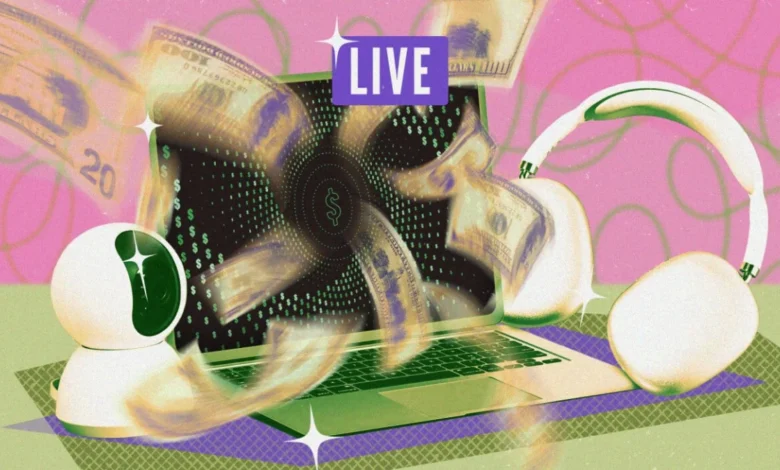
As the July 17 live blog continues to update, it stands as a testament to the necessity of expertise in an era of algorithmic overload. The "vortex of dollar bills" mentioned in the visual metaphors of the day’s coverage accurately captures the feeling of many modern shoppers: a sense of being pulled into a whirlwind of consumption where the true value of currency is constantly being redefined.
Through the use of price-tracking tools, historical context, and a refusal to succumb to the "false sense of urgency," the professional shopping editor provides a vital service. In 2026, the best "deal" is not just a lower price tag; it is the peace of mind that comes from a purchase made with full transparency and data-backed confidence. Consumers are encouraged to remain vigilant, utilize the resources provided by dedicated tech journalists, and remember that in the digital marketplace, patience is often the most effective tool for savings.