Trump Delivers Fiery, Lengthy Address at Rescheduled White House Correspondents’ Dinner

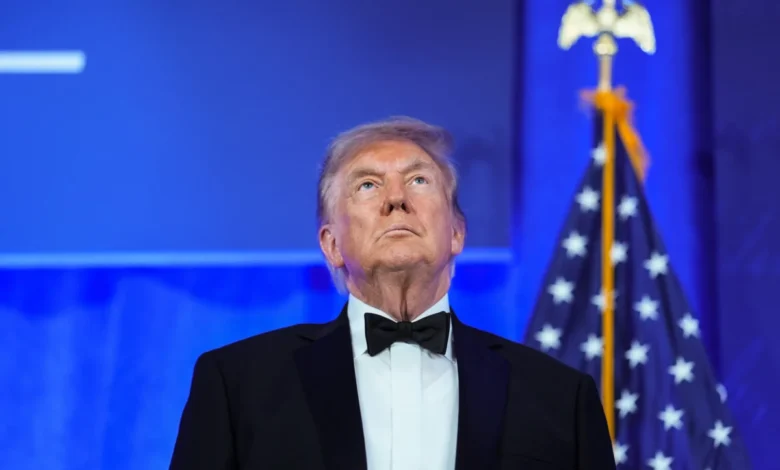
President Donald Trump made his inaugural appearance at the White House Correspondents’ Association (WHCA) Dinner, delivering a speech that stretched for over an hour and was characterized by sharp criticisms of journalists, politicians, and celebrities with whom he has publicly clashed. The rescheduled gala, held Friday evening in Washington, D.C., marked a significant departure from the traditional tone of the event, which typically features lighthearted roasts and a focus on the press’s role in democracy.
Trump’s attendance at the dinner, held at the Waldorf Astoria hotel, was his first since taking office, a decision he attributed to a perceived unfairness in media coverage during his previous term. "I thought the press treated me very, very unfairly," Trump stated, explaining his absence for four years. He added, "I think I made the right decision because they need to go where maybe you’re not wanted, but they did want me. They wanted me for ratings, and they wanted me for other reasons, but not for love."
The evening’s proceedings were particularly poignant given the circumstances that led to its rescheduling. The original WHCA dinner, slated for April 25, was abruptly interrupted by a security incident involving a gunman who breached security protocols at the Washington Hilton. The suspect was apprehended and subsequently charged. Trump addressed the incident during his remarks, expressing gratitude to law enforcement personnel for their swift action in subduing the attacker. This security scare, and the subsequent postponement, cast a somber shadow over the eventual gathering.
A Speech Marked by Retribution and Unconventional Remarks
From the outset, Trump appeared to grapple with the expected tone of the event. "I said, ‘What do we do here? Is this supposed to be fun? Am I supposed to be serious? Am I supposed to be a comedian?’" he mused, suggesting a departure from the more pointed barbs he may have originally intended. However, this initial uncertainty quickly gave way to a barrage of criticisms directed at the assembled press corps.
"This evening it’s really all about the fake news media and your handling of prizes – writing and producing and performing made-up stories like the Academy Awards," Trump declared, drawing a parallel between journalistic output and what he deemed the declining relevance of the Oscars. He argued that the Academy Awards’ ratings had plummeted because "they took on Trump. They hit me all night long." This comparison underscored his ongoing contention that media criticism is driven by personal animosity rather than objective reporting.
Trump then issued a stark warning to the journalists present, predicting financial ruin for the media industry should he no longer be a prominent figure. "When I’m gone. You’re all going to be broke. Your business model is going to be finished. No, it’s true. When I’m not around, you’re going to be broke. There’s not going to be anybody to report on. Nobody gives a damn about anybody else," he asserted. This statement highlights his belief in his own central role in driving media engagement and revenue.
The President also touched upon his perceived shift in media strategy, stating, "mostly, I’ve given up on you and the media, so that now I just gave up on you, and I’m number one on TikTok. Did you see that?" He claimed to have "given up on traditional press, and it obviously worked because we did win in a landline" (a likely misstatement for "landslide"). He further boasted about his involvement in the potential sale of TikTok to American investors, framing it as a strategic move away from traditional media outlets.
Targeting Individual Journalists and Media Outlets
The speech was replete with personal attacks on various media figures and organizations. Trump singled out Don Lemon, labeling him "the dumbest man on television" and questioning his ability to make a comeback. He also addressed Kaitlan Collins of CNN, who had received a WHCA award for her coverage of a confrontation between Trump and Ukrainian President Volodymyr Zelensky. While offering a seemingly backhanded congratulatory note, Trump dismissed her award as "a fake" and suggested she "shouldn’t get the award." He further commented on Collins’ demeanor, urging her to "smile" and implying a lack of genuine happiness despite her journalistic achievements.
Trump’s remarks about Collins took a peculiar turn when he alluded to the Bud Light controversy involving transgender influencer Dylan Mulvaney. He joked that Collins had signed a "major new sponsorship" but mistakenly believed it was her on the Bud Light can, not Mulvaney. He referenced the significant backlash and financial impact on Bud Light, stating, "Dylan Mulvaney cost Bud like $35 million in market cap. It was the worst commercial ever made, by the way." This tangent, while seemingly random, reflects his engagement with and commentary on cultural and political controversies.
CNN anchor Anderson Cooper also faced Trump’s scrutiny. While acknowledging Cooper had covered him well for many years, Trump suggested his reporting changed once he "went for politics." He noted that Cooper "went bad as soon as I went for politics" but added, "for years, he loved interviews. I did so many interviews with him, and he was great."
Beyond CNN personalities, Trump’s criticisms extended to other media figures, including Jake Tapper. He also broadened his attack to include politicians such as California Governor Gavin Newsom, U.S. Representatives Ilhan Omar, Senators Elizabeth Warren and Chuck Schumer, and entertainer Bruce Springsteen. Of Springsteen, Trump remarked, "What the hell happened to that guy? He looks like hell… I’m sure he doesn’t like the way I look, but I don’t look so bad." He criticized Springsteen’s concert for containing "four political speeches" and humorously renamed the tour "Bored in the USA."
The Shadow of Lawsuits and Awards
The event also highlighted the ongoing adversarial relationship between Trump and the press, particularly concerning legal actions. The Wall Street Journal reporters who received the Katharine Graham Award for Courage and Accountability for their story about a birthday letter purportedly written by Trump to Jeffrey Epstein were acknowledged. Trump, who has denied penning the letter, has been embroiled in a protracted legal battle with the Journal over the coverage. He initially filed a $20 billion lawsuit, which was dismissed by a judge but later refiled. The Journal’s legal team has characterized his lawsuit as "an affront to the First Amendment." Trump’s interaction with the award-winning reporters at the dinner, described as an "awkward" handshake followed by a gesture of "mock resignation," underscored the tension surrounding these ongoing disputes.
The WHCA’s decision to forgo a traditional comedian and instead feature mentalist Oz Pearlman was another notable deviation from custom. In past years, the dinner has often included a comedian to offer satirical commentary on the sitting president. The selection of a mentalist, while perhaps intended to avoid the political minefield of a comedian roasting a president with whom he has a contentious relationship, further set this year’s event apart.
A Glimpse into Future Ambitions
Towards the end of his lengthy address, Trump donned a "Trump 2028" hat, signaling his intention to run for a fourth term and reiterating his unsubstantiated claims of having won the 2020 election. He expressed his intent to return to the correspondents’ dinner in 2027, suggesting a continued engagement with the political and media landscape.
Trump also included a jest directed at Robert F. Kennedy Jr., his Secretary of Health and Human Services. He made a peculiar reference to Kennedy "personally ran over the cow in his car" and suggested an appetizer featuring "his favorite cut of male raccoon roadkill," which was apparently rejected. This remark, while framed as a joke, served to highlight his characteristic blend of personal anecdotes and unconventional humor in public address.
The duration of Trump’s speech, approximately 64 minutes from his 9:33 p.m. podium entry, was considerably longer than typical remarks at such events. This extended monologue provided a platform for him to air grievances, assert his political ambitions, and engage in pointed commentary on a wide array of individuals and institutions.
The WHCA Dinner, traditionally a forum for fostering relations between the press and the presidency, was transformed by President Trump’s presence into a stage for his unvarnished opinions and a stark reminder of the ongoing tensions between the White House and the media. The event’s rescheduling due to a serious security threat only amplified the unusual nature of this year’s gathering, underscoring the turbulent political climate in which it took place. The evening concluded with outgoing WHCA president Weijia Jiang and incoming president Jacqui Heinrich presiding over the ceremonies, a testament to the enduring, albeit challenged, role of the White House press corps.