WHO Director-General visits Jordan to recognize strong collaboration on health system delivery, emergency relief and advancing mental health

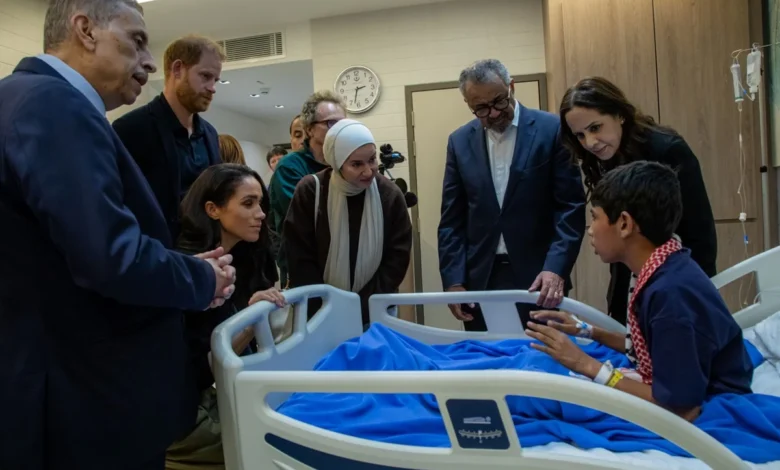
The World Health Organization (WHO) Director-General, Dr. Tedros Adhanom Ghebreyesus, has concluded the first leg of a pivotal two-day State visit to the Hashemite Kingdom of Jordan, a diplomatic mission designed to reinforce the strategic partnership between the UN health agency and the Jordanian government. The visit, which highlights Jordan’s role as a regional stabilizer in public health, centered on three core pillars: the acceleration of universal health coverage (UHC), the expansion of mental health services, and the management of humanitarian health logistics amid ongoing regional volatility.
A Diplomatic Focus on Regional Stability
The centerpiece of the visit was a high-level consultation with His Majesty King Abdullah II. This meeting served as a vital forum for discussing the intersection of national health policy and regional emergency response. Jordan has long been recognized for its disproportionate contribution to refugee health, currently hosting over three million refugees—a population comprised primarily of Syrians and Palestinians.
During the discussions, Dr. Tedros acknowledged the Kingdom’s "Medical Corridor" initiative, a specialized logistical program that facilitates the transfer of critically ill and injured children from Gaza to Jordanian medical facilities. This initiative has become a lifeline for patients requiring specialized interventions, including cancer treatment and complex surgeries, that are currently unavailable within the Gaza Strip due to the degradation of local health infrastructure.
Chronology of the State Visit: Day One
The first day of the mission was characterized by a rigorous schedule aimed at assessing both the challenges and the successes of Jordan’s healthcare system.
- Morning Sessions: Dr. Tedros held a series of bilateral meetings with the Jordanian Minister of Health to review the integration of primary health care services. These discussions emphasized the “whole-of-society” approach to UHC, a policy framework that Jordan has pioneered in the Middle East.
- Clinical Site Visits: The Director-General conducted a field inspection of a WHO-supported hospital currently treating pediatric patients evacuated from Gaza. The visit provided firsthand insight into the logistical hurdles of the medical corridor, including the necessity of continuous international financial support to maintain the flow of medical supplies and personnel.
- Multi-Stakeholder Roundtable: Dr. Tedros convened a summit involving international donor nations, various United Nations agencies, and philanthropic organizations. The objective was to secure long-term financing for Jordan’s health systems, particularly as they absorb the burden of regional crises.
- The Archewell Engagement: Accompanying the Director-General were Prince Harry and Meghan, the Duke and Duchess of Sussex. Representing Archewell Philanthropies, the couple participated in briefings regarding mental health, a key component of the WHO’s current strategic focus.
The Burden of Care: Supporting Data and Context
Jordan’s healthcare system operates under significant pressure. According to recent World Bank and UNHCR data, Jordan is the second-largest refugee host per capita globally. This demographic reality places immense strain on public hospitals and community clinics.
The integration of mental health into primary care has been a significant milestone for the Kingdom. WHO’s Special Initiative for Mental Health, which has been operational in Jordan, reports that the integration of psychological screenings into routine medical visits has increased the detection of anxiety and depression among refugee populations by approximately 22% over the last two years. However, funding gaps remain. The humanitarian health action plan for the region currently faces a shortfall, with experts noting that for every dollar spent on emergency response, nearly three dollars are required to sustain long-term chronic care for displaced persons.
Official Statements and Global Leadership
In his address to the press, Dr. Tedros lauded the Jordanian leadership, stating, "Jordan continues to show the world what it truly means to put health and humanity first." He emphasized that the collaboration is not merely transactional but is a model for how host nations can maintain resilient systems despite external shocks.
Prince Harry, speaking on the importance of mental health, highlighted the systemic need to address psychological trauma in conflict zones. "Mental health is fundamental to recovery, dignity, and long-term peace," the Duke noted. "We remain deeply committed to advancing awareness, reducing stigma, and expanding access to mental health support for all those affected by conflict and crisis."
The inclusion of the Duke and Duchess of Sussex reflects a broader trend of leveraging high-profile advocacy to draw attention to underfunded humanitarian sectors. Archewell Philanthropies has historically supported WHO initiatives, specifically regarding equitable vaccine distribution and the development of mental health programs in emergency settings.
Broader Implications: A Model for Regional Resilience
The implications of this visit extend beyond the borders of Jordan. As the WHO looks to stabilize health systems in the Eastern Mediterranean region, the Jordan model—defined by the fusion of primary healthcare and emergency humanitarian logistics—is being viewed as a blueprint for other nations facing similar demographic pressures.
The upcoming second day of the visit is set to address specialized rehabilitation. Dr. Tedros is scheduled to visit the National Center for Rehabilitation of Addicts, an institution that showcases the intersection of medical, psychological, and social service delivery. Furthermore, the Director-General will engage with the Jordanian Hashemite Fund for Human Development and the King Hussein Cancer Center. These visits are designed to highlight how specialized institutions can collaborate to create a cohesive national health network that is capable of scaling up during times of regional conflict.
Analysis: Challenges and Future Outlook
Despite the praise for Jordan’s resilience, the country faces significant macroeconomic headwinds. The sustainability of the medical corridor and the maintenance of universal health coverage depend heavily on the continued goodwill of the international donor community. Analysts suggest that the WHO’s focus on this visit is an attempt to "de-risk" humanitarian aid by formalizing partnerships between the state and international philanthropic actors.
By emphasizing the "humanitarian-development nexus," the WHO is signaling a shift away from short-term emergency responses toward building permanent, resilient infrastructure. This is critical in the context of the Middle East, where protracted conflicts have created a "new normal" of long-term displacement. The success of this visit will be measured not by the immediate policy announcements, but by the ability of the WHO and the Jordanian government to turn these high-level discussions into sustained, multi-year funding commitments.
As the state visit concludes, the focus remains on the "Medical Corridor" and the integration of mental health services as the two most vital components of Jordan’s current health strategy. With the international community watching, the outcome of these discussions is expected to influence the regional allocation of health resources for the remainder of the fiscal year.
In closing his initial remarks, Dr. Tedros reinforced the mandate of the WHO: to ensure health for all, regardless of status or geography. The partnership with Jordan represents one of the most practical applications of this mandate in the modern era, serving as a beacon of cooperation in an otherwise fractured regional landscape. The final day of the visit will likely solidify the commitments made during the roundtable, setting the stage for a new phase of international cooperation in the Eastern Mediterranean.