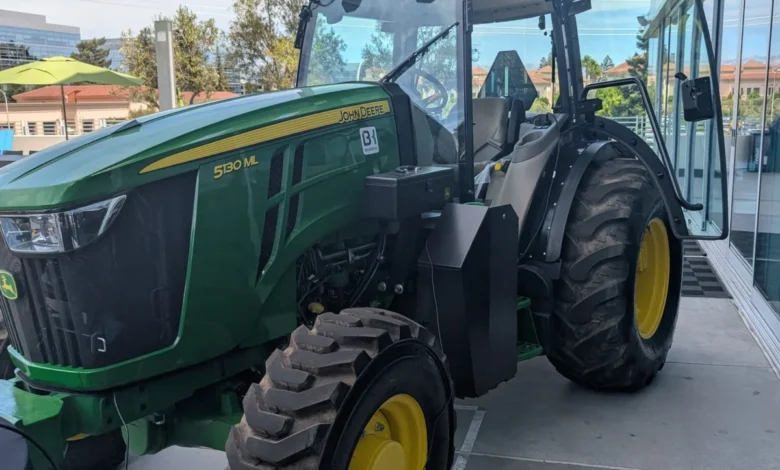
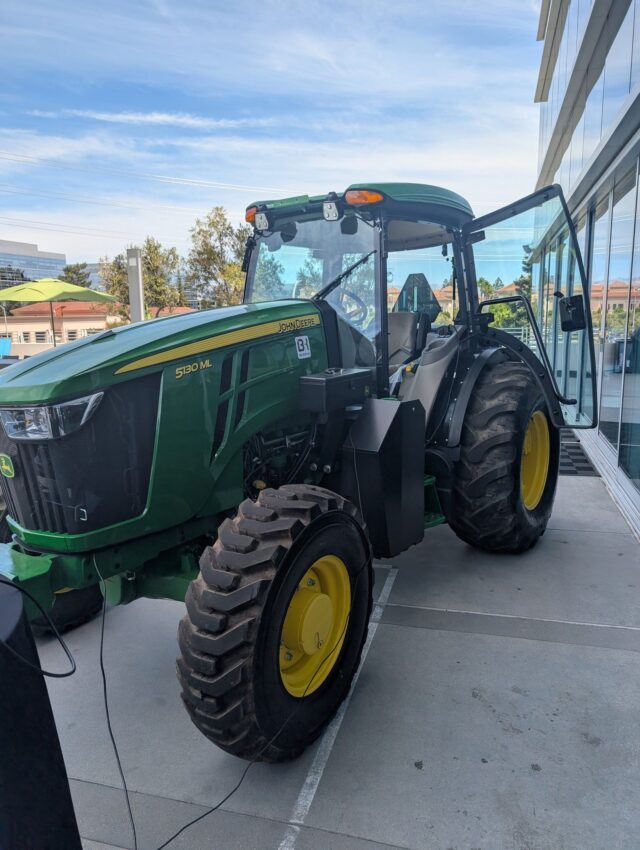
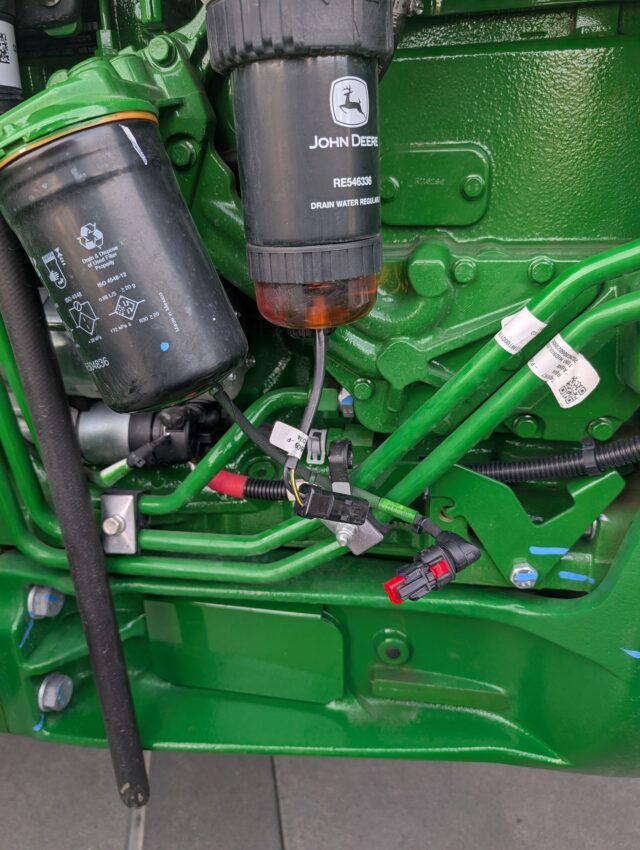
The modern agricultural machine is no longer just a mechanical marvel of steel, pistons, and combustion; it is a rolling data center, heavily computerized and dependent on complex software ecosystems. At John Deere’s corporate office in Santa Clara, California, a demonstration of the company’s "Operations Center Pro Service" puts this reality into perspective. Standing on the lawn next to a high-value 5130ML tractor, a reporter with no mechanical or agricultural background is tasked with troubleshooting a simulated engine fault: a disconnected water-in-fuel sensor.
Connecting a laptop to the machinery via a diagnostic cable instantly triggers a bright red notification detailing the system failure. Guided by software that cross-references the specific serial number of the tractor with the manufacturer’s user manual and digital architecture, the user locates the dangling wires beneath the hood, snaps them back into place until they click, and watches the dashboard alert instantly disappear. The entire process takes less than three minutes.
For John Deere executives, including Senior Vice President and Chief Technology Officer Jahmy Hindman, this seamless interaction is meant to showcase that the company’s equipment is inherently owner-friendly. Yet, despite corporate demonstrations designed to highlight newfound accessibility, the broader agricultural community remains deeply skeptical, arguing that official self-repair tools are merely a superficial concession to mounting regulatory and legal pressure rather than a true embrace of the right-to-repair movement.
The Evolution of the Smart Tractor and the Right-to-Repair Battleground
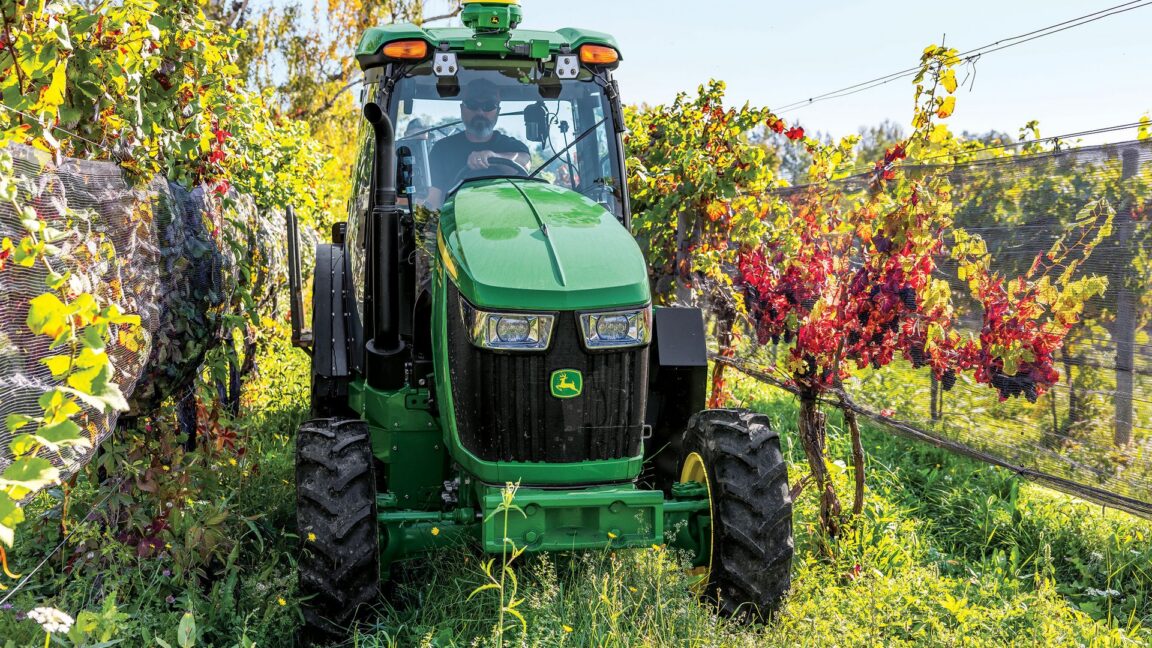
Over the past two decades, John Deere has solidified its position as the largest agricultural machinery manufacturer in the United States. Concurrently, its equipment has evolved exponentially in technological complexity. Modern tractors, combines, and sprayers are laden with dozens of electronic control units (ECUs), network controllers, sensors, and 4G wireless connections capable of harvesting hyper-local data on soil composition, crop yield, and operational efficiency. Some advanced models can even operate autonomously along pre-programmed geographic coordinates without human intervention.
However, this technological leap introduced a parallel friction point: digital locks and proprietary diagnostic software. For years, farmers seeking to perform routine maintenance, alter machine parameters, or swap out damaged components were legally and technologically blocked from doing so unless they utilized official, dealer-sanctioned technicians. Independent repair shops and agricultural workers found themselves locked out of vital diagnostic codes, forcing them to rely on expensive dealership visits and authorized downtime that routinely crippled harvest schedules.
This frustration catalyzed a powerful grassroots movement advocating for the "right to repair," drawing intense national scrutiny. Over the past decade, the controversy escalated from agricultural forums to federal courtrooms and regulatory agencies, transforming the everyday tractor into a symbol of consumer ownership rights in the digital age.
Legal Settlements and Financial Repercussions
The mounting pressure culminated in major legal and regulatory milestones for John Deere. In April, the agricultural giant agreed to a landmark $99 million settlement with equipment owners to resolve allegations of monopolizing the repair market and inflating maintenance costs. Just months later, in July, the company settled a separate, high-profile lawsuit brought by the United States Federal Trade Commission (FTC), which mandated that John Deere open up its software and diagnostic tools to make its products significantly more repairable.
While John Deere did not admit any wrongdoing in either settlement, right-to-repair advocates immediately raised alarms. Critics argued that the financial payouts were insufficient relative to the widespread economic harm suffered by farmers, and they questioned whether the structural terms of the settlements would fundamentally alter the manufacturer’s corporate behavior. At the time of writing, both settlements remain subject to final judicial approval, leaving the long-term enforcement mechanisms in a state of regulatory limbo.
Inside John Deere’s Pro Service Ecosystem
In response to the shifting legal and political landscape, John Deere introduced its Pro Service platform in 2025. Designed to bridge the gap between closed proprietary systems and independent remediation, Pro Service acts as a digital intermediary. The service is structured on a tiered subscription model: individual machine access starts at an annual fee of $195, while broader operations and independent repair businesses face costs ranging from $4,995 to $5,995 annually to access the complete fleet database.
Through a Wi-Fi or wired connection, Pro Service pairs the user’s computer directly with the machine’s onboard computer network. By verifying the unique serial number, the software pulls precise manuals, maintenance histories, and diagnostic workflows. Recently, the company integrated an artificial intelligence assistant named "JD" into the Operations Center ecosystem to help technicians and owners parse through complex component libraries. The software allows offline downloads for remote field use, tracks update histories, and provides direct links to the John Deere digital shop for replacement parts.
According to Kelli Sullivan, group product manager of marketing automation and governance at John Deere, the platform places data sovereignty squarely in the hands of the owner, allowing them to choose whether to share diagnostic logs with the manufacturer, an independent shop, or keep them strictly private.
Despite these offerings, widespread adoption has lagged. One year after its rollout, John Deere reports approximately one thousand daily users across its platform—a modest figure when juxtaposed against the roughly 1.8 million operational farms across the United States. Company representatives attribute this adoption gap to a lack of awareness, maintaining an active campaign to educate agricultural workers on tools they already possess.
The Farmer’s Perspective: Simplicity Versus Deep Diagnostics
For many working farmers, however, the hesitation to embrace Pro Service runs deeper than mere lack of awareness. Jared Wilson, a Missouri-based corn and soybean farmer managing 3,000 acres and a named plaintiff in the $99 million class-action lawsuit, views the system with persistent distrust. Wilson has openly criticized the recent legal settlements as fundamentally flawed, asserting that corporate-provided software solutions are engineered primarily for elementary fixes.
"If you have multiple failures, you have to figure out where to start," Wilson explains, pointing out that complex modern tractors often feature upwards of 50 distinct electronic controllers. "If you have three or four different diagnostic codes, where do you start in the tree to figure out what’s wrong?"
Wilson and many of his peers do not utilize Pro Service, nor do they know active users within their farming networks. Instead, a thriving gray market of cracked, unauthorized software versions persists across farming communities, allowing operators to bypass official restrictions entirely. Furthermore, farmers express deep-seated anxiety regarding transparency and parity. Many question whether the consumer version of Pro Service provides the exact same diagnostic depth as the software utilized by certified dealership technicians—a claim CTO Jahmy Hindman maintains is entirely equivalent.
Another structural friction point involves Product Improvement Plans (PIPs). John Deere utilizes PIPs to identify and distribute notices regarding potential or existing machine flaws based on aggregated field telemetry. Critics argue that when an operator encounters a novel, unprecedented mechanical or software failure, the feedback loop required to verify the issue, elevate it to corporate engineering, and finally issue an official PIP through Pro Service takes too much time. During this lag, the farmer is left with an immobilized machine and limited diagnostic visibility, forcing them back into the pipeline of authorized dealership support.
Broader Implications for the Right-to-Repair Movement
As the debate continues, critics like Willie Cade, a board member of advocacy group Repair.org, argue that the underlying motivation of agricultural conglomerates remains financial optimization for corporate stakeholders rather than operational empowerment for end-users.
"They’re just monopolists that want to make money and as much as they possibly can," Cade asserts. "Their real customer is not the farmer. Their real customer is Wall Street."

Conversely, John Deere leadership maintains that its intentions are aligned with keeping agricultural equipment operational and productive in the field. CTO Jahmy Hindman acknowledges that while continuous improvement is necessary, the company has made significant strides in shifting toward a more open diagnostic environment.
Beyond the immediate economic concerns of the agricultural sector, industry analysts view the outcome of the John Deere right-to-repair conflict as a crucial testing ground for consumer rights across the broader technology landscape. Because heavy machinery represents some of the most durable, long-lasting capital goods in modern society—often remaining in service for decades—the precedents established here will likely influence legislation governing personal electronics, medical devices, automotive systems, and smart home appliances. As Jared Wilson notes, the battle over agricultural equipment is ultimately the vanguard of a much larger, persistent societal problem regarding ownership in an increasingly digitized world.
Related posts: