Joshua Palmer scores decisive touchdown as Buffalo edges past Houston in opening weekend thriller

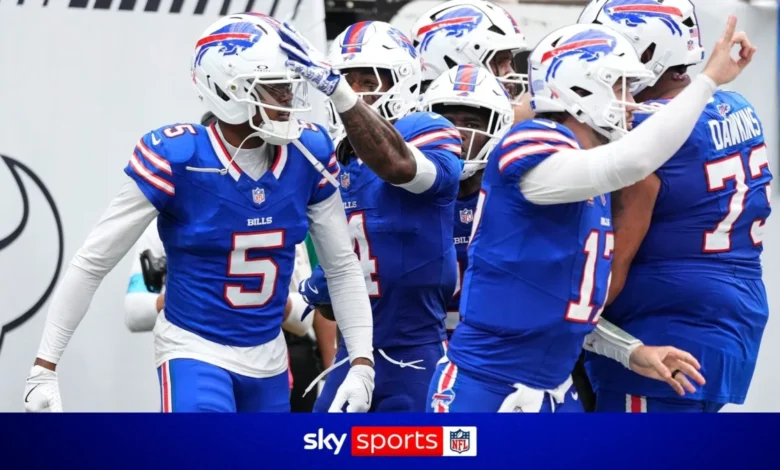
The opening weekend of the 2026 NFL season delivered on its promise of high-stakes drama Sunday night, as the Buffalo Bills secured a hard-fought victory over the Houston Texans. In a contest defined by defensive adjustments and late-game volatility, wide receiver Joshua Palmer emerged as the hero, hauling in a game-winning touchdown reception with less than two minutes remaining on the clock. The 24-20 victory serves as a significant tone-setter for both franchises, highlighting the narrow margins that often dictate the trajectory of a season.
A Chronology of the Contest
The game began under a cloud of anticipation, with both teams eager to prove their legitimacy as AFC contenders. Houston, entering the season with high expectations following their aggressive offseason roster construction, opened the scoring in the first quarter with a methodical 12-play drive that culminated in a short field goal. Buffalo responded midway through the second quarter, utilizing a balanced offensive attack that saw quarterback Josh Allen scramble for a crucial first down before connecting with his tight end on a 15-yard scoring strike.
By halftime, the score sat at 10-7 in favor of the Texans, as their pass rush consistently pressured the Buffalo pocket. The third quarter proved to be a stalemate of field position, with both teams forced to punt on multiple occasions as weather conditions—a stiff, swirling wind—began to impact the passing game.
The intensity shifted in the fourth quarter. Houston extended their lead to 17-7 early in the period, capitalizing on a turnover deep in Buffalo territory. However, the momentum swung decisively when Buffalo’s secondary forced a three-and-out, giving Allen the ball at his own 35-yard line with six minutes remaining. A rapid-fire, no-huddle offensive series brought the Bills within striking distance. With 1:48 left in the game, Palmer exploited a momentary lapse in Houston’s zone coverage, finding open space in the back corner of the end zone to secure the go-ahead touchdown. A final defensive stand by Buffalo, punctuated by a batted pass on fourth down, sealed the result.
Statistical Breakdown and Key Performers
The statistics from Sunday’s matchup reveal a game of contrasts. While Houston dominated the time of possession—controlling the ball for 34 minutes and 12 seconds compared to Buffalo’s 25 minutes and 48 seconds—the Bills proved more efficient in the red zone. Buffalo converted on three of their four red-zone opportunities, a stark improvement from their performance in the same category during the 2025 campaign.
Josh Allen finished the evening with 268 passing yards and two touchdowns, despite suffering three sacks from an aggressive Houston defensive front. Conversely, the Texans’ signal-caller managed 215 yards through the air and rushed for an additional 45, but struggled to sustain drives once the Buffalo defense shifted to a "nickel" formation in the final quarter.
Joshua Palmer’s performance was the standout individual contribution of the evening. Beyond his decisive touchdown, Palmer recorded seven receptions for 112 yards, establishing himself as a primary target in Buffalo’s revamped aerial attack. For Houston, the defensive secondary showed flashes of brilliance but struggled with discipline, conceding three penalties for defensive holding that extended Buffalo’s final scoring drive.
Strategic Implications and Post-Game Reactions
In the aftermath of the defeat, Houston head coach DeMeco Ryans addressed the media with a focus on accountability. "We had opportunities to put this game away in the fourth quarter, and we didn’t execute," Ryans stated. "When you play against an elite quarterback like Allen, you cannot leave the door open. We had the coverage, but we lost sight of Palmer on that final route. It is a learning experience, but it’s a difficult one to swallow in Week 1."
Conversely, the mood in the Buffalo locker room was one of tempered optimism. "We knew it was going to be a dogfight," said Buffalo’s head coach. "Houston is a physical, well-coached team. What I’m most proud of is the composure we showed when we were down ten points in the fourth. That’s the type of resilience that wins games in December, not just September."
Analysts have noted that this game serves as a microcosm of the current AFC landscape. Both teams are projected to be in the hunt for divisional titles, and the outcome of this head-to-head meeting could have significant implications for playoff seeding come January. The "head-to-head" tiebreaker rule is frequently the deciding factor for wild-card spots, making this early-season victory particularly valuable for Buffalo.
The Broader Impact on the 2026 Season
The 2026 NFL season arrives at a time of increased parity across the league. With several teams undergoing major coaching changes or roster overhauls, the stability shown by Buffalo in their late-game execution suggests they remain a team to beat. For Houston, the loss does not necessarily signal a decline in their potential; rather, it underscores the need for consistency in their secondary and a more clinical approach to closing out games.
From a structural perspective, the league’s increased emphasis on protecting the passer was evident throughout the match, with several high-impact hits resulting in "unnecessary roughness" reviews. Officials maintained a tight standard of officiating, which contributed to the game’s length but ensured a consistent application of the rules.
As the league moves into Week 2, the attention shifts to how these teams adjust. Buffalo must now prepare for a divisional rivalry game, while Houston will look to bounce back against a struggling opponent. The victory for Buffalo is more than just a notch in the win column; it is a validation of their off-season investments and a demonstration that their roster depth is capable of overcoming significant in-game deficits.
Technical and Tactical Analysis
Tactically, the game was a masterclass in defensive variation. Houston utilized a heavy blitz package throughout the first half, testing the integrity of the Buffalo offensive line. By the second half, Buffalo countered by implementing a "max protect" scheme, keeping an extra tight end or running back in to block, which created the one-on-one opportunities that allowed Palmer to flourish.
The evolution of the game also highlighted the impact of current analytics in coaching. Houston opted to kick a field goal on a 4th-and-2 situation in the second quarter, a decision that has already drawn scrutiny from statistical models which suggest a "go-for-it" approach would have increased their win probability by 4%. Such fine-tuned decisions are becoming the hallmark of modern NFL coaching, and the margin of victory—four points—will likely lead to rigorous film study for the Houston coaching staff.
Conclusion
The opening weekend of the 2026 NFL season has set a high bar for the months to follow. The matchup between Buffalo and Houston provided the tactical depth, individual brilliance, and late-game suspense that characterizes the sport at its highest level. As the dust settles on this opening thriller, both franchises now face the reality of a grueling 17-game schedule. For Buffalo, the momentum is tangible, while for Houston, the path forward is clear: refine the execution, secure the secondary, and minimize the lapses that turned a potential victory into a narrow defeat. As the league looks toward the second week of action, the performance of Joshua Palmer remains a key talking point, serving as a reminder that in the NFL, the difference between success and failure is often found in the final two minutes.