The Unlikely Rise of the Baklava Guy: How Jacob Komarow Turned a Concert Bet into a Flourishing New York Culinary Phenomenon

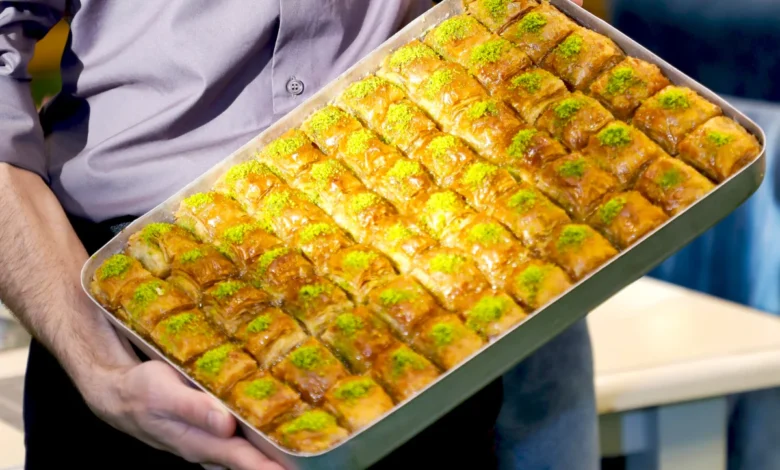
In the high-energy, fast-paced environment of New York City, where food trends often rise and fall with the speed of a viral social media post, Jacob Komarow has carved out a unique niche. Known to his growing legion of fans simply as the "Baklava Guy," the 30-year-old entrepreneur has transformed a modest, unconventional side hustle into a legitimate business enterprise. Operating without a traditional brick-and-mortar storefront, Komarow has leveraged the streets of New York, the power of digital virality, and a strategic supply chain to generate a monthly average of $20,000 in sales. His journey, marked by personal redemption and entrepreneurial grit, offers a compelling case study on the efficacy of mobile, experiential commerce in a modern urban landscape.
A Chronology of Growth: From Concert Parking Lots to Corporate Partnerships
The origins of Good Baklava can be traced back to September 2021, a period when Komarow was in the early stages of rebuilding his life. Having struggled with drug addiction following his high school departure, Komarow found himself at a crossroads. Six months into his sobriety journey, he attended a Phish concert in California. On a whim, he purchased three trays of pre-made baklava from a local Middle Eastern grocery store, wagering with a friend that he could successfully resell the pastries to fellow concert-goers. The success of that initial experiment—tripling his investment—was not merely a financial win; it was a catalyst for a new professional identity.
For nearly three years, Komarow treated the venture as a nomadic side project. He traversed the country, selling baklava at various outdoor events and music festivals. It was during the spring of 2022, while visiting a Turkish food vendor in Paterson, New Jersey, that Komarow experienced a pivotal moment in product development. After sampling the authentic, high-quality baklava available there, he realized that to scale his business, he needed a reliable, high-caliber supplier. He eventually secured a partnership with a bakery in Gaziantep, Turkey—a region globally renowned for the quality of its pistachios and traditional pastry techniques. This connection now provides him with a consistent, high-quality inventory that serves as the backbone of his operation.
The trajectory of the business shifted dramatically in 2024 and 2025. In June, Komarow’s decision to offer free samples to fans outside Madison Square Garden during a pivotal Knicks playoff game served as a masterclass in guerrilla marketing. Videos of his interactions with fans gained significant traction on platforms like Instagram and TikTok, eventually catching the attention of mainstream media, including a feature in The New York Times. This national coverage acted as an accelerant, vaulting his brand from a local curiosity to a recognizable name in the city’s culinary scene.
The Business Model: Agility and Experiential Sales
Good Baklava operates on a model of extreme agility. By avoiding the overhead costs of a permanent storefront—such as commercial rent, utilities, and full-time staffing—Komarow has maintained a lean operation that focuses entirely on direct-to-consumer engagement. His "storefront" is wherever the people are: city parks, music venues, and transit hubs.
The pricing strategy is segmented to accommodate both impulse buyers and dedicated customers. In-person, a three-piece serving typically fetches between $10 and $15, a premium price point that consumers appear willing to pay for the "experience" of the interaction and the quality of the product. Online, the business offers a 12-pack for approximately $30, providing a more stable, predictable revenue stream that complements the volatility of street-side sales.
Data from the past nine months indicates that while the business is profitable, it is also subject to significant seasonal fluctuations. December 2025 marked the company’s highest-grossing month, with sales reaching $70,000, driven largely by holiday-themed gifting and bulk orders. Conversely, the following month saw a contraction to under $10,000. This volatility underscores the necessity of Komarow’s "careful testing" approach, where he constantly adapts his sales pitches and event appearances based on real-time feedback and seasonal consumer behavior.
The Impact of Corporate Integration
As the brand’s visibility has expanded, so too have the opportunities for corporate collaboration. The "baklava wildfire," as Komarow described the surge in interest following his media appearances, attracted the attention of national brands seeking to tap into his unique, grassroots audience. Recent partnerships have included collaborations with US Mobile and Acme Smoked Fish, as well as various local and national restaurant chains.
These partnerships signify a broader trend in the food industry: the movement toward "creator-led" brands. Rather than relying solely on traditional advertising, companies are increasingly looking to partner with individuals who have established authentic, high-engagement connections with their customer base. For these corporations, associating with the "Baklava Guy" provides a sense of urban authenticity and community connection that is difficult to manufacture through traditional marketing campaigns.
The Human Element: Resilience and the American Dream
Beyond the revenue figures and the logistical successes, the story of Good Baklava is deeply rooted in personal transformation. Now more than five years sober, Komarow frequently speaks about his business as a testament to the possibility of change. His journey from a high school dropout struggling with substance abuse to a successful entrepreneur managing international supply chains is, in his own estimation, an embodiment of the modern American dream.
However, the reality of the business remains grounded in the grit of daily operation. Komarow remains the face of the company, often found personally distributing his product. This hands-on approach is not just a branding choice; it is a vital part of his market research. By engaging directly with New Yorkers, he maintains an intuitive understanding of his customer base—a demographic that he believes is uniquely suited to his business. "I don’t think this company could have ever survived anywhere else besides New York City," he noted, citing the city’s density, energy, and appreciation for the hustle as critical factors in his success.
Future Implications and Market Analysis
The success of Good Baklava poses interesting questions regarding the future of small-scale food entrepreneurship. The business demonstrates that in an era of digital connectivity, a physical address is no longer a prerequisite for commercial viability. Instead, visibility, reputation, and the ability to leverage social media to create "events" around a product are becoming the primary drivers of growth.
As the company looks toward the future, the challenge will be managing scale without diluting the authenticity that fueled its initial rise. Maintaining a relationship with a supplier in Turkey while managing the logistical complexities of a roaming, high-volume operation will require a transition from a "side hustle" mentality to a more structured corporate framework. Whether Komarow chooses to pursue a permanent location or continues to lean into the nomadic, event-based model, his influence on the local food scene is already firmly established.
In summary, Jacob Komarow’s story serves as a reminder that innovation often stems from unconventional sources. By treating the street as a laboratory and the consumer as a participant, he has built a sustainable, scalable business out of a simple, syrupy-sweet pastry. As he continues to navigate the complexities of the New York market, the "Baklava Guy" stands as a case study for aspiring entrepreneurs on the power of persistence, adaptability, and the enduring value of a high-quality product.