Godzilla Minus Zero Continues the Oscar-Winning Legacy With New Kaiju Threats and Post-War Drama

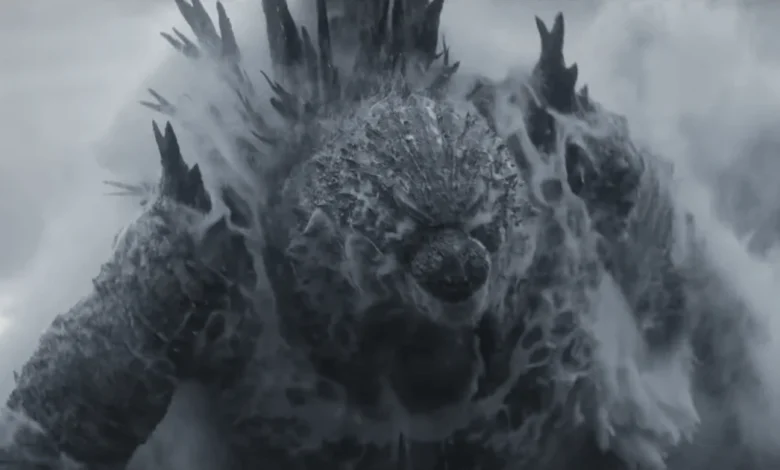
The announcement and subsequent premiere of Godzilla Minus Zero at the 2026 New York Film Festival mark the latest milestone in Toho’s historic kaiju franchise. Directed by Takashi Yamazaki, the film serves as a direct sequel to the globally celebrated and Academy Award-winning 2023 feature Godzilla Minus One. Following its festival debut, distributor GKIDS has scheduled a nationwide theatrical release in the United States for Friday, November 6, 2026.
The picture builds upon the psychological weight and visual grandeur of its predecessor, expanding its narrative scope to examine the fragile equilibrium of a post-war Japan grappling with atomic trauma, shifting geopolitical tensions, and an entirely new airborne threat to national survival.
Narrative Premise and Evolution of the Title
When writer-director Takashi Yamazaki initially unveiled the title Godzilla Minus One, he clarified that it carried a dual meaning: it indicated a timeline set prior to Ishirō Honda’s seminal 1954 classic, and it mirrored the precarious state of a nation rebuilding from zero, only for a catastrophic monster to reduce that fragile progress to a negative value.

The sequel’s title, Godzilla Minus Zero, adopts a similarly existential logic. Rather than resetting the timeline, the title addresses the fragile reality of a population struggling to maintain the equilibrium won through grassroots resilience in the wake of the earth’s dawn of the nuclear era. Reframing the primary cast from passive victims of circumstance to active survivors, the narrative forces familiar faces to confront difficult moral binaries: vengeance versus peace, grief versus growth, and self-preservation versus sacrifice.
Chronology and the Arrival of King Ghidorah
The events of Godzilla Minus Zero unfold in 1949, two years after the conclusion of the previous film. In this timeline, Godzilla has been obliterated and left dormant at the floor of the Pacific Ocean, temporarily sparing the Japanese archipelago from marine assault. However, peace is short-lived. A meteorite crashes into the mountainous Nagano prefecture, carrying an embryonic terror that quickly matures into the iconic three-headed dragon, King Ghidorah.
The narrative kicks off with a destructive rampage in Matsumoto, establishing Ghidorah as an aggressive, highly destructive force. The chronological placement of the monster’s arrival creates a seamless bridge from the atomic anxieties of 1947 to the escalating global tensions of the late 1940s.
Returning Characters and Expanded Roster
The human element of the film relies on a mix of returning survivors and new specialists tasked with managing large-scale disasters. Ryunosuke Kamiki reprises his role as Kōichi Shikishima, the former kamikaze pilot who successfully orchestrated Godzilla’s defeat in the previous installment. Now married to Noriko, portrayed by Minami Hamabe—who survived the Ginza attack bearing an eyepatch and hidden secrets—Shikishima attempts to embrace domestic life as an adoptive father to the young Akiko, played by Sae Nagatani. Shikishima’s primary conflict centers on his desire to remain out of the cockpit and protect his family rather than returning to active combat.

Alongside Shikishima, key technical and scientific personnel step into leadership roles. Naval engineer Noda, characterized by his professorial demeanor and portrayed by Hidetaka Yoshioka, now heads the newly established Large-Scale Disaster Response Bureau. He is joined by Makoto Aoyama, a gifted meteorologist played by Masami Nagasawa, whose meteorological forecasting proves critical in anticipating Ghidorah’s flight patterns.
The ensemble also introduces Kanji Murakami, an embittered biologist played by veteran actor Min Tanaka. Murakami’s backstory features survival through the atomic bombing of Hiroshima, the Ginza monster assault, and the initial Matsumoto attack. This multi-disaster survival arc draws thematic inspiration from historical figures such as Tsutomu Yamaguchi, who survived multiple atomic blasts during World War II.
Geopolitical Dynamics and the U.S. Military Presence
Unlike Godzilla Minus One, which deliberately isolated its narrative to focus exclusively on Japanese civilian self-reliance in the absence of government or foreign intervention, Godzilla Minus Zero introduces the occupying United States military into the geopolitical equation.
The U.S. forces are depicted as pragmatic and occasionally detached from the humanitarian cost of the destruction. Lacking the generational trauma of nuclear devastation, American military leadership views the emerging kaiju phenomenon primarily through a strategic and opportunistic lens rather than as an existential threat to humanity. This dynamic introduces friction between local emergency planners and foreign military authorities, reflecting real-world historical tensions during the Allied occupation of Japan.

Technical Craft, Action Sequences, and Scale
Yamazaki returns not only as director but also as the lead visual effects supervisor, utilizing advanced digital techniques to elevate the scale of the action sequences far beyond the budgetary and technological constraints of the previous film.
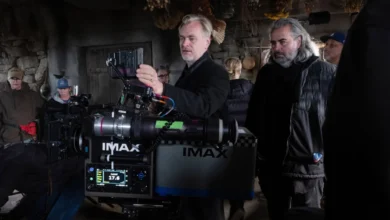
The film features two major, sustained monster sequences. The first is an aerial defense engagement over Matsumoto, underscored by composer Naoki Satō’s Wagnerian orchestral score and captured with large-format IMAX cinematography. The second is the climatic confrontation between Godzilla—who eventually returns from the ocean depths—and King Ghidorah. This final battle sequence earns the franchise its first-ever "R" rating, driven by intense, choreography-heavy destruction that emphasizes the raw power of the kaiju.
Critical Reception and Broader Implications
Early critical responses from the New York Film Festival have praised Godzilla Minus Zero for maintaining the thematic resonance that made its predecessor a global box office sensation and critical darling. Reviewers have highlighted the film’s willingness to ground its spectacle in character-driven explorations of trauma, guilt, and familial duty.
While critics note that the film does not entirely match the sociological gravity of Honda’s 1954 original, it succeeds in expanding the modern franchise’s emotional and narrative horizons. By positioning Godzilla and King Ghidorah as recurring catastrophic events rather than traditional cinematic villains, Yamazaki establishes a stable framework for future installments, cementing Toho’s enduring monster franchise as a vital space for contemporary blockbuster filmmaking with historical conscience.
Related posts: