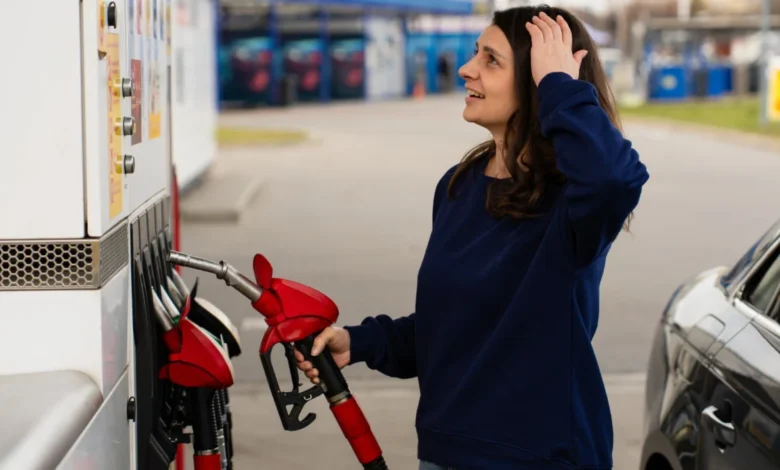
As national average fuel prices hover near $4.20 per gallon, American motorists are increasingly searching for financial relief at the pump. Persistent geopolitical tensions in the Middle East, combined with supply chain disruptions and maritime incidents in the Strait of Hormuz, have kept energy markets volatile throughout the year. With little indication of immediate price stabilization, household budgeting strategies have pivoted heavily toward retail fuel rewards, supermarket loyalty systems, and wholesale club memberships.
While the recent termination of several prominent high-yield programs—most notably the discontinuation of the Kroger-U.S. Bank gas discount partnership—has narrowed consumer options, significant savings remain accessible. Strategic motorists can still shave substantial margins off their per-gallon costs by leveraging existing grocery rewards, subscription services, and specialized travel stop programs, particularly when stacked with cash-back credit cards.
Chronology and Market Context of the 2026 Fuel Price Surge
The upward trajectory of petroleum prices traces back to heightened geopolitical friction between the United States and Iran that escalated sharply in February. Subsequent disruptions along critical maritime trade routes, including incidents involving oil tankers striking naval mines in the Strait of Hormuz, immediately rattled global crude markets. Brent crude and West Texas Intermediate futures surged, quickly translating to elevated retail prices at domestic service stations.

By mid-2026, the national average stabilized at a stubborn $4.20 per gallon, with regional disparities pushing prices much higher in high-cost states such as California, where averages routinely exceed $5.50. Consumer advocacy groups and automotive analysts report a fundamental shift in purchasing behaviors. Drivers are increasingly planning multi-stop errands around specific fuel discount networks, utilizing mobile applications to track fluctuating cent-off-per-gallon promotions, and reevaluating their primary grocery and retail shopping habits to maximize loyalty points.
Save Mart’s Limited-Time West Coast Shell Partnership
Among the most lucrative supermarket-linked fuel programs is Save Mart’s regional promotion, though its long-term viability remains limited. Operating primarily on the West Coast where baseline pump prices are notoriously steep, Save Mart has partnered with participating Shell service stations to offer up to $1 off per gallon.
Under the mechanics of the free Save Mart Rewards program, customers earn one point for every dollar spent on qualifying in-store grocery purchases. These points scale incrementally: 100 points yield a 10-cent-per-gallon discount, compounding up to a maximum accumulation of 1,000 points, which unlocks the full $1-per-gallon reduction. Given that regional fuel costs often eclipse $5.50 per gallon, maximizing this discount translates to an 18% savings at the pump.
However, consumers must navigate strict program parameters. The discount is capped at a maximum of 20 gallons per single fill-up, limiting total cash savings to $20. Furthermore, accrued points carry a strict three-month expiration window, discouraging long-term hoarding. Originally scheduled to sunset in September 2026, the promotion received a temporary extension through the end of the year, though industry analysts warn that supermarkets are increasingly scaling back such aggressive fuel-subsidy programs to protect profit margins.

Wholesale Club Dominance: The Costco Membership Model
Wholesale retail giant Costco continues to anchor its customer retention strategy around low-cost fuel, operating outside the traditional point-accumulation framework. Access is gated behind an annual membership fee of $65, which covers wholesale shopping privileges, optical and pharmacy services, and secondary member cards.
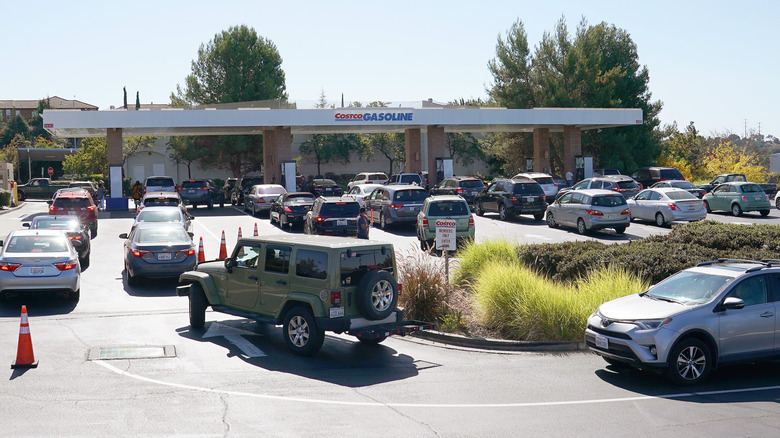
Costco’s value proposition relies on high-volume throughput and competitive wholesale pricing, typically undercutting local station averages by 10 to 20 cents per gallon. Despite notoriously heavy vehicular congestion at station sites, operational efficiencies—such as multi-lane queue management and dual-sided fueling hoses—keep wait times surprisingly brief.
Financial analysts note that frequent drivers can fully amortize the $65 annual membership fee within months simply through weekly refueling. When combined with co-branded financial products offering up to 5% cash back on fuel purchases, Costco remains one of the most reliable buffers against inflationary energy pressures, though its utility is strictly bound to geographic proximity to warehouse locations.
Two-Tiered Fleet and Consumer Incentives at Love’s Travel Stops
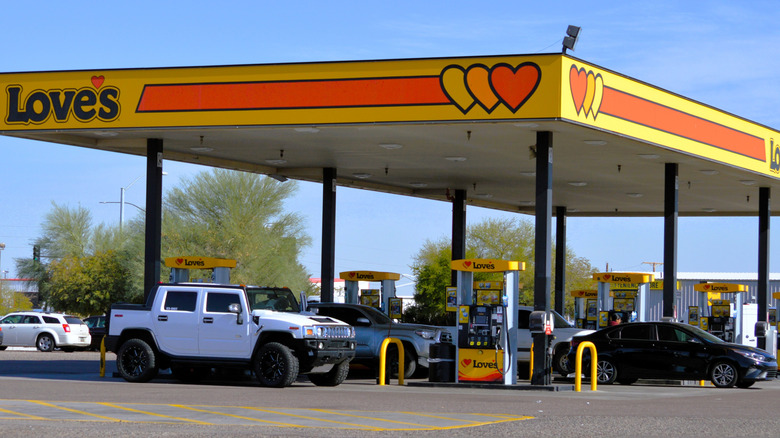
Love’s Travel Stops employs a bifurcated membership structure that caters simultaneously to everyday motorists and long-haul commercial truck drivers. For standard passenger vehicle operators, the Love’s Rewards program grants an automatic baseline discount of 10 cents off every gallon of gasoline, alongside one point per gallon fueled and two points per dollar spent inside the travel center.

Unlike supermarket programs, Love’s points do not expire as long as the member account remains active and in good standing. In addition to gasoline incentives, members receive up to 25 cents off auto-diesel purchases, complimentary basic Wi-Fi access at travel stops, and mobile app features allowing advance ordering at integrated quick-service restaurants.
For professional over-the-road (OTR) truckers, the program scales dynamically based on monthly fuel volume thresholds. Moving from the Base tier (under 499 gallons) up to Gold (500 gallons), Platinum (1,000 gallons), and Diamond (1,500 gallons) unlocks tangible quality-of-life benefits. High-volume commercial drivers receive complimentary shower credits, free beverage refills, and accelerated point multipliers applicable to truck maintenance services, addressing both financial overhead and driver wellness on interstate corridors.
Albertsons forU and Chevron/Texaco Synergy
The Albertsons forU grocery rewards ecosystem offers one of the most robust multi-brand fuel savings architectures available. Mirroring standard digital loyalty programs, forU tracks consumer spending at a rate of one point per dollar on grocery items—with double points awarded for gift card purchases—and unlocks targeted digital coupons and personalized meal-planning tools.
At the pump, accumulated points translate to a standard 10-cent-per-gallon discount, scaling up to a maximum of $1 off per gallon. These rewards are redeemable at Albertsons-owned fueling stations as well as participating Chevron and Texaco locations. A notable advantage for brand-loyal consumers is the ability to stack Albertsons fuel rewards with a proprietary Chevron loyalty card, creating a combined promotional discount of up to $1.50 off per gallon.
Geographic exceptions apply; notably, consumers in California and Hawaii face state-specific restrictions that cap the maximum redemption value at 20 cents per gallon. Additionally, standard points expire at the end of the month following their acquisition, necessitating active management by the consumer unless they subscribe to premium tier extensions.
Walmart+: Subscription-Based Fuel Access and Broader Ecosystems
Rounding out the major retail contenders, Walmart+ operates on a flat annual subscription model priced at $98 per year, with discounted rates available for qualifying students and government assistance recipients. While structured similarly to warehouse club models, Walmart+ ties fuel savings directly to a broader digital and physical retail ecosystem that includes free grocery delivery, shipping perks, and streaming service access.
The fuel component provides a consistent 10-cent-per-gallon discount across an extensive nationwide network, encompassing dedicated Walmart fueling stations alongside participating CITGO, Mobil, Murphy, and Exxon locations. Subscribers who also maintain Sam’s Club memberships do not experience compounding fuel discounts; instead, the Walmart+ subscription grants direct access to Sam’s Club fuel pumps at member pricing.
Redemption mechanics require active engagement with the Walmart mobile application, necessitating the scanning of a dynamic QR code or entry of a digital discount ID at the dispenser terminal. While marginally less frictionless than tap-to-pay credit card systems, the breadth of the partner station network provides reliable geographic coverage for long-distance commuters.
Fact-Based Analysis of Broader Implications
The proliferation of retail-linked fuel discounts underscores a structural shift in how American consumers absorb macroeconomic volatility. As energy commodities remain sensitive to geopolitical conflicts in the Middle East, traditional oil companies have seen retail margins squeezed by consumer resistance to high prices at the pump. In response, major supermarkets and big-box retailers have effectively weaponized fuel discounts as loss-leaders designed to capture primary grocery and discretionary retail spending.
From an economic perspective, these loyalty and rewards programs mitigate the regressive impact of high fuel prices, which disproportionately burden lower- and middle-income commuters who lack access to public transit or electric vehicle alternatives. However, analysts caution that capturing maximum value requires disciplined consumer behavior—such as tracking point expiration dates, consolidating shopping trips to specific retail chains, and assuming the fixed costs of annual subscriptions. As long as energy markets remain vulnerable to international supply shocks, retail rewards programs will remain a vital instrument in the American consumer’s financial toolkit.