Musical Legends Honored at the 57th International Film Festival of India: A Tribute to Asha Bhosle and S. Janaki

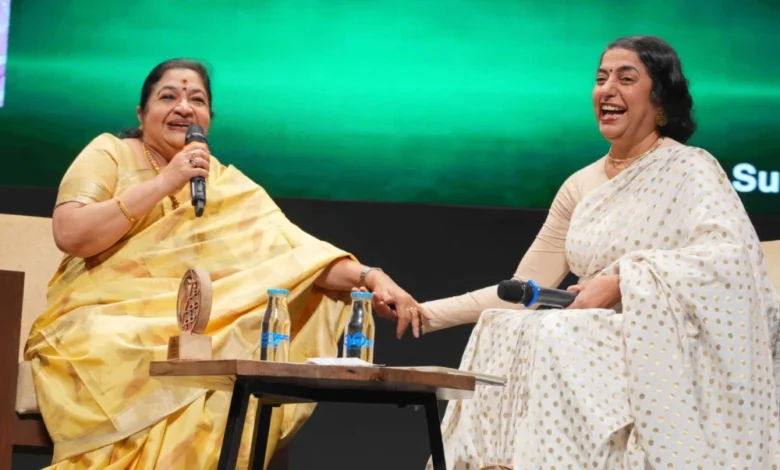
The 57th International Film Festival of India (IFFI), held in the scenic coastal state of Goa, became a poignant site of remembrance and celebration for the titans of Indian cinema. During a dedicated tribute session, renowned playback singer K.S. Chithra and celebrated actor-filmmaker Suhasini Maniratnam took the stage to honor two of the most consequential voices in the history of South Asian music: Asha Bhosle and S. Janaki. Both legendary artists passed away earlier in the year—Bhosle in April at the age of 92, and Janaki in July at the age of 88.
The memorial event took place as part of the annual Lata Mangeshkar Talk, titled "The Voice That Echoes Forever." Named in honor of Bhosle’s legendary elder sister, Lata Mangeshkar, the session served as a cultural touchstone to reflect on the immense contributions these women made to Indian film soundtracks, shaping the sonic landscape of the nation across generations. Through heartfelt anecdotes, musical performances, and rare behind-the-scenes recollections, Chithra and Suhasini painted a vivid portrait of artists whose influence transcends language barriers and cinematic eras.
A Celebration of Titans: Background and Context of the 57th IFFI Tribute
The International Film Festival of India, established in 1952, is one of Asia’s most significant cinematic events. Traditionally celebrated for showcasing global cinema, recognizing directorial debuts, and fostering international cultural exchange, recent iterations of IFFI have increasingly integrated dedicated retrospectives and masterclasses celebrating the foundational pillars of Indian film culture—most notably, its music.
Music has historically formed the heartbeat of Indian cinema, with playback singers often serving as the invisible soul behind the nation’s most beloved screen icons. The passing of both Asha Bhosle and S. Janaki within months of each other marked the end of a golden era in Indian playback singing. Bhosle, a two-time Grammy nominee whose illustrious career spanned over eight decades, was globally recognized not only for her prolific output across thousands of Hindi and regional films but also for crossing over into Western pop culture—famously referenced in Cornershop’s 1997 global indie hit "Brimful of Asha."
Similarly, S. Janaki, affectionately revered as the "Nightingale of South India," recorded tens of thousands of songs in Malayalam, Tamil, Telugu, Kannada, and Hindi. Her unmatched vocal range allowed her to effortlessly transition from playing the role of a cherubic child to a heartbroken romantic heroine within a single cinematic narrative. The pairing of K.S. Chithra—herself a living legend with over 25,000 recorded tracks across five decades—and Suhasini Maniratnam provided a masterclass in oral history, offering festival attendees rare insights into the discipline, camaraderie, and sheer artistic genius of these departed icons.
Chronicles of Inspiration: Chithra’s Formative Years and Musical Idols
Taking the audience through her personal and professional journey, K.S. Chithra reflected on the luminaries who shaped her musical sensibilities. Growing up in a culturally vibrant household, Chithra’s early inspirations included Lata Mangeshkar, P. Susheela, and S. Janaki.
Chithra shared amusing and tender childhood memories of attempting to imitate Janaki’s distinctive vocal styling, readily acknowledging that the veteran singer’s technical brilliance and emotional agility were fundamentally inimitable. While Janaki’s vocal acrobatics and versatility left a permanent imprint on her, Chithra noted that Lata Mangeshkar’s devotional and classical renditions taught her the profound value of emotional restraint and lyrical depth.
The conversation soon shifted to Asha Bhosle, whose relationship with her own identity and monumental legacy was complex. Chithra highlighted Bhosle’s tireless work ethic and her deliberate desire to carve out a distinct musical identity independent of her legendary sister, Lata Mangeshkar. Bhosle achieved this by pioneering diverse genres within Indian film music, seamlessly crossing over from high-tempo cabaret numbers and rock-inflected tracks to soulful, deeply introspective ghazals.
Chithra recalled her first meeting with Bhosle, during which the senior artist offered a candid critique, playfully asking Chithra why she consistently chose to sing in such a high register. This exchange underscored the rigorous technical standards upheld by Bhosle, who expected absolute precision and intentionality from her contemporaries and juniors.
Behind the Scenes: Suhasini Maniratnam Recalls the Making of "Iruvar"
Adding a filmmaker’s and actor’s perspective to the dialogue, Suhasini Maniratnam treated the IFFI audience to an unforgettable behind-the-scenes anecdote regarding the production of Mani Ratnam’s critically acclaimed 1997 Tamil masterpiece, "Iruvar."
The film featured a landmark musical score by Oscar-winning composer A.R. Rahman ("Slumdog Millionaire"). During the recording phases, Rahman conceived a track that required the sultry, energetic vocal sensibilities of veteran Tamil playback singer L.R. Eswari. To elevate the track, Rahman successfully invited Asha Bhosle to lend her voice to the project.
However, a unique cross-cultural and generational communication hurdle emerged: Rahman was unsure how to verbally explain the stylistic nuances of L.R. Eswari to Bhosle, who was primarily rooted in the Hindustani and Hindi film traditions. Turning to Suhasini for assistance, Rahman asked the actor to bridge the gap. Suhasini stepped in, demonstrating Eswari’s iconic vocal delivery and stylistic inflections for Bhosle. Demonstrating her legendary adaptability, Bhosle immediately absorbed the brief, channeling the requested energy to deliver the unforgettable track "Venilla Venilla."
Suhasini also elaborated on S. Janaki’s uncanny ability to inhabit characters through her voice alone. Unlike singers who maintain a singular signature tone, Janaki possessed a chameleon-like vocal apparatus. Suhasini noted that Janaki could effortlessly transform her timbre to sound like a young child, a distressed middle-aged mother, or even a teenage boy, fully aligning her vocal instrument with the dramatic demands of the cinematic narrative.
Personal Touches: The Human Side of S. Janaki
Beyond her towering professional achievements, S. Janaki was remembered by her peers for her warmth, deep humility, and profound reverence for her own idols. K.S. Chithra shared an intimate anecdote illustrating Janaki’s lifelong fandom of Lata Mangeshkar.
Long before she became a legendary playback icon in her own right, a young Janaki would tune into radio broadcasts of Mangeshkar’s songs. With meticulous care, she would lower the volume during the vocal portions and record herself singing live over the instrumental tracks—engaging in what Chithra charmingly described as "karaoke on her own." This self-directed training ground helped forge Janaki’s immaculate pitch control and breath support.
On a personal level, Chithra offered a glimpse into Janaki’s nurturing maternal nature offstage. When visiting Janaki’s home, the senior singer would personally feed Chithra by hand, showcasing a bond of sisterhood and mutual respect that defied the competitive nature often associated with the entertainment industry.
Broader Implications: The Evolution of Playback Singing and Vocal Longevity
The panel discussion naturally expanded into a broader analytical dialogue regarding the modern demands of the recording industry and the necessity for artists to recognize their vocal limitations as they age. In an era dominated by pitch correction software, digital sampling, and rapid turnaround times for film soundtracks, the panel underscored the irreplaceable value of rigorous classical training, emotional intelligence, and sustained lung capacity—qualities that defined the careers of Bhosle, Janaki, and Mangeshkar.
Musicologists and film historians note that the passing of these monumental figures marks the definitive closure of a chapter where playback singers enjoyed celebrity status rivaling that of the actors onscreen. Today’s industry operates under a decentralized model featuring multiple vocalists per film and heavy digital manipulation. The tributes at IFFI served as an essential reminder of a time when a single voice could singularly define the cultural identity of a cinematic decade.
A Musical Finale: Chithra and Suhasini Reclaim the Stage
True to the spirit of a musical celebration, the panel was interspersed with live performances. K.S. Chithra intermittently broke into spontaneous vocal snippets, moving effortlessly through her own extensive repertoire before delivering soaring renditions of numbers originally popularized by S. Janaki and Asha Bhosle.
In a high-energy interactive segment, the festival organizers hosted a closing quiz. Classic film clips were projected onto screens with their original background music completely stripped away. Chithra was challenged to identify each film and song purely through visual cues, immediately launching into pitch-perfect vocal renditions of all five selections to the delight of the audience.
The session culminated in a powerful emotional crescendo. Chithra began singing "Paadariyen," the iconic classical-fusion number from the 1985 classic film "Sindhu Bhairavi." The song holds profound historical significance for Chithra, as it earned her the very first of her six National Film Awards. As Chithra’s voice filled the auditorium, Suhasini Maniratnam—who starred in the original film—joined her on stage, emotionally lip-syncing to the performance.
The closing moment served as a living bridge between past and present, ensuring that while the pioneering voices of Asha Bhosle and S. Janaki have been silenced by time, their art remains eternally vibrant, echoing through the hearts of new generations of artists and audiences alike.