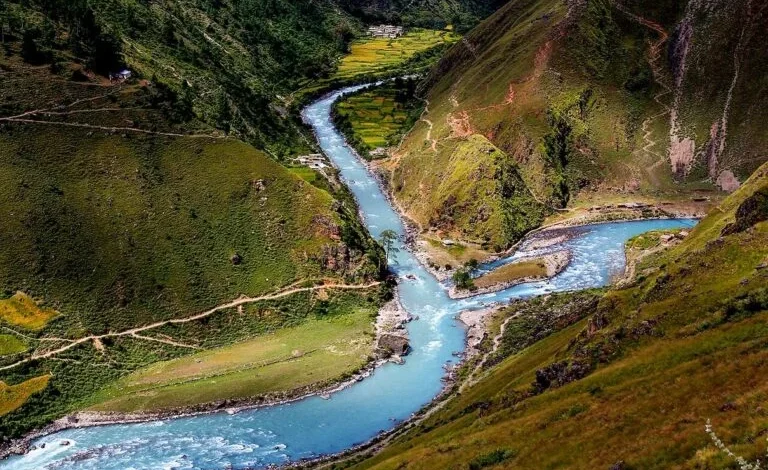
The recent catastrophic collapse of a glacial mass on the Tibetan Plateau has triggered a humanitarian and environmental emergency across the Nepal-China border, claiming more than 1,000 lives and leaving over 4,000 individuals missing. The disaster, which sent a violent torrent of water, silt, and debris tearing through the Trishuli River valley, has exposed critical vulnerabilities in Nepal’s infrastructure-heavy development strategy. As rescue operations struggle to navigate mud-choked tunnels—some of which were designed to accommodate heavy machinery but are now entombed with sediment—the event has ignited a fierce national debate regarding the wisdom of the country’s aggressive hydropower expansion.
A Chronology of Climate-Driven Instability
The tragedy in the Rasuwa and Nuwakot districts is not an isolated incident but the culmination of a decade of environmental warnings. Climate research conducted by the International Centre for Integrated Mountain Development (ICIMOD) has long indicated that the Hindu Kush Himalaya region is undergoing rapid transformation. Glacial thinning, the degradation of permafrost, and the increasing frequency of Glacial Lake Outburst Floods (GLOFs) have fundamentally altered the hydrological landscape.

While disaster management agencies in Kathmandu were aware of these rising risks, the momentum behind the hydropower sector remained largely unchecked. In the last ten years, Nepal has pivoted toward a state-led energy policy that prioritizes "run-of-river" hydropower projects. These facilities are often situated in narrow, steep river corridors that are historically prone to landslides and debris flows. The recent collapse has damaged 11 operational hydropower plants, effectively neutralizing 10% of Nepal’s total electricity generation capacity. This loss has forced a significant reversal in energy trade; the nation, which typically maintains a surplus and exports power to India, has been compelled to cease these exports and initiate emergency power imports to stabilize its domestic grid. Furthermore, fifteen additional plants currently under construction suffered significant structural damage, raising questions about the long-term viability of current engineering standards in a warming climate.
The Force Multiplier Effect
Environmental experts and geologists monitoring South Asian river systems have raised concerns regarding the role of dam infrastructure in exacerbating natural disasters. These massive concrete installations, while designed to harness energy, can function as "force multipliers" when a natural event occurs. The presence of tunnels, diverted channels, and impoundment structures can obstruct natural drainage, leading to a catastrophic surge of water and debris when dams are overtopped or fail.
The tragedy has effectively halted the momentum of several energy projects, but the broader geopolitical and economic push for damming remains. International financiers and various private sector entities have pledged support for projects intended to triple Nepal’s hydroelectric capacity over the next ten years. The primary driver for this expansion is the growing demand for electricity within India’s industrial grid. With roughly 6,000 rivers and streams in Nepal, the government’s current policy framework seeks to harness nearly every viable waterway for power generation, with the notable exception of the Karnali River.

The Karnali: A Critical Threshold
The Karnali River remains Nepal’s final, free-flowing waterway. Originating near Mount Kailash on the Tibetan border, it traverses the canyons of western Nepal before joining the Ganges on the plains of India. The river represents a vital corridor for biodiversity and a repository for cultural heritage. It serves as the primary habitat for the endangered golden mahseer (Tor putitora) and the vulnerable giant catfish (Bagarius yarrelli). Furthermore, the lower reaches of the Karnali, within Bardiya National Park, are home to the critically endangered gharial crocodile (Gavialis gangeticus).
The river is currently the subject of intense pressure from engineering firms and government agencies aiming to bore tunnels through its surrounding mountains. These proposed projects seek to divert the river’s flow to generate massive amounts of power, a move that would fundamentally alter the ecosystem. Proponents of conservation, including indigenous groups such as the nomadic Raute people, argue that the river’s value lies in its wild state. The Karnali acts as a spiritual and cultural nexus for three distinct civilizations: the Kailash, the Khas, and the Ganga, representing a faith landscape for nearly two billion people.
Economic Alternatives and Energy Diversification
Critics of the current hydropower-centric model argue that Nepal is ignoring more sustainable and resilient energy alternatives. Nepal possesses significant potential for solar and wind energy production. Estimates suggest that the country experiences approximately 300 days of sunshine annually, providing a robust foundation for solar infrastructure. Additionally, the deep river gorges and mountain passes offer high-potential sites for wind energy harvesting.

By diversifying the energy portfolio, Nepal could potentially reduce its reliance on river-corridor infrastructure, which remains highly susceptible to the unpredictable impacts of climate change. The "Phoenix Species Project," recently bolstered by high-profile international funding, has identified the lower Karnali as a critical zone for biodiversity preservation. The potential destruction of this habitat via damming would not only result in the loss of rare species but would also eliminate the growing ecotourism economy that provides a sustainable livelihood for local communities.
Policy Implications and the Path Forward
The devastation on the Trishuli River serves as a stark reminder that the integration of large-scale infrastructure into unstable mountainous terrain requires a reassessment of risk. Conservationists are now calling for the permanent protection of the Karnali, proposing a model similar to the United States’ "Wild and Scenic Rivers Act." The objective is to secure international recognition, including UNESCO World Heritage status, for the river basin.
A petition is currently pending before the Supreme Court of Nepal, challenging the legality and safety of the proposed dam projects on the Karnali. Supporters of this legal action contend that the government must balance its developmental goals with the necessity of preserving a "natural insurance policy" against climate-related disasters. As the global community observes the destabilization of Himalayan ecosystems, the pressure on international financiers to implement more stringent environmental, social, and governance (ESG) criteria in their project selection has increased.

The question facing the Nepali government is no longer just how much power can be generated, but what the cost of that power will be in an era of climate volatility. The destruction of existing hydropower facilities has created a fiscal crisis for the energy sector, forcing officials to confront the reality that engineering solutions cannot always override geological and meteorological forces. The choice to preserve the Karnali as a free-flowing river is being presented by environmental advocates not as a rejection of development, but as a strategic decision to maintain an ecologically sound and disaster-resilient future.
Institutional Responses and Future Outlook
As the recovery phase begins, the discourse among policymakers is slowly shifting toward a "build-back-smarter" approach. There is increasing interest in decentralized energy systems that do not require the same level of invasive river engineering. The disaster has forced a pause in project approvals, providing a window for civil society groups to advocate for a moratorium on all new dam projects until a comprehensive, climate-adjusted risk assessment is conducted for the entire Hindu Kush Himalaya region.
International stakeholders, including development banks and foreign energy corporations, are now facing increased scrutiny regarding their role in the current crisis. There is growing demand for greater transparency in environmental impact assessments (EIAs), with many critics noting that past EIAs failed to adequately account for the accelerating pace of glacial retreat.

The Karnali remains at the center of this transition. Its future will serve as a bellwether for Nepal’s development trajectory. Whether the government chooses to treat the river as a resource for extraction or as a protected, vital artery of the nation will determine the long-term resilience of the country’s energy and ecological systems. In the wake of the loss of over 1,000 lives, the consensus among scientists and environmentalists is clear: the cost of continuing the status quo is increasingly prohibitive. Saving the last wild river is not merely an act of environmental preservation; it is a fundamental step toward securing a safer, more sustainable future for the people of the Himalayas.