Trump Administration Plans $84,000 Signage Campaign at Smithsonian to Combat What It Calls Woke Historical Curricula

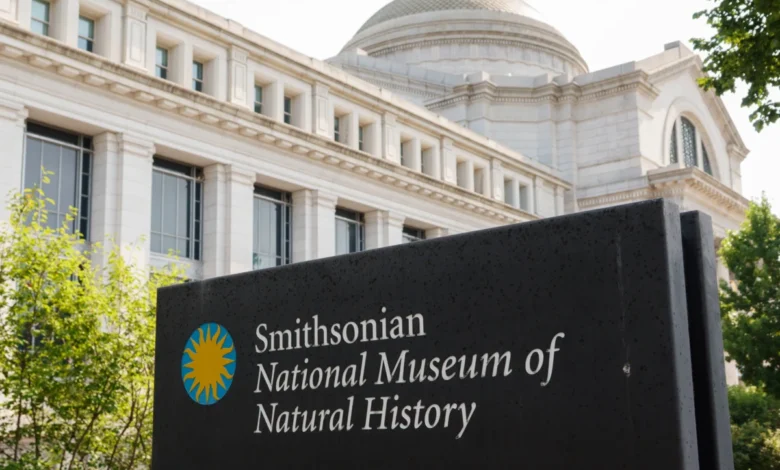
The United States federal government is moving forward with an $84,000 initiative to install prominent warning signs outside the Smithsonian National Museum of American History, a move driven by presidential directives that accuse the historic institution of promoting biased and divisive narratives.
According to correspondence from the Department of the Interior, the forthcoming installation is designed to caution visitors—particularly families—against exhibits that the administration claims present partisan viewpoints, misrepresent biological realities, and offer an unduly critical perspective on American history. This unprecedented measure marks a significant escalation in the ongoing culture wars surrounding public memory, federal institutions, and the curation of national heritage in the nation’s capital.
Chronology of Executive Actions and Directives
The path toward modifying the visitor experience at America’s premier museum complex has unfolded across multiple phases since Donald Trump returned to the White House.
In March 2025, the administration issued a wide-ranging directive titled Restoring Truth and Sanity to American History. The document explicitly mandated the identification and removal of what it characterized as improper ideologies from federal cultural properties, specifically targeting institutions operating under the Smithsonian umbrella.
Several months later, in July 2025, a subsequent executive order formally called for the deployment of temporary and permanent signage directly outside the museums. The stated purpose of these notices was to provide an alternative framework for visitors, framing the institution’s standard exhibits through a lens that challenges contemporary academic and curatorial consensus.
By September 2026, operational plans solidified. Interior Secretary Doug Burgum detailed the scope of the project in a letter obtained by investigative journalists, confirming that federal funds would be allocated to erect the controversial displays. The initiative transforms federal property into a physical extension of executive branch grievances, bypassing traditional curatorial independence and establishing a direct precedent for government intervention in museum displays.
Core Grievances and Curatorial Disputes
At the heart of the administration’s campaign is a fundamental disagreement over how American history and social structures are interpreted for the public. The primary points of contention center on two major areas: the historical treatment of race and racism, and the representation of modern gender and sexual politics.
Federal officials argue that recent exhibits developed by the Smithsonian Institution have embraced a race-centered ideology that portrays Western values as inherently oppressive. For years, critics aligned with the administration have pushed back against unflinching historical depictions of slavery, segregation, and systemic violence, asserting that such displays foster unnecessary national division and undermine patriotism.
In addition to racial history, the planned signage specifically targets exhibits that touch upon LGBTQ+ issues and gender non-conformity. According to Department of the Interior letters, the warnings are intended to alert parents to concepts deemed inconsistent with traditional biology. The administration’s stated rationale emphasizes protecting children from perspectives that challenge binary definitions of sex, acknowledge transgender identities, or discuss complex gender dynamics in modern society.
Supporting Data and Financial Allocation
The logistical details of the signage campaign highlight the federal commitment to the project. The administration has earmarked $84,000 in public funds for the design, fabrication, and installation of the large-scale notices outside the National Museum of American History on the National Mall.
While modest in comparison to massive federal infrastructure projects, the expenditure represents a novel use of taxpayer funds: directing public capital toward disputing the educational content of a federally chartered, albeit semi-autonomous, educational and research institution. The Smithsonian Institution encompasses 21 museums, the National Zoo, and numerous research centers, drawing millions of domestic and international visitors annually. Directing federal skepticism toward one of its most visited cultural flagships introduces an unprecedented dynamic between executive oversight and independent cultural stewardship.
Official Responses and Institutional Implications
The Smithsonian Institution, historically guarded regarding its independence and curatorial integrity, faces a delicate balancing act as the federal government exercises its authority over public grounds and federal agencies. While museum officials and professional historical associations have long maintained that exhibits are grounded in rigorous academic scholarship, peer-reviewed research, and diverse historical evidence, direct pushback from cabinet-level officials places the institution under intense political scrutiny.
Historians, museum directors, and civil liberties advocates have expressed deep concern over the implications of the project. Critics argue that utilizing federal signage to discredit museum curators sets a dangerous precedent, effectively transforming educational spaces into political battlegrounds. By signaling to the public that a museum’s expert staff is actively misleading visitors, the administration normalizes skepticism toward professional expertise, peer-reviewed history, and scientific consensus.
Conversely, supporters of the administration’s actions defend the initiative as a necessary correction against what they perceive as ideological drift within America’s cultural institutions. From this perspective, public museums funded largely by taxpayers should reflect a unified national narrative that celebrates foundational achievements rather than focusing extensively on historical injustices or evolving social norms. Proponents argue that providing alternative context empowers visitors and ensures ideological transparency in public spaces.
Broader Impact on National Capital Tourism and Culture
The installation of these signs alters the landscape of the National Mall, a space traditionally conceived as a neutral repository of shared national heritage, artistic achievement, and historical memory. By embedding partisan ideological disputes into the physical architecture of the Smithsonian, the administration’s policy reshapes how millions of tourists experience Washington, D.C.
The long-term consequences of this policy extend beyond a single museum or a single administration. If executive power can be routinely leveraged to append ideological disclaimers to federally funded cultural exhibits, future administrations may adopt similar tactics, resulting in a revolving door of politicized commentary appended to national landmarks. As the debate over the curation of American history intensifies, the intersection of political ego, public education, and cultural heritage remains one of the most contentious battlegrounds in modern American public life.
Related posts: