The Peloponnese Reawakening: Ancient Traditions and Modern Cinema Drive a Tourism Renaissance in Greece’s Storied Peninsula

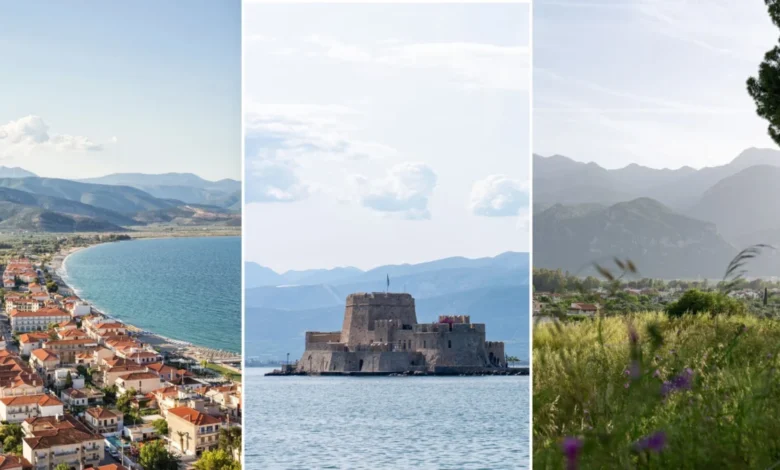
The Peloponnese peninsula, a landmass roughly the size of Slovenia and home to some of the most significant archaeological sites in Western civilization, is currently undergoing a profound transformation from a "well-kept secret" to a premier global destination. Despite its proximity to Athens and a coastline stretching over 860 miles, the region has historically seen a disproportionately low number of international visitors. According to data from the Bank of Greece, only three out of every 100 foreign travelers reached this westernmost Greek peninsula in 2025. However, a convergence of high-profile cinematic exposure, multi-billion-euro luxury investments, and a massive community-led hiking infrastructure project is positioning the region for an unprecedented tourism surge.

The Nolan Effect: Cinema as a Catalyst for Messinian Tourism
A primary driver of the renewed international interest in the Peloponnese is the release of Christopher Nolan’s latest blockbuster, The Odyssey. This modern retelling of Homer’s 3,000-year-old epic was filmed partially on location in Messinia, one of the five administrative regions of the peninsula. The production, featuring Matt Damon as Odysseus and Tom Holland as his son Telemachus, utilizes the region’s jagged limestone cliffs and ancient ruins to bring the mythical journey to life.
Key filming locations include Nestor’s Cave, where Damon’s Odysseus is depicted battling the Cyclops, and the 13th-century Methoni Castle, which serves as the backdrop for Telemachus’s vigil. Industry analysts suggest that "set-jetting"—tourism driven by filming locations—will significantly boost arrivals in the Messinian region, much as previous productions did for the islands of Skopelos and Santorini. Beyond the visual spectacle, the film highlights the Hellenic concepts of xenia (ritualized hospitality) and nostos (the homecoming), themes that resonate deeply with the local population’s current efforts to revitalize their ancestral lands.

The Peloponnese Trail Network: 1,200 Miles of Discovery
While cinema draws the eye to the coast, the Peloponnese Trail Network is designed to draw visitors into the heart of the peninsula. This ambitious project, the largest of its kind in Greece, connects nearly 1,200 miles of ancient footpaths and mule tracks, linking isolated mountain villages to historical coastal hubs.
Nikos Stakias, a hospitality professional who returned to the Peloponnese after two decades abroad, is a key figure in this community-led initiative. The network aims to promote sustainable, slow-paced tourism that benefits local economies directly. Currently, the project has opened 11 official trails, including:

- The Argolis Trail: A 64-mile route in the northeast that passes the 4th-century BC Theater of Epidaurus, a UNESCO World Heritage site, and the Ottoman-era stone paths leading to the Palamidi Fortress in Nafplio.
- The Parnon Trail: A 143-mile circular route through the southeast, traversing the Mount Parnon range. This trail connects the "red cliff" town of Leonidio to remote shepherding villages like Pera Melana and Pragmateftis.
The development of these trails represents a strategic shift toward eco-tourism, allowing the region to accommodate more visitors without the environmental strain associated with traditional resort hubs.
From Infrastructure to Ultra-Luxury: The Economic Evolution
The current tourism boom is the result of a decades-long effort to modernize the peninsula’s infrastructure. In the early 2000s, a series of new highways and tunnels significantly reduced travel times from Athens, making the Peloponnese a viable weekend destination for both domestic and international travelers.

The late Captain Vassilis Constantakopoulos, a Messinian shipping magnate, is widely credited with initiating the region’s luxury pivot. His vision resulted in the opening of Costa Navarino, an eco-conscious luxury retreat designed to provide employment for locals and stem the tide of rural-to-urban migration. The success of this flagship development has attracted top-tier global hospitality brands.
Recent and upcoming developments include:

- W Hotels and Mandarin Oriental: Opened in 2022 and 2023, respectively, these brands have established a new standard for luxury in Messinia.
- Future Investments: Global leaders such as Four Seasons and Six Senses are slated to open properties in the Porto Heli area by 2026. These projects are part of a broader "luxury hub" initiative involving an estimated €2 billion in investments, encompassing ultra-luxury residences, marinas, and specialized sports facilities.
A Historical and Mythological Bedrock
The Peloponnese’s appeal is deeply rooted in its status as the cradle of Greek civilization. Long before modern tourism, the peninsula was the setting for the foundational myths of the West. It was here that Hercules performed the first six of his twelve labors, including the slaying of the Nemean lion and the capture of the Erymanthian boar in the mountains of Arcadia.
The region’s historical timeline is equally dense:

- Mycenaean Period: The Argolis region was the heart of the Mycenaean civilization, the first advanced civilization in mainland Greece.
- Classical Era: The peninsula was home to the powerful city-states of Sparta and Corinth.
- Byzantine Period: Mystras, the last stronghold of the Byzantine Empire, remains a hauntingly beautiful site of churches and palaces near modern-day Sparta.
- Independence: The Greek War of Independence against the Ottoman Empire originated in the Mani Peninsula of the Peloponnese in 1821, leading to the establishment of Nafplio as the first capital of modern Greece.
Cultural Preservation: The Survival of the Tsakonian Language
Amidst the influx of modern investment, efforts to preserve the region’s unique cultural heritage have intensified. In the town of Leonidio, nestled between the Parnon mountains and the sea, residents are fighting to save the Tsakonian language.
A direct descendant of the ancient Doric Greek spoken by Spartans, Tsakonian is one of the oldest living dialects in Europe. For centuries, the rugged topography of the Parnon range kept these communities isolated, allowing the language to survive. However, as modern roads arrived in the 1950s, the dialect began to fade. Today, it is estimated that fewer than 2,500 people, mostly elders, speak it fluently.

Eleni Manou, an author and educator, is leading the revival through children’s books and workshops. "Language is not just words; it’s a culture alive," Manou stated during a recent cultural symposium. The town now hosts the annual Melitzazz Festival in July, which integrates Tsakonian traditions into a contemporary arts framework, and street signs in the region are now bilingual, featuring both modern Greek and Tsakonian script.
The Loom of History: Weaving in Geraki
Similar preservation efforts are visible in the village of Geraki in Laconia. Here, the ancient art of vertical-loom weaving—a practice documented in the region for 5,000 years—is being taught to a new generation. The technique produces kilims, traditional rugs featuring geometric patterns like the "tree of life."

Chrysoula Stamatopoulou of Geraki Weaving noted that while the craft was nearly extinct five years ago, the village now attracts students from across Europe who come to learn the trade for free. This initiative has been recognized as part of the Greek National Intangible Cultural Heritage, providing a sustainable model for preserving ancient skills through educational tourism.
Reversing the Brain Drain: Socio-Economic Implications
The revitalization of the Peloponnese is also a story of demographic recovery. Following World War II and the subsequent Greek Civil War, the region suffered from mass emigration. The 2008 global financial crisis exacerbated this "brain drain," as young Greeks fled to Northern Europe and Australia in search of stability.

However, the tide is beginning to turn. Projects like the Vamvakou Revival, funded by the Stavros Niarchos Foundation and led by young entrepreneurs with ancestral roots in the village, have seen the population of the hillside town grow from nine residents to over thirty. By providing high-speed internet, coworking spaces, and tourism infrastructure, these initiatives are proving that the Peloponnese can offer a viable future for the younger generation.
Social entrepreneur Maria Monastirioti, who relocated from Athens to Arcadia, now organizes agro-gastronomic experiences that highlight local products like trachanokeftedes (fermented milk pasta balls). "This is a blessed land," Monastirioti says, reflecting a sentiment shared by many "returnees" who view the peninsula’s slower pace of life as a competitive advantage in a post-pandemic world.

Future Outlook: A Balanced Homecoming
As the Peloponnese prepares for the influx of travelers expected in the wake of The Odyssey and the completion of the Trail Network, the challenge remains one of balance. Local authorities and community leaders are tasked with ensuring that the luxury developments in the "Greek Riviera" of Porto Heli do not overshadow the authentic, rugged character of the interior.
The "homecoming" of the Peloponnese is not merely about the return of tourists, but the return of its own people and the re-emergence of a cultural identity that has weathered millennia. With its combination of cinematic allure, ancient history, and a commitment to sustainable growth, the peninsula is finally stepping out of the shadow of the Aegean islands to claim its place as the heart of the modern Greek experience.