Gian van Veen Secures World Matchplay Semi-Final Berth Against Gerwyn Price After Dramatic Blackpool Encounter

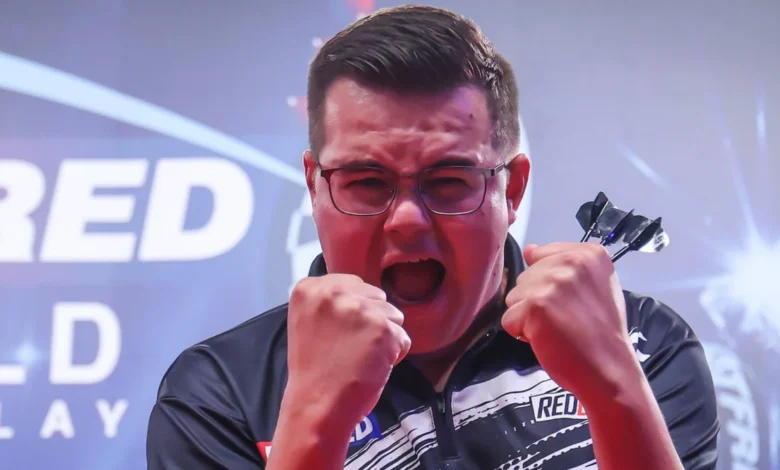
The iconic Winter Gardens in Blackpool is set to host a thrilling World Matchplay semi-final showdown between Gerwyn Price, the 2021 champion, and Dutch sensation Gian van Veen, following contrasting yet equally compelling quarter-final victories. Van Veen battled through an eventful 16-13 contest against veteran James Wade, showcasing a remarkable late surge to secure his maiden appearance in the final four of this prestigious PDC darts tournament. Meanwhile, Price demonstrated his championship pedigree with a commanding 16-12 performance against Ross Smith, signaling his intent to reclaim the coveted title.
Van Veen’s Resilience Shines Through in Blackpool Thriller
The initial stages of the quarter-final between Gian van Veen and James Wade were characterized by a subdued atmosphere and uncharacteristic scoring from both competitors. The match, held under the glare of the Winter Gardens’ historic chandeliers, failed to ignite as expected in the first half. Neither player found their rhythm, with legs being exchanged at a less-than-explosive pace, leaving the crowd anticipating a spark to truly bring the contest to life.
However, the match dramatically shifted gears when James Wade, trailing 11-7, staged a formidable comeback. The experienced English dartsman rattled off four consecutive legs, demonstrating flashes of his renowned tenacity and clinical finishing. This surge not only leveled the score but also injected a palpable sense of urgency and excitement into the arena, much to the delight of the passionate Blackpool crowd. The momentum appeared to swing decisively in Wade’s favor, leaving Van Veen facing a significant challenge to reassert his dominance.
As the match progressed, the scoring tempo significantly elevated. Both players began to find their range, trading high-scoring legs and executing ton-plus checkouts with increasing regularity. This period of heightened play showcased the quality of darts that fans had come to expect from a World Matchplay quarter-final. Despite the improved scoring from both men, a notable aspect of Van Veen’s performance was his overall average, which remained at a respectable but not dominant 93. This statistic, coupled with the pressure of Wade’s comeback, might have contributed to audible booing from sections of the crowd at certain points.
Yet, it was Van Veen who ultimately held his nerve under pressure. In a display of remarkable mental fortitude, the young Dutchman silenced the dissent by clinching the final two legs of the match. This decisive finishing, executed with precision in the crucial moments, secured his passage to the semi-finals for the very first time in his burgeoning career. The victory marks a significant milestone for the 22-year-old, solidifying his status as one of the sport’s most exciting emerging talents. The visual evidence of his resilience was captured during the match, including a magnificent 160 checkout that helped him establish a commanding 9-6 lead over Wade earlier in the contest, a moment that hinted at his potential to go all the way.
Price’s Dominance Sets Up Blockbuster Semi-Final Clash
In stark contrast to the tense, comeback-laden affair involving Van Veen, Gerwyn Price delivered a performance that underscored his championship credentials in his quarter-final against Ross Smith. The Welshman, a former World Champion and a consistent force in the PDC, posted an impressive 102.78 three-dart average, a figure that highlights his consistent high-level play. Furthermore, Price peppered the board with ten maximum 180s, demonstrating his potent scoring power and aggressive approach to the game.
Price controlled much of the match against Smith, building a seemingly comfortable 12-8 lead. However, much like Wade in the earlier match, Ross Smith mounted a spirited challenge, threatening to overturn the deficit. The resilience shown by Smith underscored the competitive nature of the World Matchplay, where no lead is ever truly safe.
Despite Smith’s fightback, Gerwyn Price responded with characteristic composure and authority. He swiftly extinguished Smith’s momentum, rattling off four consecutive legs to secure his 16-12 victory. This decisive finish not only sealed his place in the semi-finals but also marked his return to this stage of the World Matchplay for the first time since 2022, a testament to his enduring presence at the top of the sport. His performance was a clear statement of intent, signaling that he is a serious contender for this year’s title.
The Road to the Final: Semi-Final Line-Up and Future Prospects
The semi-final line-up at the 2026 Betfred World Matchplay is now complete, promising a captivating conclusion to the tournament. Gerwyn Price will face Gian van Veen in what is anticipated to be a fascinating clash of experience versus emerging talent. Price, with his major title pedigree, will be a formidable opponent for Van Veen, who is seeking to make a grand entrance onto the world darts stage. For Van Veen to overcome Price, he will undoubtedly need to elevate his game beyond his 93 average, particularly against a player of Price’s caliber.
The other semi-final will feature the defending champion, Luke Littler, against the Dutchman Dirk van Duijvenbode. Littler, the prodigious talent who captivated audiences with his victory in the previous year’s tournament, continues his quest for back-to-back titles. Van Duijvenbode, a powerful scorer and a crowd favorite, has reached the semi-finals of this event for the first time, highlighting his own impressive progression in the sport. This match pits youth and reigning champion status against raw power and a debut semi-final appearance, promising another enthralling encounter.
The semi-finals, scheduled for Saturday, will be played over the best-of-33 legs format, a demanding test of endurance and consistency. The winners will then advance to Sunday’s grand final, a best-of-35 legs showdown that will crown the 2026 Betfred World Matchplay champion. The anticipation is building for what promises to be a memorable conclusion to one of darts’ most prestigious tournaments.
Context and Significance of the World Matchplay
The Betfred World Matchplay, held annually at the iconic Winter Gardens in Blackpool, is one of the premier events on the Professional Darts Corporation (PDC) calendar. Established in 1994, it is the second most prestigious darts tournament after the PDC World Darts Championship. The unique format, played over a series of legs and sets, demands not only exceptional scoring power but also immense mental strength and the ability to perform under immense pressure in front of a fervent crowd. The historic venue itself, with its grand architecture and intimate setting, adds to the unique atmosphere and prestige of the tournament. Winning the World Matchplay is a significant achievement for any professional darts player, cementing their place in the sport’s history. This year’s tournament, following the established tradition, has once again delivered drama, upsets, and displays of world-class darts, culminating in a final four that promises an exciting climax.
Broader Impact and Viewer Engagement
The progression of players like Gian van Veen and Dirk van Duijvenbode to the semi-finals highlights the evolving landscape of professional darts. While established stars like Gerwyn Price continue to contend for major titles, a new generation of talent is consistently emerging, pushing the boundaries of the sport and captivating a growing global audience. The World Matchplay, with its extensive broadcast coverage, serves as a crucial platform for these rising stars to gain recognition and build their careers.
For fans of the sport, the remaining matches represent the pinnacle of darts entertainment. The clash between Price and Van Veen offers a compelling narrative of experience versus ambition, while the Littler versus van Duijvenbode encounter promises a thrilling display of youth, defending champion pedigree, and raw power. The tournament’s broadcast partners, including Sky Sports and NOW, are providing comprehensive coverage, ensuring that fans worldwide can follow the drama unfold. Live coverage on Saturday from 7.30 pm on Sky Sports Action and around 9 pm on Sky Sports Main Event will lead viewers into the semi-final action, with the ultimate conclusion on Sunday. The availability of streaming options, such as through NOW, further enhances accessibility for a wider audience, solidifying the World Matchplay’s position as a must-watch sporting event. The narrative of the tournament, from its early rounds to the nail-biting semi-finals, underscores the enduring appeal and excitement of professional darts.
Related posts: