Apple Unveils Audio Intelligence for Series 12 and Ultra 4 Watches Amid Growing Privacy Scrutiny

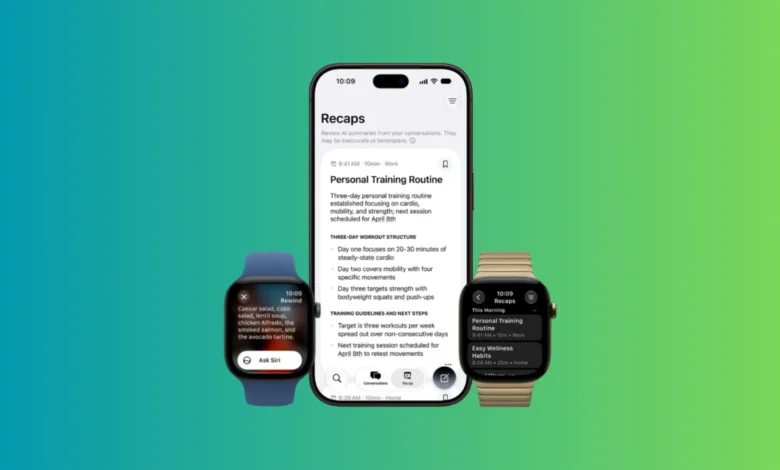
The annual September product showcase remains one of the technology industry’s most closely watched events, serving as a bellwether for consumer electronics trends and software innovation. During its September 9 keynote address, Apple formally introduced its latest flagship wearable devices, the Apple Watch Series 12 and the Apple Watch Ultra 4. While hardware refinements, battery efficiency improvements, and enhanced display technologies traditionally dominate the conversation following such announcements, this year’s release shifted the spotlight firmly toward ambient artificial intelligence. Central to the new lineup is a suite of software capabilities collectively designated as "Audio Intelligence," headlined by continuous background audio processing and on-demand conversation summarization.
By introducing persistent audio ingestion to a wrist-worn device, Apple has crossed a significant technological threshold. However, the feature has immediately ignited intense debate among privacy advocates, legal scholars, and consumers regarding the boundaries of personal surveillance, data security, and consent in public spaces.
The Mechanics of Audio Intelligence
To understand how Apple’s Audio Intelligence functions without violating foundational data protection promises, it is necessary to examine the underlying hardware and software architecture. The Apple Watch Series 12 and Ultra 4 are powered by the newly developed S11 chip, which integrates a hardware-level security partition known as the Secure Exclave.
When the device is active, ambient audio is captured through the microphone and routed directly into this partitioned, localized buffer. This compartment operates entirely independently of the watch’s main operating system, preventing even core system software from accessing the raw data stream. Within the Secure Exclave, the audio buffer is encrypted in real-time and continuously overwritten, meaning that no permanent or retrievable audio recording is ever created, stored, or saved to local flash memory.
From this protected buffer, a heavily truncated and anonymized version of the data is transmitted over a secure, encrypted tunnel to a matching Secure Enclave located on the user’s paired iPhone. Once received by the smartphone, an on-device machine learning model processes the data to generate a concise textual summary. This transcription process discards approximately half of the raw conversational content, extracting only essential points while stripping away acoustic markers and identifying details.
Following this local processing phase, the abstracted text summary—along with minimal, generic metadata such as rough timestamp markers and broad geographical context—is uploaded to Apple’s Private Cloud Compute infrastructure. To ensure anonymity, Apple utilizes a third-party blind relay network, which conceals the user’s IP address from Apple servers. Consequently, incoming data cannot be traced back to a specific Apple ID or device serial number by company personnel. Within the secure cloud environment, Siri AI finalizes the compilation, delivering daily text recaps to the user through a feature known as Siri Recap. By default, these summaries are automatically purged from cloud servers every seven days unless the user manually elects to preserve them.
The Chronology of Apple’s Privacy Architecture
Apple’s journey toward ambient, on-device artificial intelligence has evolved incrementally over several years, culminating in the architectural frameworks unveiled in September 2026.
In June 2024, during its Worldwide Developers Conference (WWDC), Apple introduced "Apple Intelligence," establishing the groundwork for deep, cross-platform generative AI integration built primarily on on-device processing and Private Cloud Compute. At the time, the company emphasized its cryptographic guarantees, aiming to differentiate itself from competitors relying heavily on centralized cloud harvesting.
By late 2025, industry leaks and patent filings indicated that Apple was actively developing hardware-level buffers designed for continuous contextual awareness. The integration of the Secure Exclave in the S11 chip, announced on September 9, 2026, represents the realization of these patents.
Simultaneously, Apple published an exhaustive cryptographic and architectural whitepaper titled "Audio Intelligence Privacy Overview," detailing the precise data pathways utilized by the Series 12 and Ultra 4. Despite these technical safeguards, privacy researchers immediately scrutinized the ecosystem vulnerabilities introduced when users choose to sync these summaries to persistent storage repositories, such as iCloud Notes or Apple Journal.
Data Security Risks and the Threat of Account-Level Breaches
While Apple’s server-level infrastructure employs advanced cryptographic controls designed to prevent mass data extraction, security analysts point out that user-level vulnerabilities remain a persistent vector for exposure.
The primary security concern arises when a user opts to save generated conversation summaries beyond the temporary seven-day window. Once saved to iCloud storage or integrated into productivity applications like Apple Notes, these transcripts become subject to standard cloud account security protocols. While catastrophic breaches of centralized corporate servers are statistically rare, account-level compromises occur with alarming frequency across the technology landscape.

For instance, cybersecurity reports published in January of this year highlighted a massive credential-stuffing and infostealer database leak that exposed nearly 900,000 compromised iCloud credentials on public-facing servers. If an unauthorized actor gains access to a user’s Apple ID through phishing, credential reuse, or physical device theft, they potentially unlock a centralized, searchable repository of intimate daily conversation summaries. This aggregation of private dialogues, meetings, and casual remarks represents a high-value target for identity thieves, corporate spies, and malicious actors.
The Consent Dilemma in Public and Private Spaces
Beyond digital security and cloud vulnerability, the most contentious aspect of Apple’s Audio Intelligence suite centers on interpersonal consent. Traditional recording devices—such as digital voice recorders, smartphones, or journalistic transcription tools—generally require explicit activation and are frequently accompanied by overt physical cues that alert surrounding parties.
The Apple Watch Series 12 and Ultra 4 complicate this paradigm through passive, all-day environmental listening. While Apple has incorporated certain mitigating features, such as an audible chime and a visual animation displayed on the watch face when the "Live Rewind" feature is actively queried, these notifications apply only to specific, transient functions.
Conversely, the background processing required to generate daily Siri Recap summaries operates entirely without audio or visual cues. Individuals sitting across a dinner table, working in an adjacent office cubicle, or conversing in private settings have no technological indication that their speech is being ingested, abstracted, and summarized by a nearby wearable device. Apple’s official documentation addresses this oversight primarily through brief, cautionary disclaimers advising users to "be mindful of those around you," placing the burden of ethical operation entirely on the individual consumer.
Legal Implications and Jurisdictional Gray Areas
The absence of explicit, real-time consent mechanisms places users of Audio Intelligence in a precarious legal landscape, particularly regarding state and international wiretapping and privacy statutes.
In the United States, privacy laws regarding audio recording vary significantly by jurisdiction. At least twelve states—including California, Florida, Massachusetts, and Pennsylvania—enforce "all-party" or "two-party" consent laws, which prohibit the recording or interception of confidential communications without the explicit permission of all participants involved. Violating these statutes can result in civil liability and, in certain contexts, criminal penalties.
Internationally, the regulatory environment is even more stringent. Within the European Union, the General Data Protection Regulation (GDPR) establishes rigorous legal thresholds for the processing of personally identifiable information. Collecting, summarizing, and storing dialogue containing personal data without an explicit legal basis or affirmative consent from every speaking party potentially runs afoul of European privacy mandates.
However, Apple’s legal defense hinges on a fine technical distinction: the hardware architecture does not technically create a "recording." Because the audio buffer in the Secure Exclave is continuously overwritten in real-time and never compiled into an accessible audio file, Apple argues that no tangible recording exists to be shared, subpoenaed, or produced.
As stated in the company’s privacy documentation: "Audio Intelligence features do not create audio recordings that can be accessed by the operating system, apps, the user, or Apple. There is no recording to share, forward, or produce if requested by any party, because no recording exists."
Whether this technical differentiation will satisfy regulatory bodies or withstand legal challenges in all-party consent jurisdictions remains an open question. Legal experts suggest that prosecutors or civil litigants may argue that the generation of a textual transcript derived from ambient audio constitutes a functional equivalent to transcription-based recording, potentially bypassing hardware-level semantic technicalities.
Opt-In Controls and User Autonomy
In light of the substantial privacy discussions and legal gray areas surrounding ambient processing, Apple has structured the Audio Intelligence ecosystem strictly as an opt-in feature set.
During the initial device setup process for the Apple Watch Series 12 and Ultra 4, the background listening and summarization engines are disabled by default. Users are explicitly prompted to review the privacy implications before enabling specific sub-features, such as Live Rewind or Siri Recap. Furthermore, owners retain granular control over the ecosystem, allowing them to selectively activate or deactivate individual components depending on their comfort level and professional requirements.
Industry analysts note that by making these capabilities strictly opt-in, Apple aims to mitigate immediate regulatory backlash while appealing to productivity-focused consumers who prioritize automated note-taking and daily organization over passive privacy concerns. Nevertheless, as wearable artificial intelligence continues to blur the boundary between public interaction and private data collection, the societal norms governing ambient listening will undoubtedly face continued scrutiny from legislators, privacy advocates, and the public at large.