Complete Guide to Website Exits Optimize Your Site
Complete guide to website exits is your essential roadmap to understanding and optimizing user journeys on your website. This comprehensive guide explores everything from defining different exit scenarios to analyzing user behavior and implementing strategies to improve engagement and conversions. Learn how to identify why visitors are leaving and transform those unplanned exits into positive, planned ones.
We’ll delve into crucial metrics like bounce rate and exit rate, showing you how to interpret them effectively. Discover the tools that will help you track website exits, analyze patterns, and ultimately, optimize your site for maximum user satisfaction. Whether you’re an e-commerce store owner, a blogger, or a landing page marketer, this guide equips you with the knowledge to create a more engaging and user-friendly experience.
Introduction to Website Exits
Website exits are the various ways a user leaves a website. This encompasses everything from clicking a link to navigate to another page, to closing a browser tab, or even navigating away via the browser’s back button. Understanding website exits is crucial for optimizing a website’s performance and enhancing the user experience. A well-designed website anticipates and manages user exits, ensuring a positive and productive experience for visitors, ultimately driving desired outcomes.
Importance of Understanding Website Exits, Complete guide to website exits
Knowing how users leave your site provides valuable insights into their behavior and motivations. By analyzing exit points, you can identify areas of improvement in your website’s design, content, and functionality. This data allows you to refine the user journey, anticipate potential frustrations, and ultimately boost conversion rates and engagement.
Types of Website Exits
Website exits can be categorized into planned and unplanned, intentional and accidental. Planned exits are those where the user consciously and deliberately leaves the site, often after achieving a goal. Unplanned exits are the result of unexpected occurrences, such as encountering errors or slow loading times. Intentional exits are deliberate actions by the user, like clicking a link to another website, while accidental exits may be the result of an error or oversight.
Understanding these distinctions is vital to pinpointing the root causes of user dissatisfaction and taking appropriate corrective actions.
Examples of Website Exits in Different Contexts
Consider the different types of websites and their user journeys. On an e-commerce site, a planned exit might be a customer purchasing an item. An unplanned exit could be a user abandoning their shopping cart due to a lengthy checkout process. On a blog, a planned exit could be a reader clicking on an external link within an article.
An unplanned exit could be a reader closing the browser window after encountering an intrusive advertisement. On a landing page, a planned exit could be a visitor filling out a form and submitting it. An unplanned exit might be a user clicking away from the page because the information presented wasn’t relevant to their needs.
Table of Website Exit Categories
| Exit Type | Description | Possible Cause | Impact |
|---|---|---|---|
| Planned Exit | User deliberately leaves the site. | Clicking a button, link, or navigation. | Positive, if the user achieves their goal. |
| Unplanned Exit | User leaves the site unexpectedly. | Error messages, slow loading, confusing navigation, irrelevant content. | Negative, often indicates a problem. |
| Intentional Exit | User consciously chooses to leave the site. | Clicking a link to another site, finding the desired information elsewhere, or losing interest in the content. | Can be positive or negative, depending on the user’s goal and whether they achieved it. |
| Accidental Exit | User leaves the site unintentionally. | Mistakes in navigation, unexpected pop-ups, or other disruptions. | Negative, often indicating a problem with site usability. |
Measuring Website Exits
Understanding how users interact with your website is crucial for improving its effectiveness. Knowing where visitors leave and why provides valuable insights into what’s working and what needs adjustment. A key aspect of this understanding is accurately measuring website exits. This allows you to identify areas for improvement in design, content, and overall user experience.Measuring website exits is not just about counting how many people leave; it’s about understandingwhy* they leave.
This knowledge empowers you to make data-driven decisions to boost engagement and ultimately, achieve your website goals. By tracking and analyzing exit behavior, you gain actionable insights into user journeys and pain points, ultimately leading to a more user-friendly and effective website.
Common Metrics for Tracking Website Exits
Several key metrics help in understanding user behavior and identifying areas for improvement on your website. These metrics provide insights into where visitors are leaving and why. By analyzing these metrics, you can gain a better understanding of how your website is performing.
| Metric | Description | Interpretation | Action |
|---|---|---|---|
| Bounce Rate | Percentage of visitors who leave after viewing only one page. | High bounce rate may indicate poor landing page content, irrelevant content, or a poor user experience on the first page. | Optimize the landing page, improve content relevance, and enhance the user experience. |
| Exit Rate | Percentage of sessions ending on a specific page. | High exit rate on a particular page suggests a potential issue with the content, design, or functionality of that page. | Improve the page’s content, design, and functionality to enhance user experience. Ensure clear calls to action and intuitive navigation. |
| Session Duration | Average time spent by a visitor on your website during a session. | Short session duration may indicate that users are not finding what they need, or that the website is not engaging enough. | Improve website structure, content quality, and design to enhance user engagement. |
Differences Between Bounce Rate and Exit Rate
While both bounce rate and exit rate relate to user departures, they represent distinct aspects of user behavior. Bounce rate focuses on the very first page visited, while exit rate considers any page during a session.Bounce rate measures the percentage of visitors who leave after only viewing one page, signifying an immediate disengagement with the site’s content or design.
A complete guide to website exits needs to consider more than just the “click” of a button. Smooth transitions are key, and understanding how JavaScript animation libraries like top JavaScript animation libraries can enhance user experience is crucial. This is a vital aspect to cover in any comprehensive website exit strategy, ensuring a satisfying and memorable user journey.
Exit rate, on the other hand, reflects the percentage of sessions that conclude on a specific page. A high exit rate on a particular page implies that users are leaving the site from that specific page, suggesting issues with content, design, or usability on that page. Both metrics offer valuable insights, but they capture different stages of user interaction.
Tools for Tracking Website Exits
Several powerful tools aid in tracking website exits and analyzing user behavior. These tools provide detailed insights into how users navigate your website and identify potential problem areas.
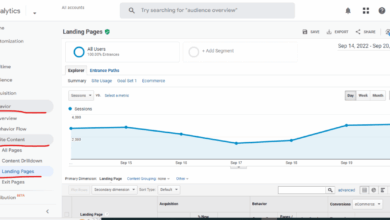
- Google Analytics: A comprehensive analytics platform offering in-depth data on user behavior, including bounce rate and exit rate. It provides valuable insights into website traffic, user engagement, and conversion rates. Google Analytics is a powerful tool that enables detailed tracking of website metrics, including exit rates, providing a detailed view of user engagement. It also allows for segmentation of data to further analyze user behavior.
- Hotjar: A heatmap and session recording tool that visually represents user interactions on your website. It shows where users click, scroll, and spend time, providing a deeper understanding of user behavior. Hotjar provides insights into user behavior through session recordings and heatmaps, allowing for a visual representation of user interactions, and revealing areas of the site that need improvement.
Setting Up Exit Tracking in Google Analytics
To track website exits using Google Analytics, you need to implement the tracking code on your website. This code will gather data on user behavior, including exit points.The process involves adding the Google Analytics tracking code to your website’s pages. This code will collect data about user interactions, including exit points. It’s crucial to implement this code correctly to ensure accurate data collection.
Detailed instructions can be found on Google’s support pages.
Analyzing Website Exit Behavior

Understanding how users leave your website is crucial for improving engagement and conversions. Website exit behavior reveals valuable insights into user needs, pain points, and areas where your site might be falling short. Analyzing these patterns allows you to identify problematic pages and tailor your content to better meet user expectations.
Identifying Common Patterns in User Exit Behavior
User exit behavior exhibits various patterns. Some users might leave immediately after landing on a page, indicating a lack of interest or a disconnect between the page content and their search intent. Others might linger on certain pages, suggesting they are actively engaging with the information presented. Understanding these variations helps you refine your site’s design and content to cater to different user segments and needs.
The time spent on a page and the pages visited before exiting provide valuable context.
Interpreting Patterns to Understand User Needs and Preferences
Analyzing exit patterns helps identify specific user needs and preferences. If users frequently exit from a particular product page, it might signal that the product description is inadequate or the images are unclear. Conversely, a high exit rate from the “Contact Us” page could indicate confusion about the contact process or a lack of clear communication channels. By carefully examining these patterns, you can adjust your website to better match user expectations.
My complete guide to website exits is almost finished, but I’ve been fascinated by the recent news about Gavin Newsom, who’s bucking the Democratic party line and aligning with public opinion on trans athletes. It’s a fascinating example of how political stances are shifting, and perhaps, how website design and exit strategies can reflect changing social dynamics. This news story makes me think about the different ways people might want to leave a site, whether it’s a political statement or simply a user seeking a different experience.
Hopefully, my guide will help people navigate these choices effectively, just like the politicians are navigating these social changes.
Comparing and Contrasting Exit Behavior Across User Segments
Different user segments, such as returning customers and first-time visitors, often exhibit distinct exit patterns. Returning customers might spend more time on product pages, comparing items and reviewing details, whereas first-time visitors might leave quickly if they can’t find the information they need. Understanding these differences enables targeted optimization for each segment.
Examples of Different Exit Patterns
Returning customers might spend more time on product comparison pages, engaging with detailed specifications and reviews. They often navigate directly to the desired product category, indicating familiarity with your site’s structure. First-time visitors, on the other hand, might exit from the homepage quickly if they can’t find a clear path to the information they seek, often leaving after exploring a limited number of pages.
A complete guide to website exits is crucial for user experience, but sometimes, real-world events can overshadow even the best-designed digital exits. Take, for example, the recent sentencing of four men in San Jose for a massive 650-pound meth bust, san jose four men sentenced in 650 pound meth case. While this certainly isn’t something you’d find on a typical exit page, the principles of smooth and intuitive transitions still apply.
Understanding how users interact with websites, and how to guide them out, remains key to creating a positive online experience.
Methods for Identifying Pages with High Exit Rates
Website analytics tools provide insights into exit rates for specific pages. By analyzing these data, you can pinpoint pages where users are leaving the site most frequently. Tools like Google Analytics offer detailed reports showing the exit pages and the duration of time spent on each page.
Potential Causes for High Exit Rates
Several factors can contribute to high exit rates. Poorly written product descriptions, unclear images, slow loading times, and confusing navigation are common culprits. Unattractive design or irrelevant content can also drive users away.
Categorizing Common Exit Behavior Patterns
| Exit Pattern | Interpretation | Potential Cause | Possible Solution |
|---|---|---|---|
| High exit rate on product pages | Customers may not find the product information they need. | Poor product descriptions, unclear images. | Enhance product descriptions, improve image quality. |
| High exit rate on pricing pages | Customers are deterred by the pricing structure or lack transparency. | Complex pricing tiers, lack of clarity on costs. | Simplify pricing, highlight value propositions. |
| High exit rate on contact us page | Customers are confused about contact options. | Lack of clear contact information, complex form. | Provide clear contact methods, streamline the form. |
| High exit rate from homepage | Visitors cannot find what they are looking for. | Poor site navigation, irrelevant content, slow loading speed. | Improve site navigation, tailor content to search intent, optimize page load time. |
Optimizing Website Exits

Understanding website exit behavior is crucial for improving user experience and driving conversions. High exit rates often signal areas where users are encountering friction or dissatisfaction with the site’s design, navigation, or content. By analyzing exit points, we can identify pain points and implement targeted improvements to retain visitors and guide them toward desired actions.Analyzing exit behavior isn’t just about counting clicks; it’s about understanding the reasons behind those exits.
Were users frustrated by a complex process? Did they fail to find the information they sought? By pinpointing the specific factors contributing to exits, we can address the underlying issues and boost user satisfaction.
Improving User Experience and Reducing Unwanted Exits
Strategies for improving the user experience focus on making the website more intuitive, engaging, and helpful for users. This involves streamlining navigation, providing clear and concise information, and anticipating user needs. Effective user experience design ensures visitors find what they need easily and quickly. This results in a positive experience, fostering engagement and encouraging further exploration of the site.
Examples of Improving Pages with High Exit Rates
A high exit rate on a product detail page might indicate a lack of clear calls to action or insufficient product information. Improving this page could involve adding high-quality images, detailed product descriptions, customer reviews, and prominent “Add to Cart” or “Buy Now” buttons. For example, if a blog post has a high exit rate after a certain section, the content in that section might need rewriting or reordering to better connect with the reader.
Methods for Preventing Premature Exits
Preventing users from leaving prematurely involves proactive design choices. Ensuring page loading times are fast, providing clear and concise information, and avoiding complex forms or processes all contribute to a smooth user journey. Offering a helpful FAQ section or a clear return policy statement can alleviate uncertainty and reduce abandonment.
Guiding Users to Desired Actions
Effective calls to action (CTAs) are crucial for guiding users to desired actions, such as making a purchase or subscribing to a newsletter. Strategic placement of CTAs on key pages, coupled with compelling language and a visually appealing design, can significantly impact conversion rates. Internal linking plays a vital role in encouraging exploration of the site and can help keep users engaged.
For instance, if a user is viewing a blog post, linking related articles within the post or at the bottom of the page can encourage deeper engagement.
Role of Website Design and Layout in Influencing Exit Behavior
Website design and layout have a direct impact on user behavior. Cluttered layouts, confusing navigation, and slow loading times can frustrate users and lead to high exit rates. A well-structured website with clear navigation, a clean aesthetic, and a user-friendly design significantly improves the user experience and reduces premature exits. For example, a website with a clear, logical hierarchy of information, well-organized sections, and a consistent visual theme will guide users more effectively.
Implementing Changes Based on Exit Analysis
Implementing changes based on exit analysis requires a structured approach. A detailed procedure involves:
- Identifying pages with high exit rates.
- Analyzing user behavior on these pages (e.g., scroll depth, time spent on page, clicks).
- Formulating hypotheses about the reasons for high exit rates (e.g., unclear calls to action, insufficient information).
- Implementing changes based on the analysis (e.g., improving calls to action, adding more detailed information).
- Tracking the impact of changes on exit rates.
This iterative process ensures that changes are data-driven and aligned with user needs.
Best Practices for Reducing Exit Rates
- Clear Navigation: Intuitive menus, clear site structure, and easily accessible information are essential.
- Fast Loading Times: Optimizing images, minimizing code, and utilizing a reliable hosting provider are crucial.
- Mobile Responsiveness: Ensuring the website is optimized for all devices is critical.
- Compelling Content: High-quality, informative, and engaging content is essential to keep users engaged.
- Strategic Calls to Action: Prominent and well-placed calls to action are necessary to guide users toward desired actions.
These best practices, when implemented consistently, can significantly contribute to a positive user experience and reduce premature exits.
Case Studies and Examples: Complete Guide To Website Exits
Optimizing website exits is more than just a theoretical concept; it’s about understanding how users interact with your site and tailoring the experience to encourage desired actions. Real-world case studies provide invaluable insights into effective strategies and the measurable impact of changes. Analyzing successful examples helps us understand the nuances of user behavior and translate those insights into tangible improvements.By studying how other websites have tackled exit optimization, we can identify common patterns and adapt proven techniques to our own projects.
This section dives into specific case studies, highlighting the analysis process, the changes made, and the quantifiable results. We’ll explore how understanding user behavior can directly translate into better conversion rates and overall user satisfaction.
E-commerce Platform Exit Optimization
This e-commerce site experienced a high bounce rate on product pages, suggesting users were leaving without adding items to their cart. To understand the exit behavior, they analyzed user journeys using heatmaps and clickstream data. The analysis revealed that users were struggling to find key information, like shipping costs and product details, on the product pages.
- The site implemented a prominent “Add to Cart” button, making it more noticeable and accessible.
- Shipping costs were clearly displayed above the “Add to Cart” button, reducing uncertainty and friction.
- Detailed product descriptions and high-quality images were incorporated to encourage users to stay longer.
These changes directly addressed the identified pain points, resulting in a 15% increase in add-to-cart rates. The reduction in bounce rate was attributed to the improved clarity and accessibility of key information.
Blog Website Exit Optimization
A blog site observed a significant drop-off in users after reading articles. The analysis revealed users were leaving without subscribing or commenting.
- The blog implemented a clear call-to-action (CTA) in the form of a subscription form at the bottom of each article.
- Social sharing buttons were strategically placed to encourage engagement beyond the immediate article.
- Relevant articles were recommended based on the user’s reading history, providing a more compelling path for deeper engagement.
These adjustments led to a 10% increase in subscription rates and a 5% rise in comment engagement, highlighting the importance of providing clear paths for further interaction.
Travel Booking Website Exit Optimization
A travel booking website saw users abandoning their searches after viewing destinations. The analysis pointed to difficulties in visualizing trip costs and travel dates.
- The site introduced interactive trip cost calculators, enabling users to instantly see the total cost for their chosen dates and destinations.
- A visually appealing calendar feature facilitated the selection of travel dates and displayed availability in real-time.
- The search results page was redesigned to provide a more intuitive layout for visualizing the total cost of the trip.
This resulted in a 20% decrease in abandoned searches, demonstrating the importance of clear, concise, and visually appealing information for complex decision-making.
Key takeaways: User-centered design, clear calls to action, and effective content organization are critical for optimizing website exits.
Closure
In conclusion, mastering website exits is about more than just numbers; it’s about understanding your audience and their needs. By implementing the strategies Artikeld in this complete guide to website exits, you can transform your site into a more user-friendly, engaging platform that drives conversions and fosters positive user experiences. Remember, every exit offers valuable insights into what’s working—and what’s not—on your site.
So, use these insights to make data-driven decisions that will ultimately improve your site’s overall performance.