Danny Trejo Claims He Was Threatened With a Lawsuit When Trying to Exit Ben Shapiro Production Pawn Shop

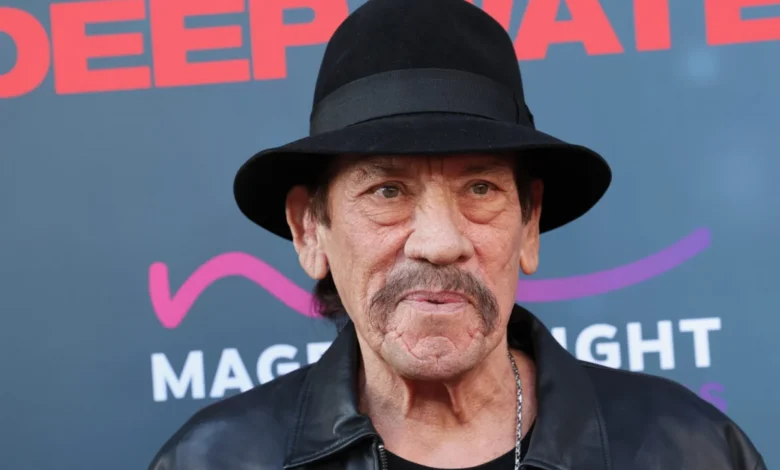
Veteran actor Danny Trejo has alleged that he attempted to walk away from his role in the controversial, pro-Immigration and Customs Enforcement (ICE) film Pawn Shop, produced by Ben Shapiro’s media company, The Daily Wire, but was blocked by legal threats of a severe lawsuit. The revelation brings fresh scrutiny to the intersection of Hollywood talent, conservative media expansion, and the tight grip of ironclad production contracts in the modern entertainment landscape.
The controversy highlights a growing friction within the film industry as conservative platforms like The Daily Wire increasingly produce original narrative features that attract mainstream Hollywood talent—sometimes resulting in public relations fallout for actors who find themselves tied to politically polarizing material.
The Confrontation and Legal Threats
Speaking to TMZ in a recent interview, Trejo addressed persistent questions regarding his involvement in Pawn Shop, a project that drew immediate backlash from fans and community advocates upon the announcement of its subject matter. When asked directly if he had tried to back out of the production once its political framing became clear, Trejo admitted that financial and legal realities prevented his exit.
"You know what? I tried, and they said no, they’d sue the hell out of me," Trejo told the outlet.
Trapped by the binding terms of his talent agreement, the "Spy Kids" and "Machete" star explained that he had to pivot his strategy. Rather than walking away—a move that could have triggered devastating financial penalties or protracted litigation—Trejo chose to subvert the production from within by altering his delivery on set.
"So I just didn’t say what they wanted me to say," Trejo added. "You know, I just changed the lyrics a little… the first thing I said, they told me they’d sue me."
Background Context and Public Backlash
Trejo’s latest statements clarify a saga that began in October, when backlash over his casting in Pawn Shop reached a boiling point across social media. Fans of the beloved Chicano actor, known for his decades-long community activism and representation of Hispanic characters, expressed shock and disappointment over his participation in a project viewed as supportive of ICE enforcement practices.
In response to the initial wave of criticism, Trejo issued a statement via TMZ distancing himself from the politics of the film.
"I am a proud Mexican who has always been and will always be a supporter of my community. I am also obviously pro-immigrant. I am not pro-ICE," Trejo stated at the time. "I know where I come from and I know our struggles. I am an actor. My job is to tell a story."
The defense was further elaborated upon by Trejo’s son, Gilbert Trejo, who took to Instagram stories to provide insider context regarding how the casting came to be. According to Gilbert, the senior Trejo was completely unaware of Ben Shapiro’s identity or political footprint when he signed on, learning of the conservative commentator’s involvement only two weeks into filming.
"I had to explain to him who that is, and what kind of guy he is," Gilbert wrote, noting that his father had "never heard of Ben Shapiro."
Gilbert’s posts underscored the rigid nature of standard motion picture contracts, emphasizing that his father could not "badmouth" the production or walk away without facing catastrophic breach-of-contract lawsuits, rendering him unable to even release the public statement he originally desired.
Plot Outline of Pawn Shop
The central source of the controversy is the narrative framework of Pawn Shop itself. According to official loglines released by the production, the film’s plot is engineered around high-tension sociopolitical flashpoints.
The story follows a Minneapolis riot that forces a young ICE officer to execute a high-stakes arrest alone after his partner is killed. Hunted through urban streets by an angry crowd determined to free the prisoner and dismantle law enforcement authority, the officer seeks refuge inside a neighborhood pawn shop. There, he is barricaded alongside a hard-edged Hispanic veteran—played by Trejo—and the veteran’s progressive college-age grandson. The narrative frames the siege as a moral crucible where ordinary men must choose between institutional law and total societal chaos.
Critics argue that the project romanticizes hardline immigration enforcement policies, while producers at The Daily Wire position the film as a gritty exploration of civic duty, honor, and defiance against lawlessness.
The Broader Trend: Mainstream Talent and Conservative Media
Danny Trejo is not the only high-profile industry veteran to face scrutiny for collaborating with Ben Shapiro’s expanding entertainment empire. Recently, actor Rob Lowe ignited a parallel debate when he agreed to star in Confession, a feature film penned by Shapiro and distributed by The Daily Wire.
Lowe addressed the mounting industry chatter during an appearance on Coleman Hughes’s podcast, "Conversations With Coleman." The veteran actor confessed that his own representation and peers questioned his decision to work with the conservative firebrand, with colleagues asking him, "Are you crazy?"
Defending his choice, Lowe emphasized his long career and ideological independence.
"I’m old enough, established enough, people know me well enough, to know that I’m not an ideologue at all," Lowe said. "I’m not telling anybody how to live, how to think, on either side of the aisle. I’ve campaigned for Republicans. I’ve campaigned for Democrats… I have my bona fides in both worlds."
The willingness of established stars like Lowe and Trejo to attach themselves to Daily Wire projects—whether through careful calculation or, in Trejo’s case, via a lack of initial awareness regarding the studio’s ideological backing—points to a shifting paradigm in Hollywood. Alternative studios are increasingly offering lucrative contracts that lure traditional talent, even as those partnerships frequently trigger intense public relations storms in a polarized political climate.
Industry Implications and Next Steps
As the debate surrounding Pawn Shop continues to unfold, legal and professional observers are examining the broader implications for talent agreements. The episode serves as a cautionary tale for actors regarding the importance of vetting production entities and understanding the political alignments behind independent financing. Furthermore, it highlights the immense legal leverage production companies hold once standard "quick-pay" or independent film contracts are executed, leaving actors with limited recourse if they experience ideological buyer’s remorse mid-shoot.
Variety has reached out to representatives for The Daily Wire for formal comment regarding Trejo’s allegations of legal intimidation, though no official response has been issued at the time of publication. As production wraps and distribution dates for Pawn Shop draw nearer, the intersection of art, ideology, and contractual obligation promises to remain a volatile topic within the entertainment industry.
Related posts: